In Ridley Scott’s 2007 movie, Frank Lucas builds a drug empire in Harlem by cutting out all the middlemen: he buys at the source, handles transport himself and sells under his own brand. The movie shows how much power lies in controlling the value chain, and it shows it through a crime.
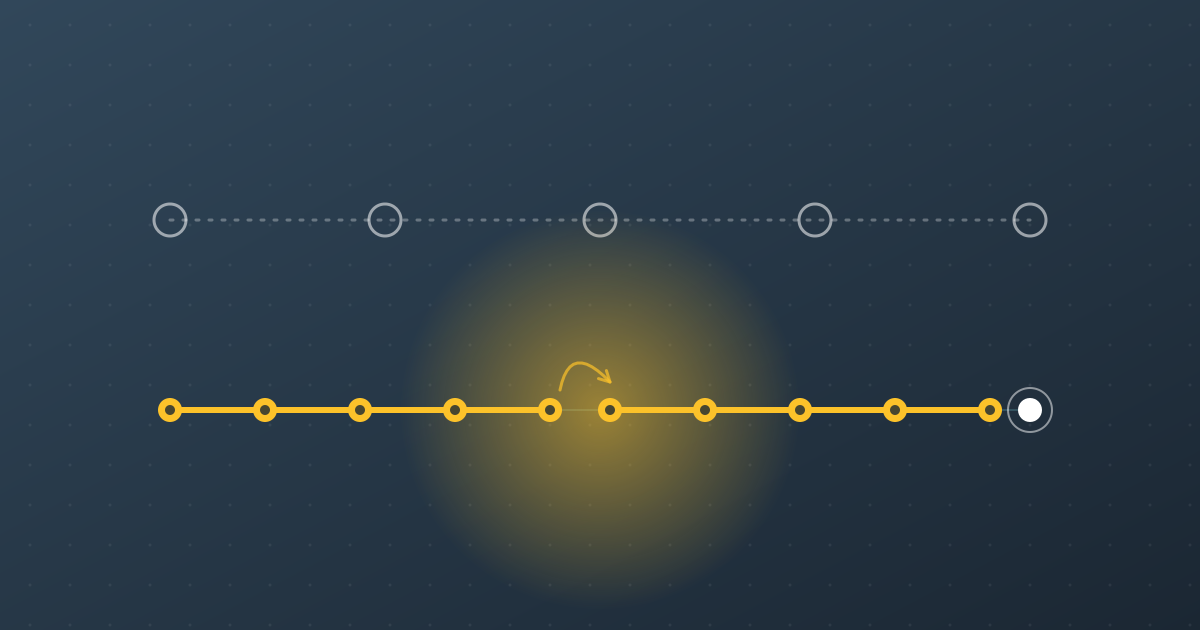
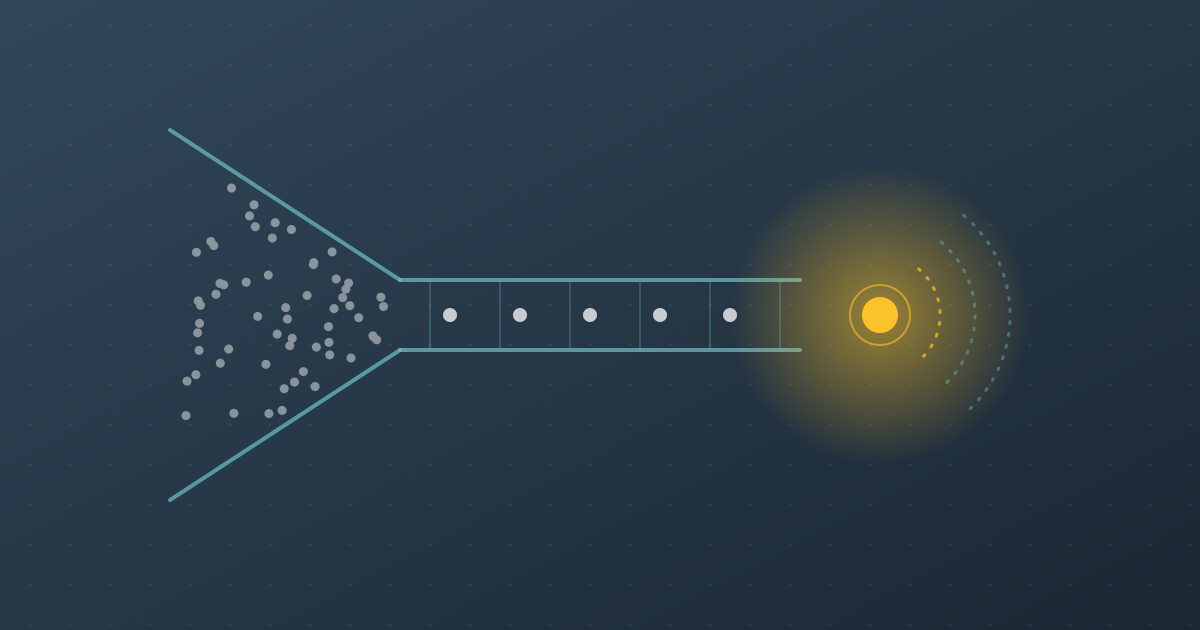
Five teal circles stand in a row with four mist-blue lines below them as supports; a gold dot travels from left to right and grows a little at each circle. At the turning point, fine gold lines stretch between the circles, a dot runs back on an arc from the last circle to the first, and in the final image the dot travels twice as fast and arrives clearly larger.
Principle #71
Value Chain: Your advantage lies not in the company as a whole but in individual activities and in how well they fit together.
3 min read5 sectionsSituationLink to the principle
Contents
Loosely based on real events, “American Gangster” tells the story of Frank Lucas (Denzel Washington) and the police officer Richie Roberts (Russell Crowe), who hunts him down. The movie is set in New York around 1970. It is a crime drama, not a business lesson. Even so, it is a good way to explain what Michael E. Porter means by the Value Chain. How much of it corresponds to the true story is highly disputed. Even people involved have called large parts of it invented. This article therefore talks only about the movie. One important point up front: this is about a crime that destroyed countless lives. The example serves solely to make a structure visible.
Beneath a direct gold line from source to destination, a long chain of intermediate stations fades away – as in “American Gangster.”
01
Other people’s chain
Situation
According to plot summaries, Frank Lucas is at first the right-hand man of the Harlem crime boss Bumpy Johnson. After Johnson’s death, he goes into the heroin trade himself.
Link to the principle
If you occupy only one link in a long chain, you have little influence on price and quality. Every middleman takes his cut and adds nothing essential. Porter would ask: where is value actually created here, and where is it merely skimmed off?
02
Buying at the source
Situation
Lucas travels to Southeast Asia and buys directly from the producers in Thailand. He smuggles the goods into the United States via soldiers returning from the Vietnam War.
Link to the principle
He skips several links at once. In doing so, he lowers his costs and gains control of inbound logistics. In the language of strategy, this is backward integration: a business takes over steps that others previously performed for it.
03
A brand of his own
Situation
Lucas sells his product under the name “Blue Magic.” According to plot summaries, it is purer and at the same time cheaper than the competition’s and pushes many other dealers out of the market.
Link to the principle
Because he controls the chain, he can offer two things at once that usually don’t go together: higher quality and a lower price. The brand makes this advantage visible. Here it becomes clear that a lead often lies not in a single activity but in how purchasing, transport and sales fit together.
04
Distribution through the family
Situation
Lucas brings his five brothers into the business as confidants. He sells wholesale to other dealers in the greater New York area and keeps a low profile.
Link to the principle
Distribution, too, is organized so that Lucas keeps control. Trust replaces contracts. That makes the chain fast, but also vulnerable: if one link breaks, the whole network is at risk.
05
The weak point of the chain
Situation
Richie Roberts and his team of investigators win over Lucas’s cousin Jimmy Zee as an informant. Through him, they learn of the last big shipment after the fall of Saigon. They find the heroin in a military plane and track it to a processing facility in Newark. A raid and arrests follow. Lucas then cooperates with the investigators against corrupt police officers.
Link to the principle
A tightly linked chain is strong as long as every link holds. But it is also easier to roll up from a single point. If you integrate your value chain, you have to know where its weak points lie. For Lucas, it was the family, of all things, which had previously been his strength.
Key takeaways
Key lessons
01
Ask where value is created in your chain and where it is merely skimmed off.
02
Consider which steps you should take into your own hands.
03
A controlled chain can improve quality and price at the same time.
04
Know the weak points of a tightly linked chain.
05
Strategy is no substitute for ethics. A strong structure can carry good and evil alike.
Summary
“American Gangster” shows Frank Lucas cutting out the middlemen of the drug trade, buying at the source, handling transport himself and selling under his own brand. In this way, he offers better goods at a lower price. The movie makes visible how much power lies in controlling the value chain, and how vulnerable a tightly linked chain is.