Jürgen Klopp, Borussia Dortmund and Relative Superiority
In 2011 and 2012 Borussia Dortmund wins the German championship, ahead of the financially far stronger FC Bayern Munich. Jürgen Klopp’s counter-pressing creates numerical superiority around the ball at the very moment possession is lost. Where the game tips, Dortmund is stronger.
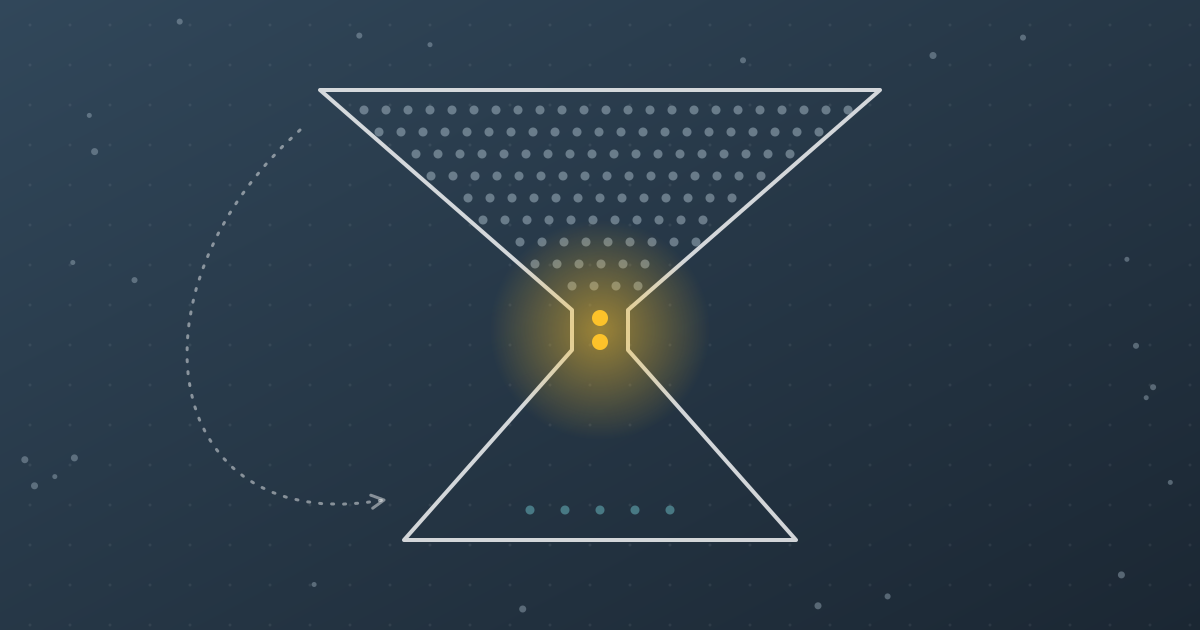
In two rows, 10 teal dots face 20 mist-blue dots, and a balance beam above them tilts toward the larger row. The 10 draw together at one end; a golden circle of light shows 10 against 4 there, a small balance beam above the circle of light tips golden toward the other side, and the long row is rolled up from the flank.
Principle #8
Relative Superiority: You don’t have to be bigger overall, just stronger at the decisive point.
3 min read5 sectionsSituationLink to the principle
Contents
In soccer, it is 11 against 11. Overall, neither side has more players. Yet every match is full of moments in which one team has more players than the other at one point on the field. In Dortmund, Jürgen Klopp shaped a style of play that creates exactly these moments by design. It is an almost pure form of Relative Superiority.
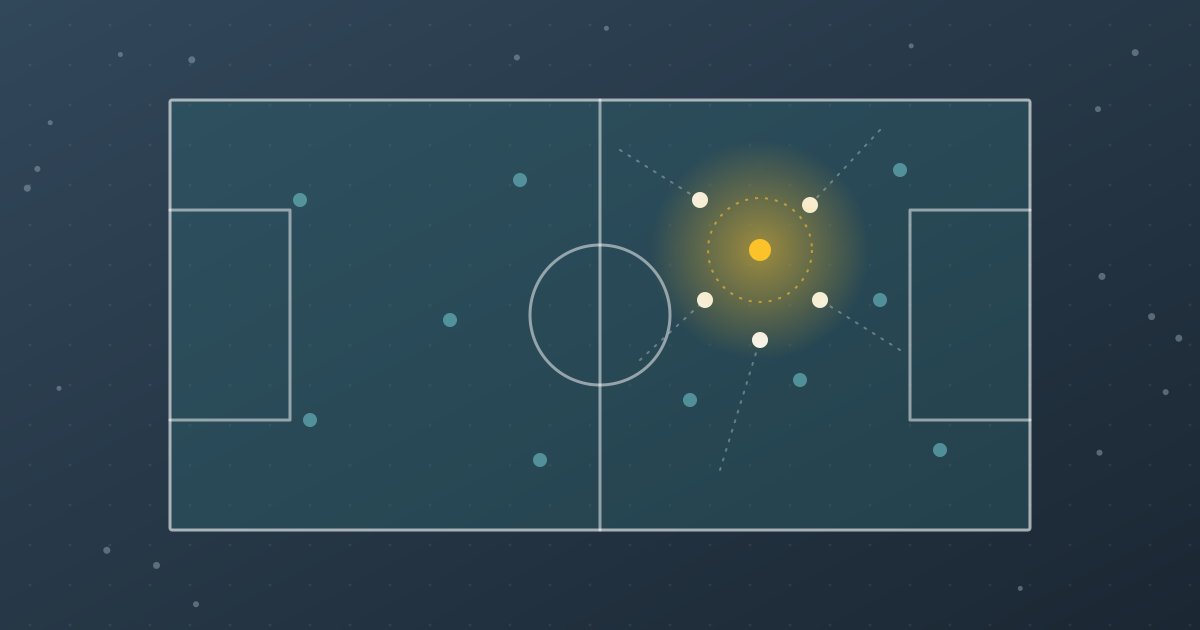
On a soccer field seen from above, five white dots quickly close in on the golden ball – like the counter-pressing of Jürgen Klopp’s Borussia Dortmund.
01
A club after the crisis
Situation
In 2004 and 2005, heavy debts seriously threatened Borussia Dortmund’s survival. Klopp arrived in 2008 from FSV Mainz 05. His squad consisted largely of young players who were little known at the time. FC Bayern Munich had considerably more money and more national team players.
Link to the principle
Dortmund would have lost any overall comparison. So Klopp did not try to be better than Bayern overall. He looked for the places and moments where matches are decided and wanted to be stronger there.
02
The moment after losing the ball
Situation
Counter-pressing means that after losing the ball, the team immediately attacks again to win it back as far up the field as possible. The players nearby close in on the player with the ball together. To do this, the wingers Kevin Großkreutz and Jakub Błaszczykowski moved inside. Observers had the impression that Dortmund sometimes had an extra man on the field.
Link to the principle
Immediately after winning the ball, the opponent is disorganized; their players are spreading out to attack. At precisely this moment and in precisely this place, Dortmund brings more players to the ball than the opponent. That is relative superiority in space and time.
03
Closing down space instead of chasing everywhere
Situation
Dortmund did not press all over the field. The team usually sat in a mid-block and pounced when the ball reached the opposing fullbacks or midfielders. It squeezed the space sideways and in depth and pushed the opponent toward the touchline.
Link to the principle
If you attack everywhere, you are thin everywhere. Dortmund chose zones where numerical superiority was easy to create and used the touchline like an extra teammate. Superiority comes from the choice of place.
04
Running as a prerequisite
Situation
This style of play demanded an enormous amount of running. Klopp promised the team three extra days off during the winter break if, in nine out of 10 matches, they ran more than 118 kilometers as a team. They missed the target but got the days off anyway.
Link to the principle
Local numerical superiority has to be earned by running. It is only possible if everyone is willing to shift quickly and together. The resource Dortmund had more of than Bayern was not money but willingness to run and coordination.
05
The results and their limit
Situation
Dortmund won the championship in 2011. In the 2011–12 season, the team collected 81 points, eight more than FC Bayern, and went 28 matches unbeaten from the seventh matchday on. In the German Cup (DFB-Pokal) final on May 12, 2012, Dortmund beat Bayern 5–2 and won the double. In the Champions League that same year, however, Dortmund went out after finishing bottom of its group. In the 2015–16 season, in the assessment of the tactics writer Tobias Escher, at least 10 of the 18 Bundesliga clubs were playing according to similar ideas.
Link to the principle
Relative superiority worked in the league, where Dortmund could impose its system over an entire season. Against international opponents, it was not enough that year. The principle is powerful, but it does not work automatically. And when others copy it, the lead shrinks.
Key takeaways
Key lessons
01
Look for the moments when your opponent is disorganized.
02
Bring more people to that place than they do.
03
Choose zones where numerical superiority is easy to create.
04
Make effort and coordination your advantage when you lack money.
05
Be prepared for others to copy your system.
Summary
Borussia Dortmund had less money and fewer stars than FC Bayern. Even so, Jürgen Klopp’s counter-pressing created numerical superiority, precisely where and when the game tips: around the ball, right after losing possession, in tight zones along the touchline. That brought two championships and the 2012 double. The story shows relative superiority as a game plan that can be designed in advance, that depends on a willingness to run and that loses its edge as soon as others adopt it.