Michael O’Leary, Ryanair and the Principle of Emptiness and Fullness
Around 1990, the small Irish airline Ryanair is deep in the red. Michael O’Leary helps rescue it, not by taking on the big airlines at their hubs but by heading for airports and customers hardly anyone cares about.
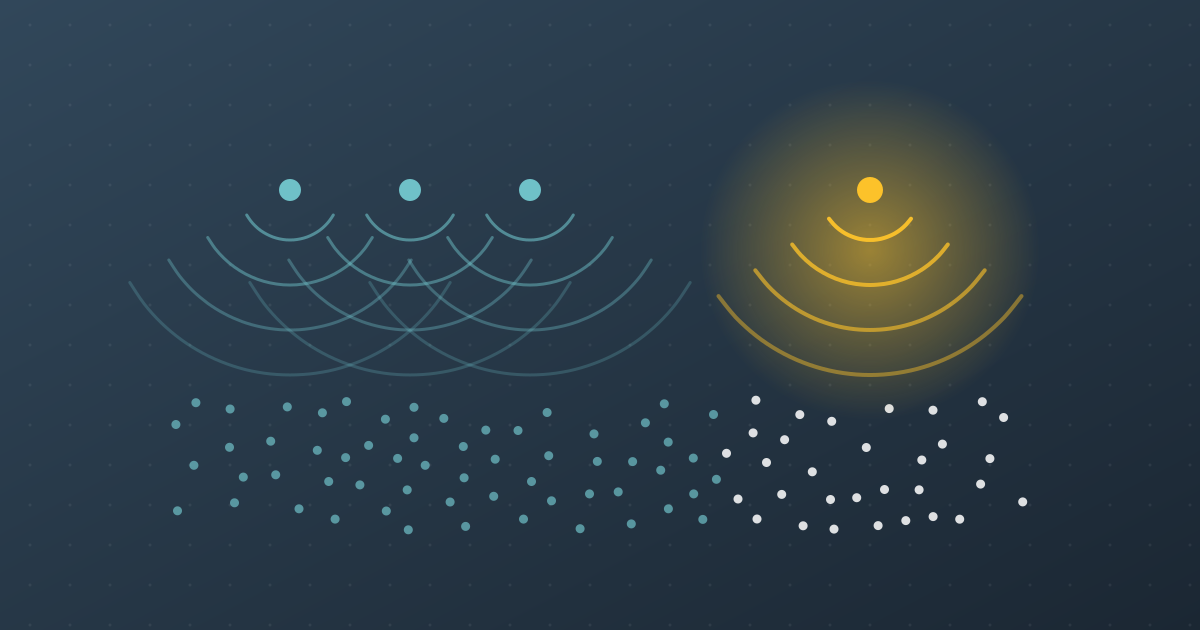
A large field of teal dots with dense patches and pale, almost empty patches in mist-blue; a small golden dot bounces head-on off the densest patch. Then it dissolves into a golden line that runs around the dense patches, seeps into the pale ones and fills them with gold.
Principle #29
Emptiness and Fullness: Commit your strength where the other side is weak or absent, and avoid the place where it is strong.
4 min read5 sectionsSituationLink to the principle
Contents
For a long time, aviation in Europe was a business for the big state-owned airlines. They had the prime slots at the major airports, the frequent flyer programs and the business travelers. Anyone who wanted to compete there had to attack their strengths. Ryanair tried that first and nearly failed. Success came only when the airline went where the big players were not – an example of the Principle of Emptiness and Fullness.
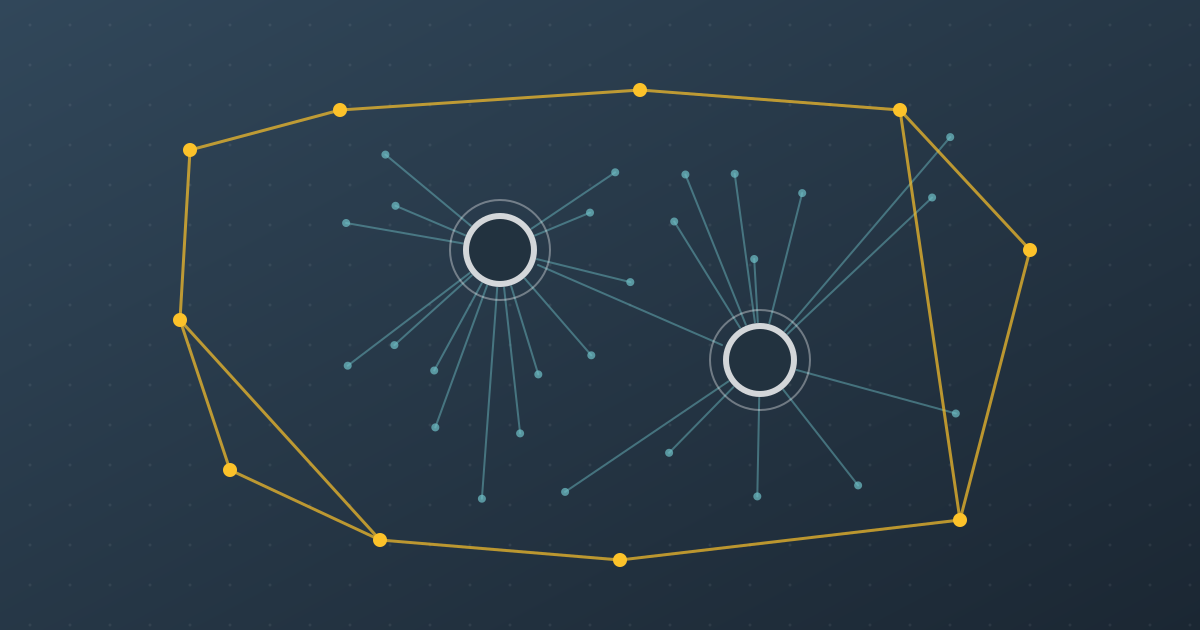
Two crowded hubs pull in every line, while at the edge golden routes link the small airfields nobody cares about – as with Ryanair.
01
A bumpy start
Situation
Ryanair is founded in 1984. The airline is named after the family of the entrepreneur Tony Ryan, who helps build it. On July 8, 1985, the first flight takes off from Waterford to London Gatwick in an aircraft with 15 seats. In 1986 the Dublin–Luton route is added. Passenger numbers rise quickly, to 82,000 in the first year of the two routes. But the young airline loses money. By 1990 it has piled up losses of around £20 million.
Link to the principle
In this phase, Ryanair fights Aer Lingus and British Airways with a mixed offering. That means fighting against the fullness of the big players with the same means, just on a smaller scale. A fight like that can hardly be won.
02
A look toward Texas
Situation
Michael O’Leary starts out as Tony Ryan’s financial and tax adviser and joins Ryanair in 1988. In 1990 the company sends him to Dallas to see Herb Kelleher, the cofounder of Southwest Airlines. For almost two decades, Southwest has been flying with low fares, a single aircraft type and short turnaround times, often from smaller airports. O’Leary comes back with a plan to bring this model to Europe: low fares, no business class and, in the long run, a single aircraft type, the Boeing 737. Tony Ryan invests another £20 million, the route network is cut back sharply, and in 1991 Ryanair makes a small profit. In January 1994, O’Leary becomes CEO.
Link to the principle
O’Leary is not looking for a better version of Aer Lingus. He is looking for a model that starts at a different point. In the United States, Southwest had shown that you can win against big airlines if you don’t attack their hubs and their business travelers in the first place.
03
The empty airports
Situation
Ryanair moves its flights to regional airports. There the fees are low, the distances short and slots readily available. Instead of London Heathrow, the airline flies to Luton and Stansted, which is now its largest base. In the early 2000s it opens its first base on the European mainland at Brussels South Charleroi. Many of these airports still see little traffic and are glad to accommodate an airline that brings them passengers.
Link to the principle
Here the emptiness is literal: airports where hardly anyone flies. The big airlines avoid them because their business travelers want to land close to the city center. For Ryanair, these very places are cheap, and the airports have little bargaining power. The strength of the big players, their slots at the hubs, plays no role there.
04
The empty seats
Situation
With very low fares, Ryanair attracts people who have rarely or never flown before: students, families, weekend travelers, migrant workers. In 1995 the airline carries more than two million passengers. Today it is Europe’s largest airline by number of passengers.
Link to the principle
The second emptiness is a group of customers the big airlines did not serve. At first, Ryanair takes hardly any business travelers away from them. It creates new demand where there was none before. Only when Ryanair has become big do the established airlines notice that their own customers are leaving too.
05
The price of emptiness
Situation
The model has its downsides. Some airports are far away from the cities whose names they bear. The European Commission objected to advantages that the publicly owned Charleroi airport had granted Ryanair, calling them unlawful state aid. An EU court overturned this decision in 2008. Ryanair is also criticized again and again for the way it treats customers and employees.
Link to the principle
An emptiness is often empty for a reason. If you occupy it, you have to live with its drawbacks and name them openly. Ryanair made these drawbacks part of its offering: if you fly cheaply, you accept a longer journey.
Key takeaways
Key lessons
01
Don’t fight with the same means as the stronger side, just on a smaller scale.
02
Look at who has already successfully occupied the gap elsewhere.
03
An emptiness can be a place or a group of people nobody serves.
04
Where the strong are not looking, they have no defense either.
05
Ask honestly why the gap is empty, and tell your customers.
Summary
In its early years, Ryanair suffered heavy losses as long as it met the big airlines on their own ground. Around 1990, Michael O’Leary brought the Southwest Airlines model to Ireland. The airline went to regional airports and to customers who had hardly flown before. A small Irish company became Europe’s largest airline. This shows the Principle of Emptiness and Fullness: don’t attack the opponent’s strength; attack the space it does not occupy.