In Ridley Scott’s “Gladiator” (2000), Maximus and his fellow fighters are meant to die in the Colosseum as the losing side of a reenacted battle. He gets the individual fighters to fight together, and they defeat the chariots.
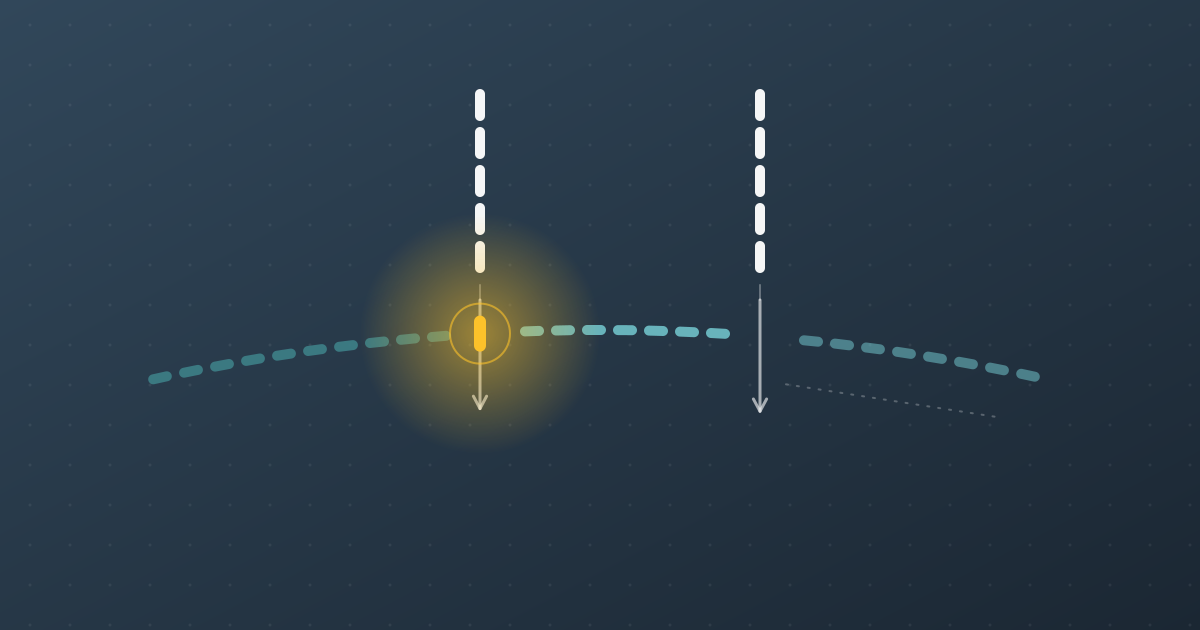
Ten teal dots face five mist-blue dots; above both, the numbers grow into their squares, 100 and 25, and fine lines show how the five fall while only one or two of the 10 fade. Then a long mist-blue row faces a smaller teal group; two golden lines cut the row into parts, the teal dots mass in gold against one part after another, and finally all the dots close into a circle.
Principle #10
Square Law of Strength: If you concentrate your forces, you win not just a little more but disproportionately more – and if you spread them out, you lose disproportionately.
3 min read5 sectionsSituationLink to the principle
Contents
“Gladiator” opened in theaters in May 2000. It was directed by Ridley Scott, with Russell Crowe as the Roman general Maximus and Joaquin Phoenix as the emperor Commodus. The film is not a history book. But one of its best-known scenes is a vivid example of the Square Law of Strength. It shows what Frederick William Lanchester meant by his square law: if you fight divided, you are beaten one by one. If you pull your forces together, you gain strength disproportionately.
In an oval arena, single dots close into a solid ring around a golden center, while chariot tracks circle in vain – as in “Gladiator.”
01
A general without an army
Situation
At the beginning, in AD 180, Maximus leads the Roman army against Germanic tribes and wins. Afterward, the emperor Marcus Aurelius wants to make him, rather than his son Commodus, his successor. Commodus kills his father, seizes power and has Maximus arrested. Maximus escapes, finds his wife and son murdered, is captured by slave traders and sold to a trainer of gladiators.
Link to the principle
In the opening battle, Maximus commands a trained, cohesive army. In the arena, he has none of that. He has only fellow prisoners, each fighting for survival on their own. At this point, the film’s question is: What is left of a commander when his army has been taken from him? The answer: the knowledge of how to concentrate forces.
02
The role of the losers
Situation
In Rome, Commodus has a battle from the Punic Wars reenacted in the Colosseum. The gladiators play Rome’s enemies – the side that, according to the script of the games, is meant to go down. Chariots drive into the arena against them. The gladiators stand on foot in the sand.
Link to the principle
The starting position matches the picture Lanchester describes. The chariots are fast and can choose any target. A single fighter on foot hardly stands a chance against them. Each chariot meets an opponent who stands alone and can take him out before anyone else can help. The gladiators’ numbers do them no good as long as they are spread out.
03
From individuals to a unit
Situation
Maximus, helmeted and unrecognized, takes command. He makes sure the gladiators fight together instead of each for himself. That is how they withstand the onslaught.
Link to the principle
Together, they all act at the same time. Every chariot that charges in no longer meets an individual but the whole group. The gladiators’ fighting strength does not just grow by the number of those involved; it changes fundamentally. Many weak individuals become a unit that is stronger than its sum.
04
From holding out to attacking
Situation
Then the gladiators under Maximus go on the attack and defeat the chariots. In the end, the side that was supposed to lose stands victorious in the arena. The crowd cheers, and Commodus descends with his nephew Lucius to congratulate the victors and see the unknown fighter.
Link to the principle
Now the calculation is reversed. The gladiators are concentrated, and wherever they face a single chariot together, they are locally superior. That is exactly what the square law recommends: defeat the enemy piece by piece with superior numbers instead of fragmenting yourself in separate fights.
05
What the film simplifies
Situation
The scene is dramatically heightened. Strictly speaking, Lanchester’s law applies to combat with aimed fire at a distance, not to close combat in an arena. Historically accurate depictions of games in the Colosseum are not the film’s aim.
Link to the principle
The film does not show the formula but the logic behind it. Fragmentation makes you vulnerable; concentration makes you disproportionately strong. That holds true beyond battles too, wherever people who could prevail together are overwhelmed one by one.
Key takeaways
Key lessons
01
If you fight alone, you will be beaten one by one, even if together you are many.
02
Pull your people together before you attack.
03
Hold your ground first, then go after individual opponents in a targeted way.
04
Here, leadership means turning individuals into a unit.
05
Even without great resources, you can change the calculation through order.
Summary
In “Gladiator,” Maximus and his fellow prisoners are meant to die as extras in a defeat. Each one on his own would hardly stand a chance against the chariots. Maximus gets them to fight together. They withstand the onslaught and then defeat the chariots. The scene vividly shows the core of the square law: concentrated strength grows disproportionately, while dispersed strength is worn down piece by piece.