In October 1805, Napoleon Bonaparte forces an entire Austrian army to surrender without fighting a major battle. He wins not through greater force in combat but through marches that take the enemy from behind.
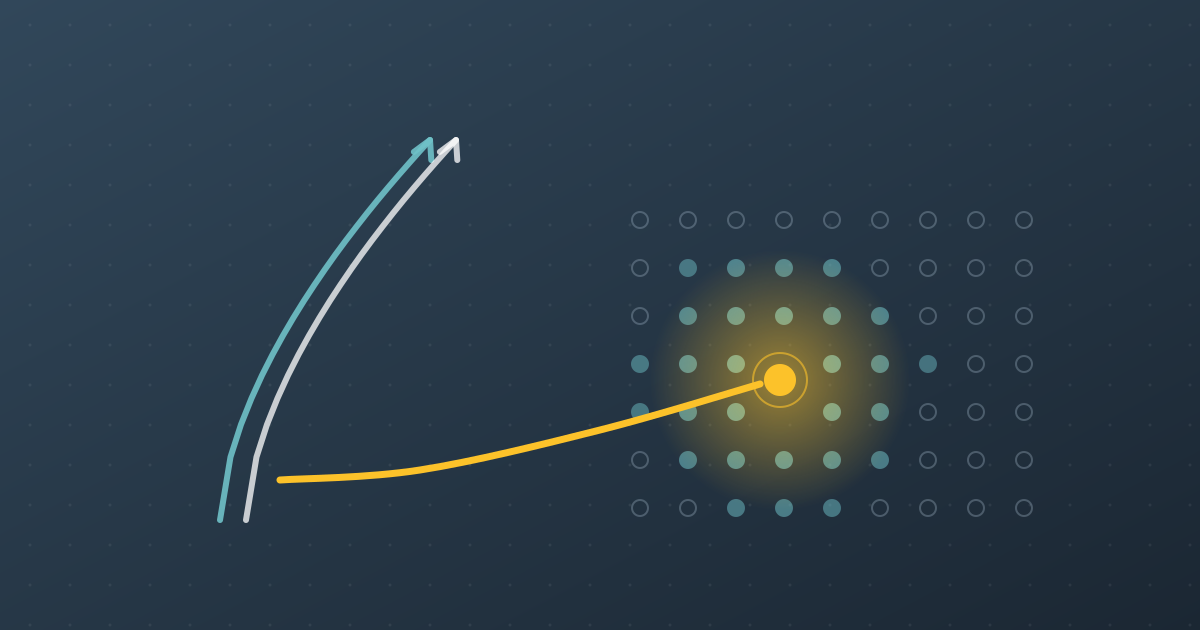
Two blocks of dots face each other, a large teal one and a smaller golden one; the golden block crashes into the other head-on, both lose dots, and then the picture rewinds. In the second run, part of the gold stays put while the rest flows past the side in an arc; a dashed line shows the severed connection to the rear, and the teal block breaks up into single mist-blue dots without any collision.
Principle #38
Maneuver: Use movement to put yourself in a better position instead of pitting your strength head-on against your opponent’s.
4 min read5 sectionsSituationLink to the principle
Contents
When people think of Napoleon, they think of great battles. Perhaps his cleanest masterpiece, though, is a campaign in which the issue was decided before a decisive battle became necessary. Ulm shows what the principle of Maneuver means: you use movement to put yourself in a position in which your opponent has only bad options left. The opponent’s own situation does the rest.
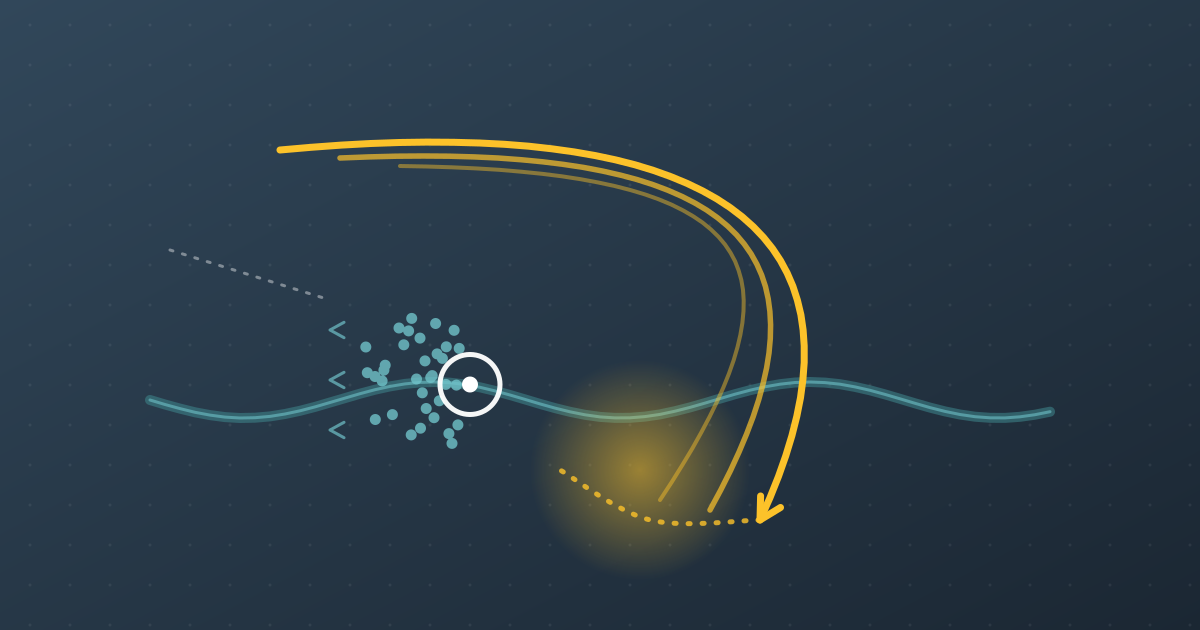
The army on the Danube faces west, while three golden arcs come from the north across the river into its rear – like Napoleon at Ulm in 1805.
01
The starting position in the fall of 1805
Situation
In 1805, Austria, Russia and Britain join forces in the Third Coalition against France. An Austrian army under General Karl Mack von Leiberich advances into Bavaria and takes up position at Ulm on the Danube. Mack expects the French to come from the west through the Black Forest. At the same time, he is waiting for Russian troops marching in from the east. Napoleon’s Grande Armée is still on the Channel coast near Boulogne at this time, where it had stood ready for a landing in England.
Link to the principle
Mack’s plan is not foolish. He holds a strong position and expects reinforcements. But he orients himself entirely toward the direction from which he expects the attack. That is exactly what makes him vulnerable to a maneuver. If you commit to one front, you have flanks and a rear.
02
The march around the flank
Situation
Within a few weeks, Napoleon moves his corps from the Channel coast to the Rhine. By the end of September, they cross the river on a broad front between Mannheim and Strasbourg. Cavalry appears in front of the Black Forest and confirms Mack in his expectation. Meanwhile, the main body marches past Ulm to the north, wheels south and crosses the Danube at Donauwörth, Neuburg and Ingolstadt in early October. Now it stands between Mack and the Russians, and between Mack and Vienna.
Link to the principle
This is the core of maneuver. Napoleon does not attack Mack’s position where it is strong. He moves in such a way that the position becomes worthless. Mack is looking west; the danger is in the east and south. His lines of communication are cut before any major engagement has taken place.
03
Engagements in the service of movement
Situation
Mack tries to break free. In a series of engagements, including at Wertingen on October 8, at Günzburg, at Haslach-Jungingen and at Elchingen on October 14 under Marshal Michel Ney, his attempts to break out are repulsed. Archduke Ferdinand fights his way through to Bohemia with a smaller part of the troops. A detachment under Franz von Werneck is pursued and lays down its arms at Trochtelfingen on October 18. The ring around Ulm closes.
Link to the principle
The engagements are real and cost lives. But they serve the maneuver, not the other way around. They prevent Mack from escaping the trap. The decision lies in the position that Napoleon created beforehand through his marches.
04
The surrender
Situation
On October 17, Mack accepts the capitulation. On October 20, 1805, his encircled troops march out of Ulm and lay down their arms; according to the usual accounts, they number around 25,000 men. French losses are small by comparison. On November 13, Napoleon enters Vienna without a fight, and on December 2 comes the victory at Austerlitz.
Link to the principle
An army loses without having been beaten in a decisive battle. That is the yield of a successful maneuver. The opponent is not smashed but outmaneuvered. It has no choice left that is worth making.
05
What it was not
Situation
Ulm was no conjuring trick out of thin air. Napoleon’s army marched faster than its opponents because it was organized into self-contained corps and largely lived off the land. Mack, for his part, clung to his position for too long. In a proclamation to his army on October 21, Napoleon himself also attributed the success to the enemy’s poor combinations.
Link to the principle
A maneuver needs preconditions: mobility, knowledge of the opponent and an opponent that commits itself. If you lack these preconditions, you cannot simply order a maneuver. Movement on the battlefield begins with organization long before.
Key takeaways
Key lessons
01
Don’t attack where the other side is strong. Ask how you can make its strength meaningless.
02
Pay attention to what the other side is fixated on. Your path lies where it is not looking.
03
Build mobility before you need it.
04
Fight only where the fight serves your position.
05
Check your own position too: are you tied to a place that makes you vulnerable?
Summary
At Ulm in 1805, Napoleon Bonaparte defeated an Austrian army without bringing it to a major battle. He marched around its flank, placed himself between it and its allies, and turned its strong position into a trap. The engagements that followed merely secured what the movement had already decided. That is maneuver in its purest sense: not strength against strength, but a better position.