In 1969, a British university receives its founding charter, and it has no intention of taking students away from anyone. The Open University is aimed at adults who were never able to study, and for their sake it leaves out what had defined universities until then: entry barriers and the campus as the place of learning.
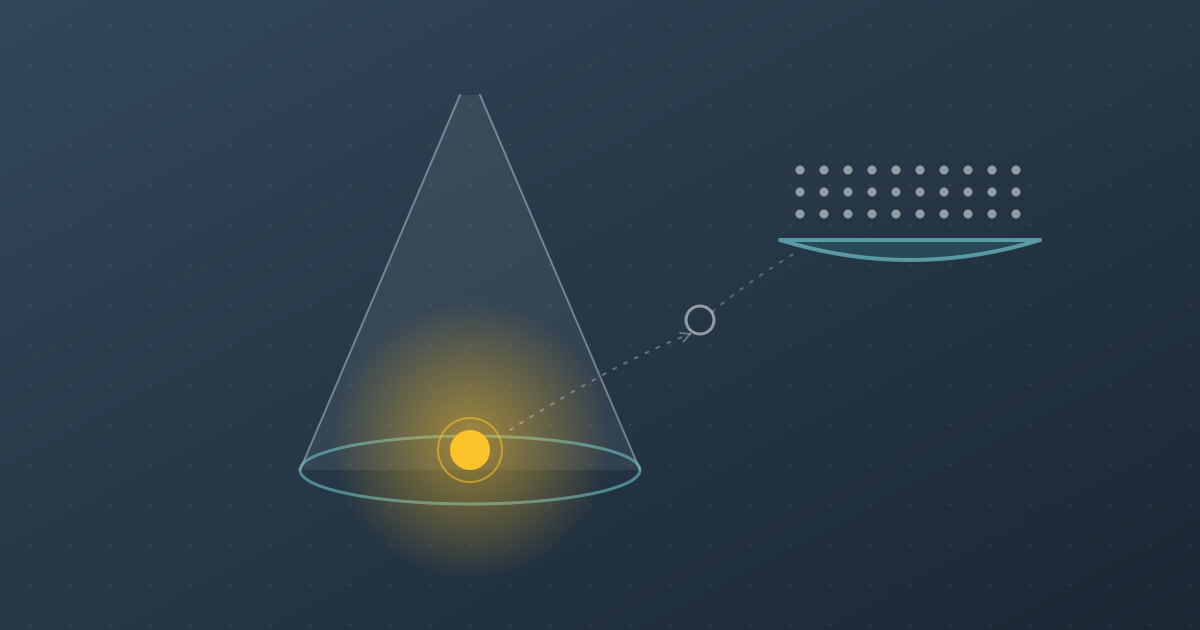
Many small teal dots crowd in a tight circle around a mist-blue swarm and collide. At the turning point, one dot drops three mist-blue splinters, turns gold and travels on an arc out into a wide, empty frame in which new gold dots light up; in the final image other dots follow, and the edge of the frame grows dense again.
Principle #72
Blue Ocean: Instead of fighting everyone for the same customers, you create a new space without competition by eliminating what everyone takes for granted and adding what does not yet exist.
3 min read5 sectionsSituationLink to the principle
Contents
Universities compete for the best students leaving school. They advertise their reputation, their faculty and campus life. In the 1960s, a large group of people in Britain stood outside this competition: adults without the necessary qualifications, working people, parents. For the universities, they were not customers. It is precisely to them that the Open University turns. W. Chan Kim and Renée Mauborgne call such people “noncustomers” and see in them the greatest source of new markets – the raw material of a Blue Ocean.
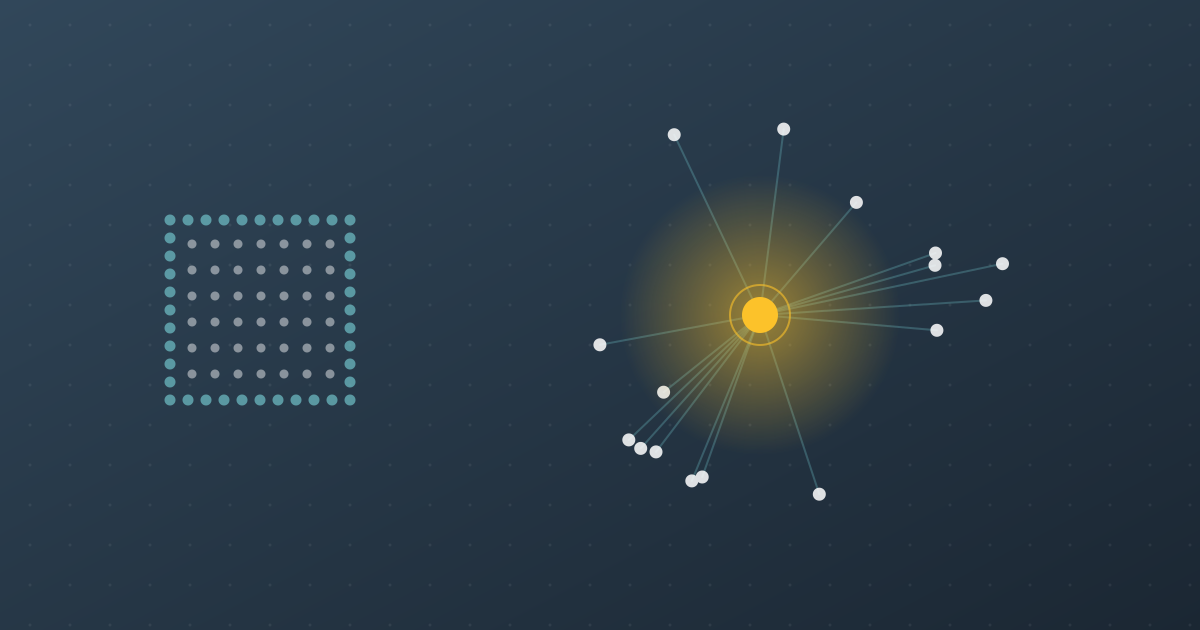
Next to a walled, crowded courtyard lie widely scattered dots, all connected to a gold center out in the open – as with the Open University.
01
An idea for those left out
Situation
The idea of a distance-learning university using television goes back, among others, to the sociologist Michael Young. Prime Minister Harold Wilson and his Labour government take it up. Starting in 1965, Jennie Lee, a politician focused on education, leads the planning as a government minister. Her aim is to open up higher education to broad sections of society.
Link to the principle
The planners do not ask how to compete with the existing universities. They ask who does not study at all, and why. That is the first step toward a blue ocean: turning your gaze away from the competitors and toward the people who are missing so far.
02
Open instead of selective
Situation
On April 23, 1969, the Open University receives its royal charter. It does without the usual academic entry requirements. Besides previous achievements, professional and life experience also count.
Link to the principle
Here the first of Kim and Mauborgne’s four questions comes into play: what will you eliminate that the industry takes for granted? For universities, selection at entry was taken for granted. The Open University does away with it and so opens up a space in which there is no competitor.
03
The lecture hall in the living room
Situation
In January 1971, the first students begin, about 25,000 of them according to the New World Encyclopedia. From January 3, 1971, until December 15, 2006, the BBC broadcasts educational programs on television. The students learn at home, with written course materials and support from tutors. The university is based at Walton Hall in Milton Keynes.
Link to the principle
The second question is: what will you create that does not yet exist? The Open University moves the university into the living room. You can study without giving up your job or moving. For the target group, this value was decisive, and no other university offered it.
04
Demand that wasn’t there before
Situation
According to the New World Encyclopedia, the number of students doubles to around 100,000 by 1987–88 and reaches about 200,000 in 2001–02. In 2009–10, there are more than 250,000. In total, more than two million people have studied at the Open University to date. Measured by the number of students, it is the largest academic institution in the country.
Link to the principle
These students were hardly poached from the other universities. The Open University is aimed at people whom another university would not have admitted or who could not have studied alongside their work and family. That is the hallmark of a blue ocean: it enlarges the market instead of redistributing it.
05
From a single case to a category
Situation
The model is taken up in other countries. The Open University of Israel, for example, is explicitly modeled on the British example. Distance-learning universities emerge in other countries as well.
Link to the principle
A successful blue ocean becomes a new category. Others follow, and over time competition arises again. The Open University’s lead then no longer lies in the idea but in experience, reputation and size.
Key takeaways
Key lessons
01
Look at the people who don’t use your offering today, and ask why.
02
Remove the barrier everyone considers necessary if it excludes the wrong people.
03
Bring your offering to where people are.
04
Measure success by whether you create new demand, not just by market share.
05
Be prepared for your single case to become a category with imitators.
Summary
The Open University did not compete with Oxford or Cambridge. It was aimed at adults who had previously been excluded from university study, it removed the usual entry barriers, and it brought the university into the living room via television and mail. In this way, demand arose that had not existed before, along with a model that other countries adopted.
W. Chan Kim, Renée Mauborgne: Blue Ocean Strategy: How to Create Uncontested Market Space and Make the Competition Irrelevant. Boston: Harvard Business School Press 2005.
Back to the basics
Read what lies behind the Blue Ocean: with explanation, animation, video and research.