At times, the online fashion retailer Shein puts thousands of new items online every day, at first in runs of about 100 pieces. Whatever sells is reordered; everything else disappears again. Shein moves through the cycle of observing, interpreting, deciding and acting faster than almost any competitor, with all the consequences that follow.
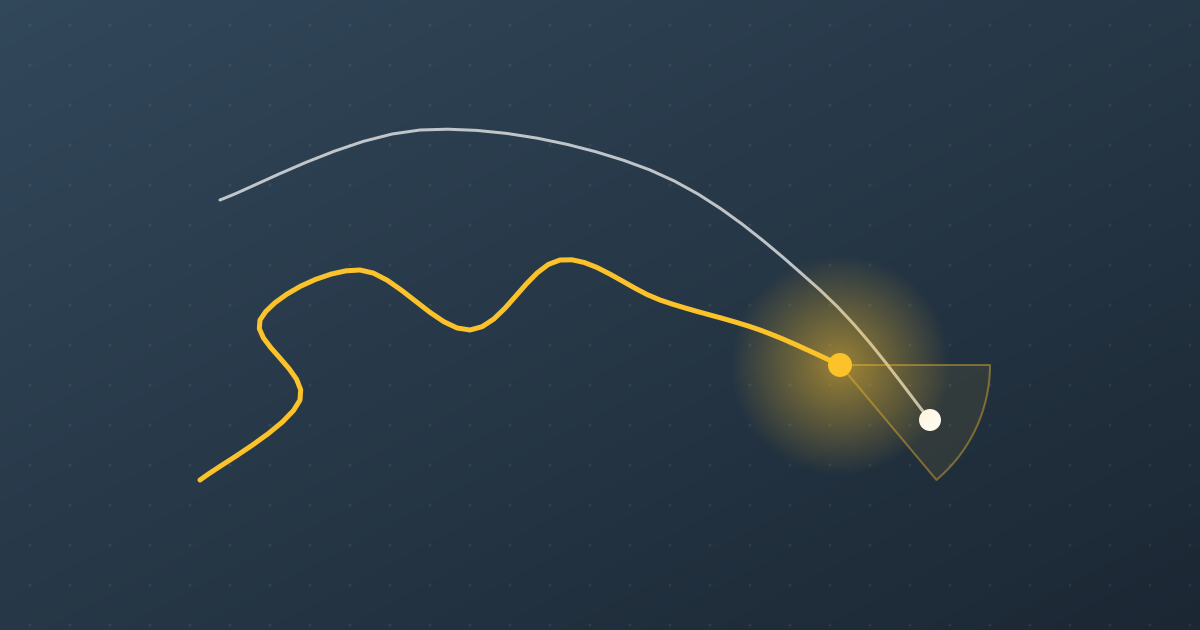
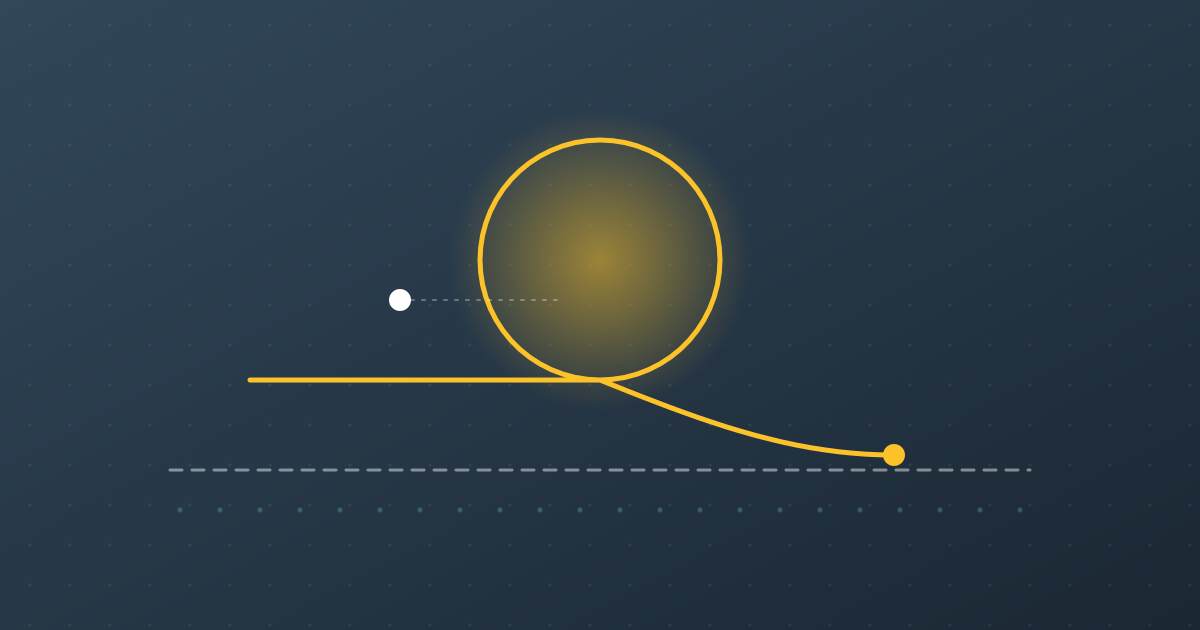
Two circles of four arc segments lie side by side, and in each a dot runs around the circle: on the left a fast golden one, on the right a slow mist-blue one. Each time the golden dot reaches its Act field, a grid of dots in the middle shifts, and the slow dot aims at a spot that no longer exists. Then the image zooms into the Orient field: several rings lie there like lenses, and one distorted lens sends even the fast dot into empty space.
Principle #25
OODA Loop: If you perceive faster, read the situation more accurately, decide and act, you shape events while the other side is still reacting to the last situation.
3 min read5 sectionsSituationLink to the principle
Contents
The American fighter pilot and military theorist John Richard Boyd described conflict as a race between cycles: observe, orient, decide, act. If you move through this OODA Loop faster and more accurately, you shape events. Boyd was thinking of air combat and military campaigns. In many respects, markets work in a similar way. The fashion retailer Shein is a particularly clear example, with its strengths and with its dark sides.
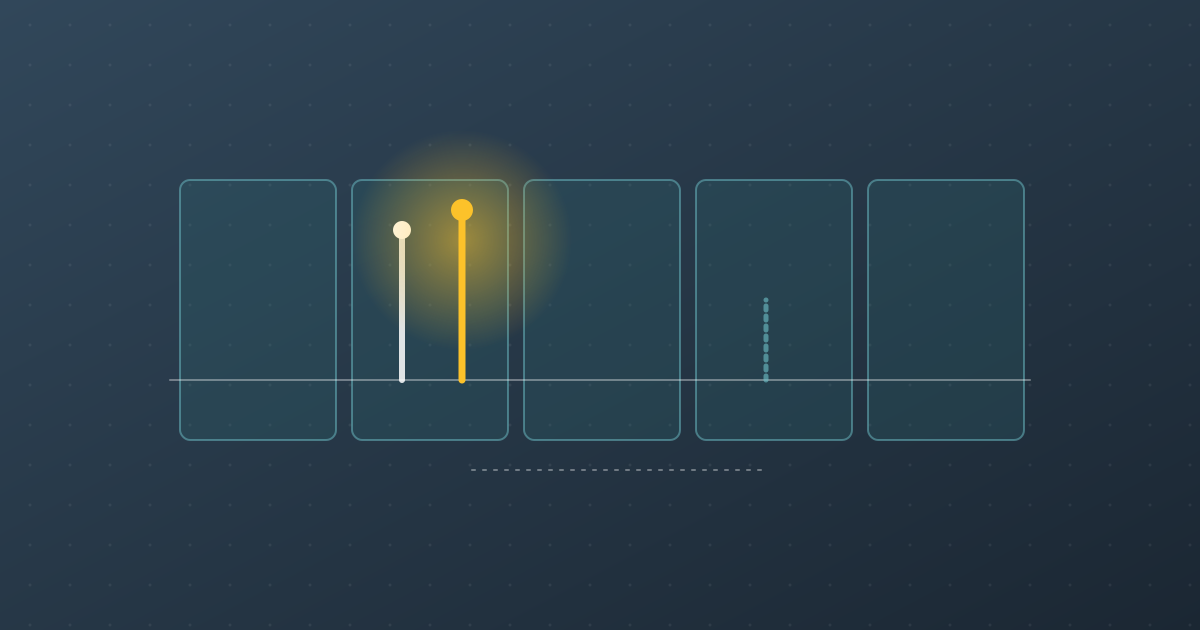
Column after column, small squares appear and fade again; only one turns gold and is added in series – as at Shein.
01
From reseller to a cycle of its own
Situation
The search engine marketer Xu Yangtian, known internationally as Chris or Sky Xu, founds the company in October 2008 in Nanjing, China, under the name ZZKKO. At first it resells goods from wholesalers without designing or producing anything itself. Starting in 2012, the company builds its own supply chain. By 2015 it is called Shein.
Link to the principle
If you want to speed up your cycle, you have to control the steps that set the pace. A pure reseller can observe but cannot act quickly, because others produce for it. Only its own supply chain makes the whole loop manageable.
02
Observing: a constant stream of signals
Situation
Shein relies heavily on algorithms and large amounts of data. Data on sales, inventory and demand are analyzed continuously. The app rewards customers with points for small tasks and so generates additional feedback. Xu, the co-founder and CEO, himself describes the change as a shift from a supply-driven to a demand-driven model.
Link to the principle
For Boyd, every loop begins with observation, and the quality of the observation limits everything that follows. Shein does not observe once a season but constantly. Orientation, the interpretation of these signals, is largely left to data models.
03
Deciding small
Situation
Every new design starts with a small first run of about 100 pieces; some sources say 100 to 200. According to these figures, competitors such as Zara tend to order around 500.
Link to the principle
Small runs make decisions cheap. A miss costs little, so no one has to deliberate for long. Boyd stressed that constant feedback allows you to commit late. Shein commits only once the market has answered.
04
Acting and observing again at once
Situation
Only what sells well is reordered. An investigation by the magazine Rest of World found that between July and December 2021, Shein added between 2,000 and 10,000 new styles to its app every day.
Link to the principle
Every action generates new observations; the loop closes within days. Retailers that plan their collections months in advance are reacting to a situation Shein has long since left behind. That is exactly what Boyd means when he speaks of getting inside the other side’s decision cycle.
05
The downside of speed
Situation
Shein has been criticized for years. An investigation by the magazine Wired describes 75-hour workweeks in supplier factories. Environmental experts criticize the high share of polyester and the amount of clothing that quickly ends up in the trash. Designers and companies accuse Shein of copying designs; many cases have been settled out of court. In 2022 the company moves its headquarters to Singapore.
Link to the principle
The OODA Loop describes how quickly and accurately you act, not whether your action is good. A fast cycle also amplifies its side effects. That is why orientation includes not only data but also values and consequences.
Key takeaways
Key lessons
01
Make decisions small; then you can make them faster.
02
Ensure a constant stream of genuine feedback.
03
Control the steps that set your pace.
04
Let results decide what you expand, not your hunches.
05
Ask what your speed does to others.
Summary
Shein has turned a reseller into one of the fastest fashion retailers in the world. The company observes continuously, decides in small runs, expands what sells and starts over at once. In doing so, it shows Boyd’s OODA Loop in its purest form: if you move through the cycle faster, you leave the competition reacting to outdated situations. At the same time, the criticism of working conditions, environmental impact and copying shows that speed alone is no measure.