On October 6, 1973, Egypt and Syria attack Israel on the holiest day of the Jewish year. The warning signs were there, but Israel’s leadership read them through a fixed picture of the opponent, and it was precisely this picture that made the surprise possible.
A large mist-blue circle is surrounded by arcs like shields, all pointing in one direction, and a small golden dot approaches the open side along a different line. Then a clock arc runs down, the arcs turn to follow, and the gold loses its shine.
Principle #32
Surprise: If you act at a time, in a place or in a way the other side does not expect, you gain, for a short time, a superiority you could not have achieved by strength alone.
5 min read5 sectionsSituationLink to the principle
Contents
Carl von Clausewitz saw surprise as a means that underlies, to a greater or lesser degree, all undertakings, because without it superiority at the decisive point is hardly conceivable. In strategy, however, he considered it harder to achieve than in battle, because large undertakings rarely stay hidden. The Yom Kippur War shows both. Egypt and Syria could not hide their preparations. They only had to make sure that Israel misread them.
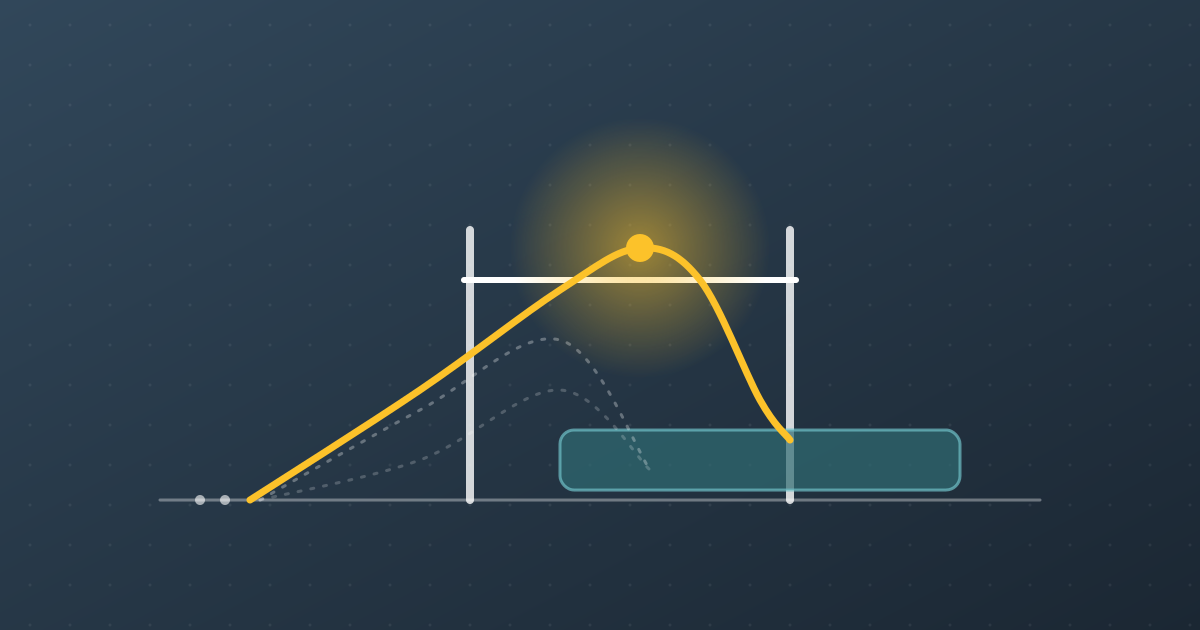
Warning signs grow from left to right, and a solid white bar cuts them off until gold breaks through – as in the Yom Kippur War of 1973.
01
An attack on the quietest day of the year
Situation
On October 6, 1973, at around 2 p.m. local time, Egypt launches Operation Badr. At the same time, Syria attacks on the Golan Heights. It is Yom Kippur, the Day of Atonement. In Israel public life comes to a standstill, no cars are on the roads, and many soldiers are off duty. On the Suez Canal, only around 450 to 600 Israeli soldiers hold the strongpoints of the Bar Lev Line. Facing them are five Egyptian divisions with around 100,000 men. The Egyptian artillery opens fire with 1,650 to 2,000 guns, depending on the source.
Link to the principle
It was clear to everyone that if war came, there would be fighting on the canal and on the Golan. The surprise lay in the timing and the scale. Israel’s defense depended on being warned in time to call up the reservists. That was exactly the time it did not have.
02
The Concept that explained everything
Situation
Israel’s military intelligence worked with a fixed assumption that later came to be called “the Concept”: Egypt would not attack until its air force could match Israel’s, and Syria would attack only together with Egypt. As early as late August 1973, Anwar Sadat and Hafez al-Assad had agreed at a meeting in Damascus to strike in October. On September 25, King Hussein of Jordan flew secretly to Israel and warned Golda Meir of a Syrian attack. In May, a warning had led to a costly mobilization without any attack following, and throughout the summer the Egyptian army held exercises near the border.
Link to the principle
Surprise arises in the opponent’s mind. The signals were there, but they did not fit the picture. Every exercise without an attack made the next troop movement look more harmless. If you want to surprise, you don’t have to hide everything. It is enough for the other side to mistake its expectation for knowledge.
03
An unexpected means at the canal
Situation
On the east bank of the canal, Israel had built the Bar Lev Line, a chain of strongpoints behind sand ramparts up to 25 meters high, built starting in 1968 at a cost of several hundred million dollars. Egyptian engineers used water pumps to wash breaches in the ramparts, around 80 on the first day alone. The troops that crossed initially stayed under the umbrella of their own anti-aircraft missiles. By October 8, around 90,000 men and almost 1,000 tanks were on the east bank.
Link to the principle
Here the surprise lies in the how. The obstacle had been built against expected means. A simple, unexpected means made it worthless within hours. And the assumption that Egypt first needed a strong air force came to nothing, because Egypt solved the problem differently: with missile defense on the ground instead of aircraft in the air.
04
What the surprise could not achieve
Situation
Ironically, the holiday helped Israel mobilize. The roads were empty, and the reservists were easy to find at home or in the synagogue. After difficult first days, Israel absorbed the attack and went over to the counterattack. On the night of October 15–16, Israeli troops crossed the Suez Canal themselves. On October 22, the UN Security Council called for a ceasefire in Resolution 338. In the days that followed, Israeli troops encircled the Egyptian Third Army on the east bank. Israel lost around 2,500 to 2,800 soldiers, depending on the source; the Arab states, according to estimates, 8,000 to 18,500.
Link to the principle
Surprise gives you a temporary lead, not a victory. As soon as the opponent has recovered, strength, supplies and command count again. Politically, however, Sadat had achieved negotiations over the Sinai. They were followed by the Camp David Accords in 1978, the peace treaty of March 26, 1979, and the withdrawal from the Sinai by 1982. Surprise was the means, not the purpose.
05
The reckoning afterward
Situation
On November 21, 1973, Israel set up a commission of inquiry under Shimon Agranat, the president of the Supreme Court. Its interim report of April 1, 1974, criticized “the Concept” because it had led to clues being ignored. It recommended removing the head of military intelligence, Eli Zeira, and other officers. Chief of Staff David Elazar also had to go. Nine days after the report, Golda Meir announced the resignation of her government.
Link to the principle
The remedy for surprise is seldom more information. Israel had enough clues. What was missing was doubt about its own interpretation. If you want to protect yourself against surprise, you have to test your surest assumption most rigorously.
Key takeaways
Key lessons
01
Surprise arises in the other side’s mind, not in your plan.
02
Test your surest assumption about the opponent first.
03
Many false alarms make you blind to the real one.
04
A simple, unexpected means can make a costly obstacle worthless.
05
Plan what comes after the first blow, because surprise carries you only a short way.
Summary
In October 1973, Egypt and Syria surprised Israel not because they hid their preparations perfectly but because Israel’s leadership read the signs through a fixed picture of the opponent. The timing, scale and means came unexpectedly. The surprise gave Egypt the crossing of the canal, but no military victory. It opened the way to negotiations, and it forced Israel to rethink how it handles warning and certainty.