The principle in detail
Three steps through the principle: grasp it, place it, put it to work. Open each topic on its own.
The core messageCore statement and 3 clarifications
Surprise creates an advantage because every preparation rests on expectations. It works in the other side’s mind, not through greater strength.
- It also says
- The advantage is short-lived. It pays off only if you use it at once.
- It does not say
- That secrecy alone makes a surprise. What matters is how the other side interprets what it sees.
- It does not say
- That surprise is a good tool in relationships. Where people depend on reliability, it costs trust.
The explanationSurprise belongs in competition and in conflict.
Surprise belongs in competition and in conflict. Your team, your partners and your family need reliability; if you keep surprising them, you lose their trust.
What is the other side not expecting, and which signal are you yourself overlooking right now?
The signs3 signs when you heed it · 3 when you overlook it
- You plan what comes after the first moment and then act quickly.
- You ask what your competitor expects.
- You take warning signs seriously even when they do not fit your picture.
- You keep plans secret and are surprised that they still surprise nobody.
- A surprise success fizzles out because no next step is ready.
- You dismiss signs of change as false alarms.
The backgroundFrom Carl von Clausewitz’s work “On War” (1832), Book III, Chapter 9. · T1 Classical Theory of War
- 5th c. BCSupplementedSun Tzu
The Art of War
- 1832OriginCarl von Clausewitz
On War
- 1962SupplementedRoberta Wohlstetter
Pearl Harbor: Warning and Decision
- 1982SupplementedRichard K. Betts
Surprise Attack
- Tradition T1TraditionClassical Theory of War
Carl von Clausewitz, Antoine-Henri Jomini, Helmuth von Moltke the Elder, Frederick William Lanchester
See the tradition on the Origin page
Read more: the full background
From Carl von Clausewitz’s work “On War” (1832), Book III, Chapter 9. Supplemented by Sun Tzu’s “The Art of War” and the case studies by Roberta Wohlstetter (1962) and Richard K. Betts (1982).
The research4 sources: 2 classics, 2 case studies · 1832–1982 · with limitations of the research
- weak
- moderate
- strong
Carl von Clausewitz provides a classical theory without measurement; the case studies by Roberta Wohlstetter and Richard K. Betts mainly support the side of those surprised.
- 1962Roberta Wohlstetter
“Pearl Harbor: Warning and Decision”: the warnings were there but were drowned out by the noise of many other signals.
- 1982Richard K. Betts
“Surprise Attack”: surprises mostly rest on misread clues and hesitant decisions, not on missing information.
- Carl von Clausewitz himself considered surprise rare in strategy, because large undertakings can hardly be concealed.
- Its advantage is limited in time: against an opponent who is stronger in the long run, it can win a battle and lose the war.
- In relationships built on trust, it is usually the wrong tool.
- The transfer to companies and leadership is an inference, not a finding of the sources themselves.
Read more: what research shows
The classic account comes from Carl von Clausewitz. In the third book of “On War” (1832), he calls surprise the means to superiority at the decisive point; in J. J. Graham’s translation, “Secrecy and rapidity are the two factors of this product.” If it succeeds, confusion and broken courage follow on the enemy’s side. At the same time, he considers it far more common in tactics than in strategy. Sun Tzu had already advised attacking the opponent where it is unprepared. Research on surprise attacks has mainly studied the side of those who were surprised. In 1962, Roberta Wohlstetter showed in the case of Pearl Harbor that the warnings were there but were drowned out by the noise of many other signals. In 1982, Richard K. Betts reached a similar conclusion: surprises rarely succeed because information is missing; mostly they succeed because clues are misread and decisions are delayed.
The related principles19 Fog of Uncertainty · 26 Deception · 41 Speed · 43 Initiative
Surprise is prepared by 26 Deception, which steers the other side’s expectations
Next to secrecy, its most important precondition is 41 Speed
43 Initiative shows that only those who use the advantage at once get to keep it
19 Fog of Uncertainty explains the side of those surprised: they see only what they expect to see
Read more: the full text
Surprise is prepared by 26 Deception, which steers the other side’s expectations; next to secrecy, its most important precondition is 41 Speed. 43 Initiative shows that only those who use the advantage at once get to keep it. 19 Fog of Uncertainty explains the side of those surprised: they see only what they expect to see.
The action steps5 things you can actually do
- Before a competitive move, ask: what does the other side expect in terms of time, place and method?
- Plan the second step before the first. Decide what you will do in the days after the surprise.
Collect the clues that contradict your picture of the competitor, and review them once a month with someone who thinks differently.
Make sure that scattered knowledge in your area comes together in one place.
- Don’t surprise your own team with decisions it should have known about beforehand. Within the team, reliability counts for more than an element of surprise.
The reflection questions3 questions: What does your most important competitor expect from you, and what does it not expect?
- What does your most important competitor expect from you, and what does it not expect?
- Which clue from the past few months does not fit your picture, and what if it is true?
- Who was the last person you surprised who actually needed reliability?
Take your time with one question. Write down your answer – or talk it over with someone you trust.
The picture to rememberThe animation once more, with an explanation
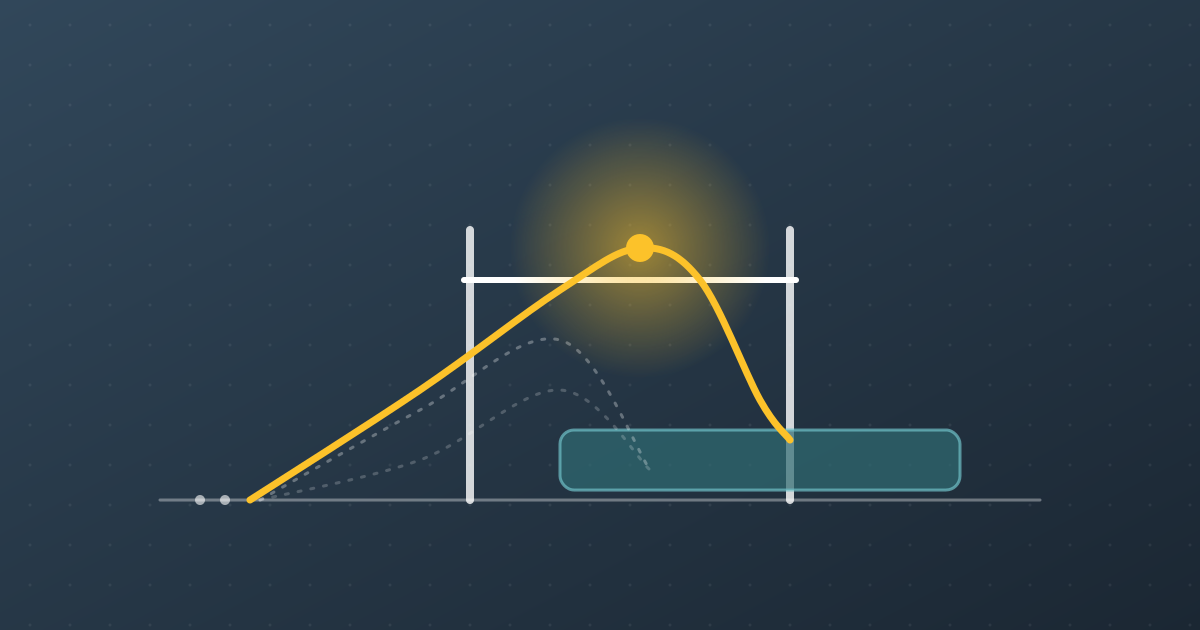
- A large mist-blue circle is surrounded by arcs like shields, all pointing in one direction, and a small golden dot approaches the open side along a different line
- Then a clock arc runs down, the arcs turn to follow, and the gold loses its shine
How the principle shows up in practice
The Yom Kippur War
In 1973, Egypt and Syria attack Israel on the holiest day of the year. The warning signs were there, but a fixed picture of the opponent made them seem harmless.
Benedict XVI
In 2013, at a routine gathering, the pope announces his resignation in Latin and so determines the time and form of the transition himself.
Dick Fosbury
In 1968 he jumps backward to Olympic gold. The technique was known, but nobody had taken it seriously.
What is the other side not expecting?
Get your profile across all 12 groups in about 10 to 15 minutes.
Start the Strategy CheckGroup 4: Deception and Indirection
Guiding question: How do you reach your goal without charging head-on?
Stage 3 of 5: Choose the path
- TraditionClassical Theory of War
Carl von Clausewitz, Antoine-Henri Jomini, Helmuth von Moltke the Elder, Frederick William Lanchester
- Related principles
Where the 92 principles come from: eight traditions of strategy, from classical war theory to dealing with uncertainty.
More about the originBackground: WEGVISOR’s own selection from the strategy literature · More about the origin