Alfred Hitchcock’s Psycho and the Direct and the Indirect
In 1960, Alfred Hitchcock promotes “Psycho” with its star, Janet Leigh, and at first tells the story of her character. Then he has her die in the first half of the film. The audience, completely focused on the heroine, is taken entirely by surprise by the real blow.
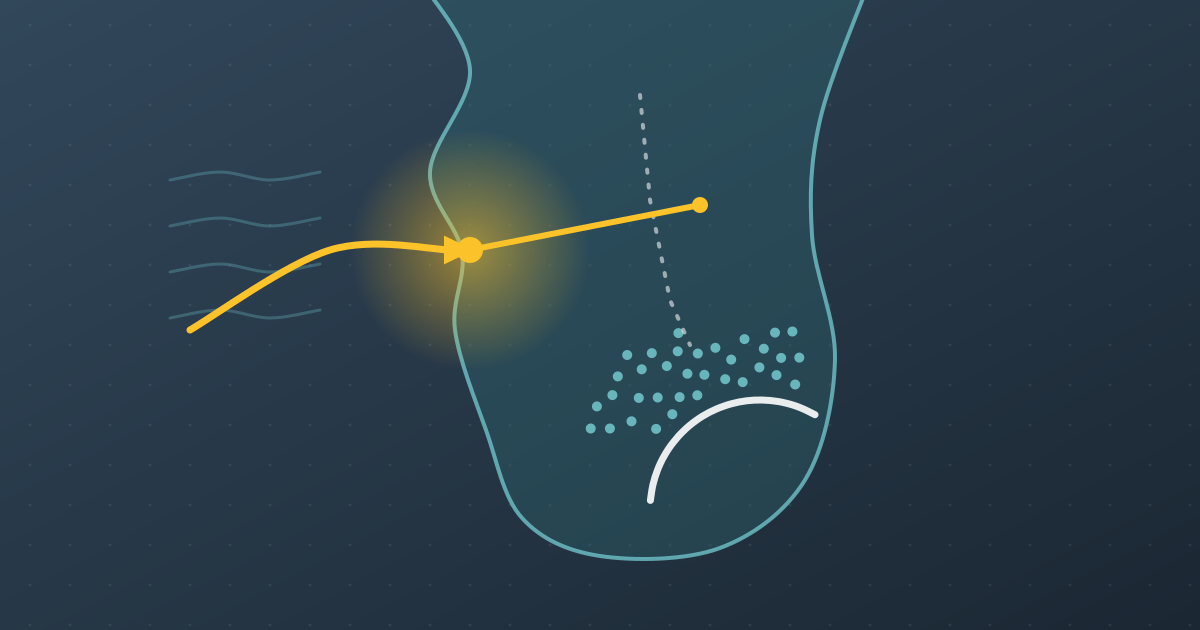
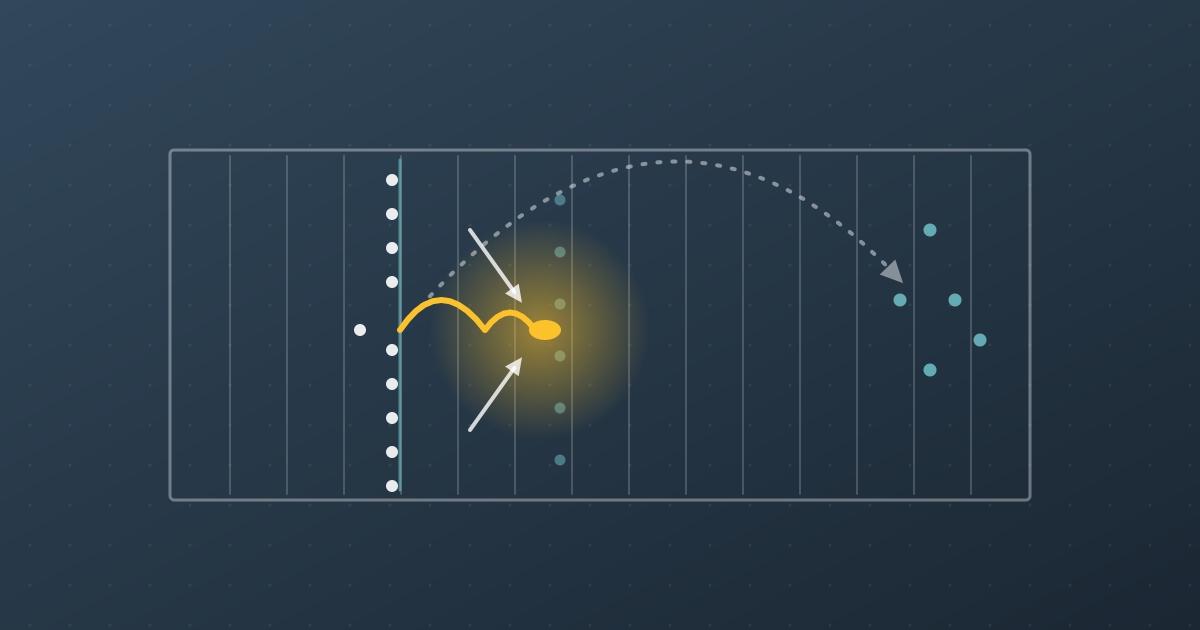
A line of teal dots runs across the image; a large mist-blue circle pushes against it head-on, and the dots crowd together at that point. A small golden dot swings in an arc around the thin end and strikes the line from behind; then the circle and the dot switch roles and circle each other.
Principle #28
The Direct and the Indirect: The expected, direct force pins the opponent down; the unexpected, indirect force decides – and neither works without the other.
4 min read5 sectionsSituationLink to the principle
Contents
Sun Tzu writes that you pin the opponent down with the direct force and win with the indirect. In the cinema, the “opponent” is the audience’s expectation. With “Psycho,” Hitchcock showed how to confirm that expectation by every means at first and then break it at a point where no one expects it – the Direct and the Indirect on screen. He also showed how much effort it takes to keep the unexpected secret.
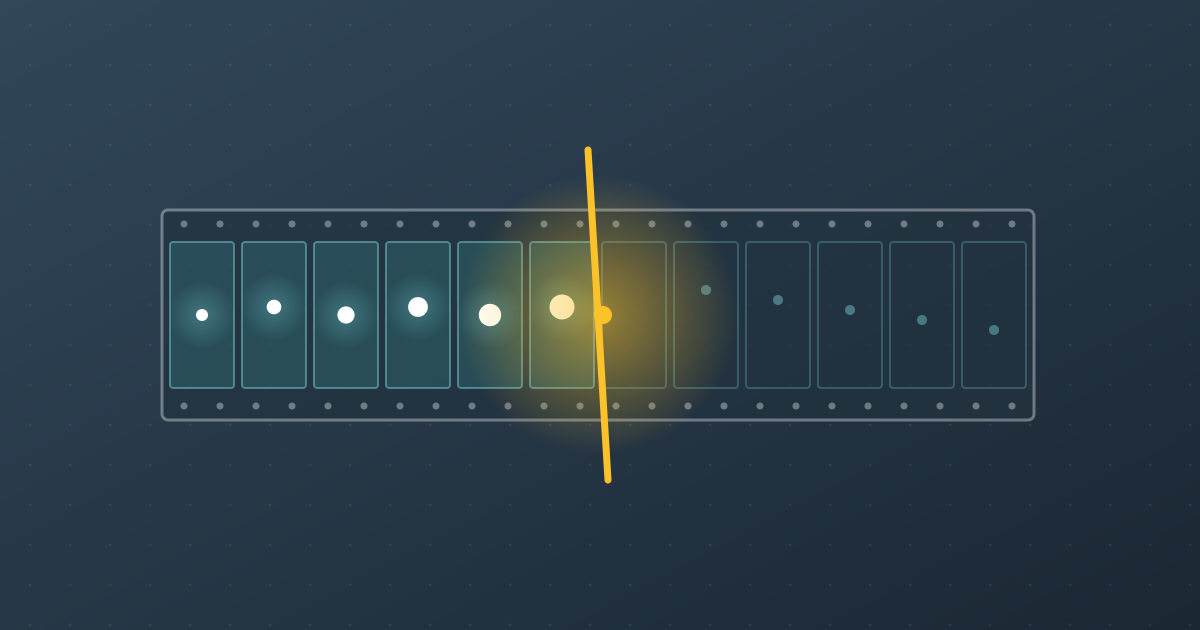
A filmstrip belongs to a bright dot that grows from frame to frame – in the middle of the film a golden cut ends it, as in “Psycho.”
01
A film against the studio’s misgivings
Situation
Hitchcock acquires the rights to Robert Bloch’s novel for $9,500. According to a widely told account, he has his assistant Peggy Robertson buy up as many copies of the book as possible to protect its twists. The studio, Paramount, is skeptical and does not provide an adequate budget. Hitchcock finances the film through his company, Shamley Productions, for about $807,000 and shoots it in black and white.
Link to the principle
The indirect force has to be prepared and protected long before it takes effect. If you are planning a surprise, you first have to make sure it does not become known beforehand.
02
The star as the direct force
Situation
For the role of Marion Crane, Hitchcock casts Janet Leigh, a major box-office draw. She plays the part for a quarter of her usual fee. The film begins as her story: a woman embezzles money, flees and checks into a remote motel. The audience follows her, fears for her and expects her to carry the film to the end.
Link to the principle
That is the direct force. The well-known star and the familiar way of telling the story hold the audience’s attention. Like an army that holds the opponent at the front, the main character makes sure that no one looks toward the side from which the real blow will come.
03
The blow in the middle
Situation
Marion dies at the end of the first act, in the shower scene. Hitchcock shoots the roughly three-minute scene from December 17 to 23, 1959. After that, the film shifts to Norman Bates, played by Anthony Perkins, and to the question of what happened at the motel.
Link to the principle
That is qi. The blow does not come from outside; it strikes the main character herself, the very thing the audience had relied on. It is so powerful because the direct force was so convincing. Without a star in the lead role, the character’s death would have been just one scene among many.
04
No admission after the film starts
Situation
“Psycho” is the first film in the United States for which no one is admitted after the screening has begun. The advertising asks the audience not to give away the ending. Janet Leigh and Anthony Perkins do not give the usual interviews, and critics do not see the film in advance. In the trailer, Hitchcock himself leisurely leads viewers around the set and breaks off before he gives anything away. In the trailer’s shower scene, it is not Leigh but Vera Miles in a blond wig.
Link to the principle
The advertising campaign is itself an interplay of the direct and the indirect. The rules, the line outside the theater and Hitchcock’s appearance are visible and loud. What is decisive stays hidden. If people are talking about the rule, they are not talking about the plot. Attention is held, and the secret stays protected.
05
When the unexpected becomes standard
Situation
The film premieres in New York on June 16, 1960. The first reviews are mixed, but audiences flock to theaters. Janet Leigh is nominated for the Oscar for Best Supporting Actress and wins a Golden Globe; Hitchcock receives an Oscar nomination for Best Director. Today, many viewers know the twist before they see the film.
Link to the principle
A qi works at full strength only once. Once it is known, it becomes an expectation itself, a zheng. Sun Tzu describes this cycle: the direct and the indirect pass into each other. If you want to surprise again and again, you have to keep finding new forms.
Key takeaways
Key lessons
01
Confirm the expectation thoroughly before you break it.
02
Place the unexpected where the other side feels most secure.
03
Protect your surprise as long as it has not yet taken effect.
04
Direct attention to something visible so that what is decisive stays hidden.
05
A surprise wears out; plan the next one from scratch.
Summary
With “Psycho,” Alfred Hitchcock demonstrated the interplay of zheng and qi in the cinema. Janet Leigh as the star and a familiar story held the audience’s expectation. Her early death broke that expectation exactly where it was firmest. A campaign of admission rules, a pledge of silence and a playful trailer protected the secret. The film shows that the indirect force is only as strong as the direct force that precedes it.