The New Orleans Saints, the “Ambush” and the Direct and the Indirect
In Super Bowl XLIV on February 7, 2010, the New Orleans Saints trail the Indianapolis Colts at halftime. They open the second half with a surprise onside kick, recover the ball, take the lead and win 31–17 in the end.
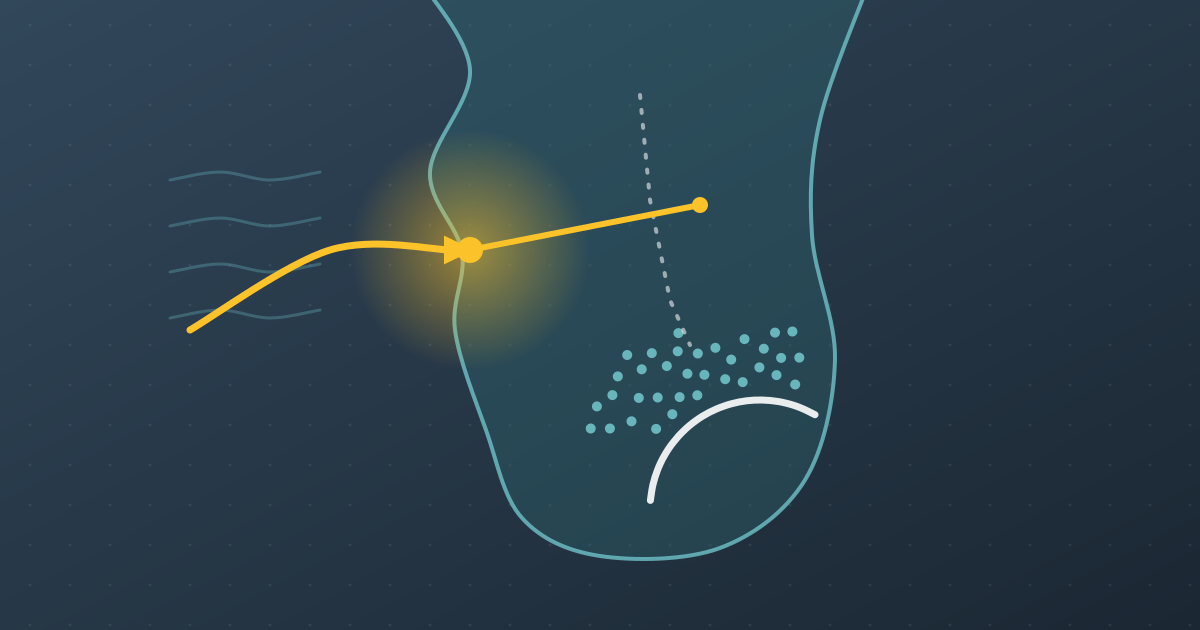
A line of teal dots runs across the image; a large mist-blue circle pushes against it head-on, and the dots crowd together at that point. A small golden dot swings in an arc around the thin end and strikes the line from behind; then the circle and the dot switch roles and circle each other.
Principle #28
The Direct and the Indirect: The expected, direct force pins the opponent down; the unexpected, indirect force decides – and neither works without the other.
4 min read5 sectionsSituationLink to the principle
Contents
Sports has a fixed framework of standard situations: plays everyone knows and moments in which everyone knows what will happen. That very framework is ideal for Sun Tzu’s principle of the Direct and the Indirect. The expected way of playing is the direct force, zheng. If you show it long enough, you can do something completely different at the right moment: qi. The 2010 Super Bowl contains one of the most famous examples in sports history.
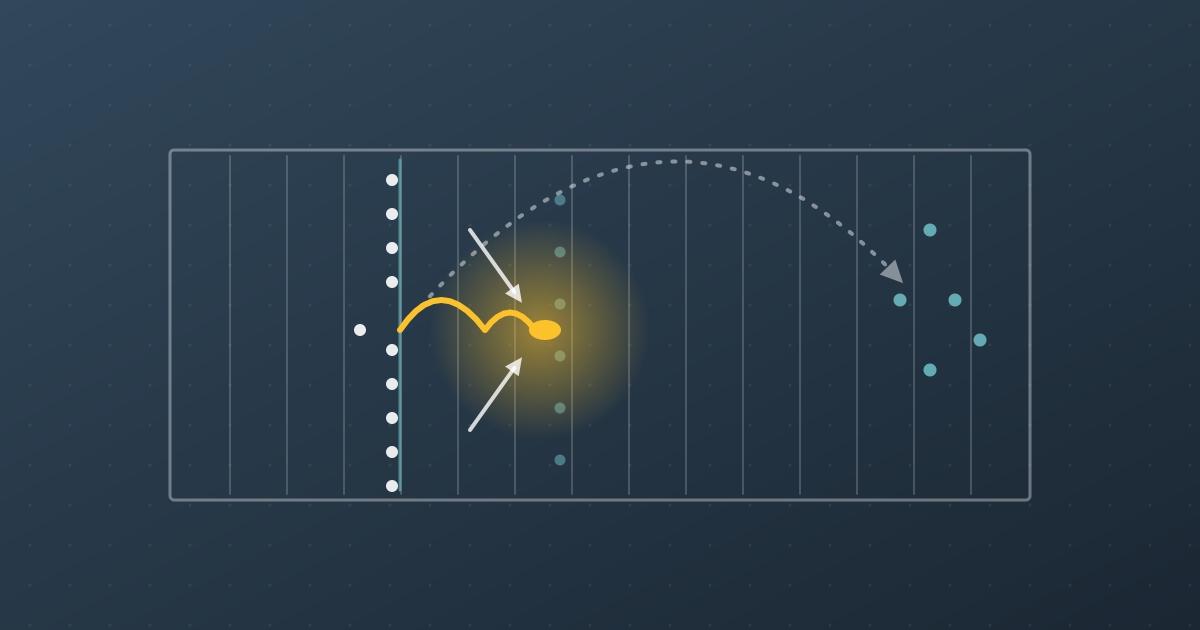
Everyone is waiting for the long arc to the back, but the golden ball just bounces a short way across the field – as in the Saints’ “Ambush” at the Super Bowl.
01
An opponent with one great strength
Situation
The NFL’s championship game takes place at Sun Life Stadium in Miami Gardens. The Saints are playing in the Super Bowl for the first time in their history. In quarterback Peyton Manning, the Colts have one of the best offensive players in the league. At halftime they lead 10–6.
Link to the principle
Against an opponent with an outstanding offense, every possession is valuable. Every drive Manning does not get to run is a gain. The question was how the Saints could gain an extra possession without winning the ball through normal play.
02
What everyone expects
Situation
After halftime, the second half begins with a kickoff by the Saints. The usual choice is a long kick, which the opponent catches and tries to return. There is also the onside kick: a short kickoff that the kicking team may recover itself after 10 yards. It is considered risky and is used almost only at the end of a game by a team that is behind and has no other choice.
Link to the principle
The long kickoff is the direct force. It determines how the opponent lines up: their players drop back to receive the long ball. Precisely because everyone expects the standard, space opens up in front for the unexpected.
03
The “Ambush”
Situation
Kicker Thomas Morstead fakes the usual kickoff and plays the ball short. It bounces off the face mask of Colts player Hank Baskett. After a scramble for the ball, the Saints are awarded possession. Officially, Jonathan Casillas is credited with the recovery; several teammates, including Chris Reis, claim to have secured the ball. The Saints call the play “Ambush.” It is the first onside kick before the fourth quarter in Super Bowl history.
Link to the principle
Here the unexpected lies not in the place but in the timing. An onside kick is well known. What is new is daring to try it at the start of the second half, when no one expects it. Qi does not have to be invented from scratch. Often it is enough to use a familiar means at the wrong time.
04
Exploiting the advantage
Situation
The Saints immediately turn the possession they have won into points. A 58-yard drive in six plays ends with a 16-yard touchdown pass from Drew Brees to Pierre Thomas. The Saints lead 13–10.
Link to the principle
The surprise opens the door, but you have to walk through it yourself. The touchdown comes not from the trick but from clean, direct play afterward. That is how qi and zheng interlock: the unexpected creates the opportunity, and craft exploits it.
05
The rest is craft
Situation
The game stays close. In the fourth quarter, cornerback Tracy Porter intercepts a pass from Manning and returns it 74 yards for a touchdown. That makes it 31–17, with a little over three minutes to go. Drew Brees, with 32 of 39 passes completed for 288 yards and two touchdowns, is named Most Valuable Player. On average, 106.5 million people in the United States watch the broadcast.
Link to the principle
The “Ambush” alone did not win the game. It unsettled the opponent and turned the course of the game. The Saints won with a mix of both: a surprise at the right moment and direct play that held up over 60 minutes. It also took courage. Had the Colts recovered the ball, they would have attacked from good field position.
Key takeaways
Key lessons
01
Show the standard long enough for the deviation to have an effect.
02
The unexpected can be a familiar means used at an unexpected time.
03
A surprise opens the door; you walk through it with solid craft.
04
Work out the price of failure in advance, and then decide boldly.
05
Win not only points but time in which the other side cannot use its strength.
Summary
In Super Bowl XLIV, the New Orleans Saints surprised the Indianapolis Colts with an onside kick at the start of the second half. The usual long kickoff was the direct force that drew the opponent back. The short ball at an unexpected time was the indirect force that won possession. The Saints immediately used it to take the lead and won 31–17 in the end. The case shows that qi is worth only as much as the zheng that precedes and follows it.
Sources
Wikipedia: Super Bowl XLIV
Sun Tzu: The Art of War, Chapter 5. China, c. 5th century BC.
Back to the basics
Read what lies behind the Direct and the Indirect: with explanation, animation, video and research.