Antonín Panenka, the Belgrade Penalty and the Principle of Rhythm and Timing
In the final of the 1976 European Championship, Antonín Panenka runs up to take the last penalty, waits until Sepp Maier dives and gently chips the ball into the middle of the goal. He wins because he knows the goalkeeper’s rhythm and breaks it.
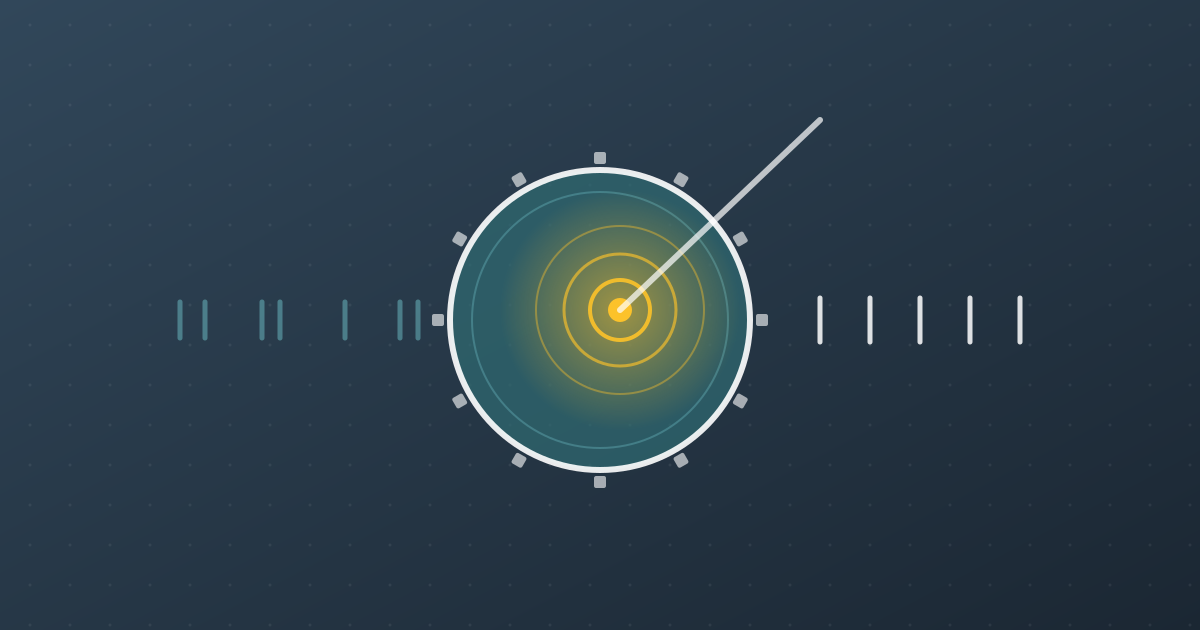
A teal circle pulses steadily, and with each beat an arc rises; a golden dot watches and settles exactly into the gap between two beats. Then the golden dot itself pulses in a calm rhythm, and many small mist-blue dots fall into line and swing along with it.
Principle #42
Rhythm and Timing: If you read the tempo of a situation, you act at the right moment, give others a reliable rhythm or throw your opponent off their stride.
4 min read5 sectionsSituationLink to the principle
Contents
In 1645, the Japanese sword master Miyamoto Musashi wrote that everything has a rhythm and that a fighter must recognize the rhythm of his opponent in order to strike at the moment the other does not expect. A penalty is a duel lasting a few seconds. Hardly any moment in sport shows Musashi’s idea, and with it the Principle of Rhythm and Timing, as clearly as the kick with which Antonín Panenka made Czechoslovakia European champion in 1976.
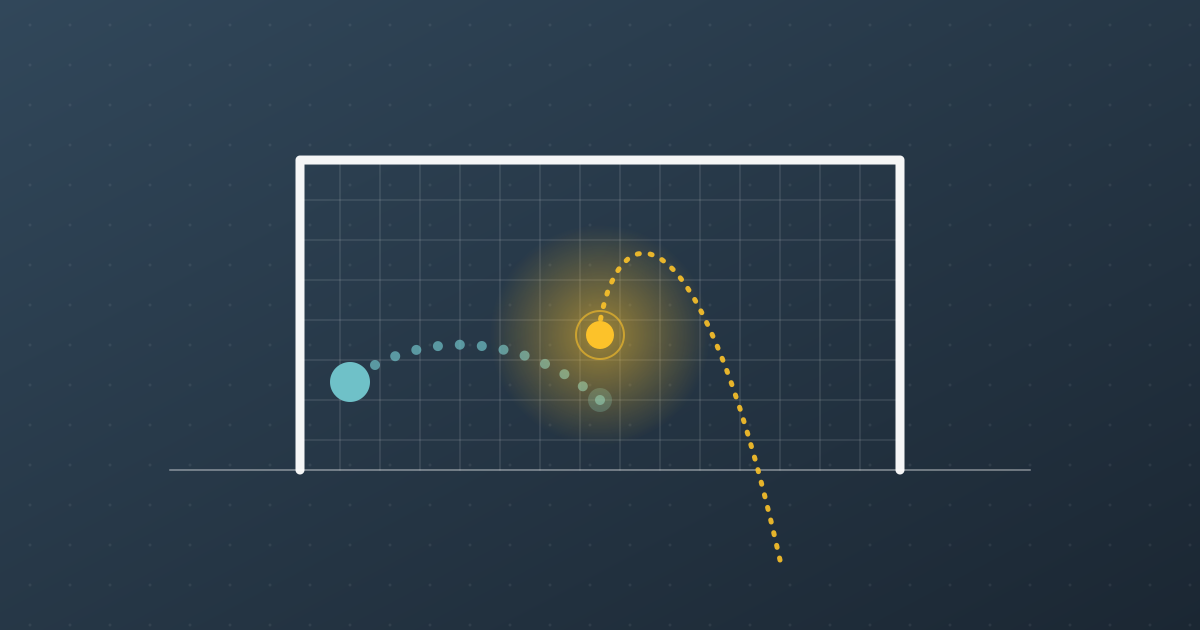
The goalkeeper flies into the corner as a trail of dots, while the ball floats in a slow golden arc into the middle of the goal – like Panenka’s penalty.
01
A final without a decision
Situation
On June 20, 1976, Czechoslovakia meets West Germany, the 1974 world champion, in the final of the European Championship in Belgrade. In front of 30,790 spectators, Czechoslovakia takes a quick 2–0 lead through goals by Ján Švehlík and Karol Dobiaš. Dieter Müller scores to make it 2–1, and Bernd Hölzenbein heads in the equalizer in the last minute of regular time. Extra time remains scoreless.
Link to the principle
A game has a rhythm. If you equalize in the last minute, you have the momentum on your side. The Germans go into the penalty shootout feeling better about their chances. The question is who sets the rhythm at the decisive moment.
02
The first penalty shootout
Situation
The teams have agreed beforehand to settle a tie not with a replay but with penalties. It is the first penalty shootout in the history of the tournament. At first, both sides score with confidence. With Czechoslovakia leading 4–3, Uli Hoeneß shoots over the bar. Now Antonín Panenka steps up. If he scores, his team is European champion.
Link to the principle
At this moment, the pressure is at its greatest. Most penalty takers then choose the safe option: hard and into a corner. That is also the rhythm every goalkeeper prepares for.
03
The goalkeeper’s rhythm
Situation
Panenka, a midfielder for Bohemians Prague, says he came up with the idea about two years before the final. He tried out the kick in almost every training session, as well as in warm-up matches and in the Czechoslovak league. His reasoning: when facing a penalty, goalkeepers usually choose a corner, and hardly any of them expects a ball into the middle. If the ball arrives there slowly and in an arc, a goalkeeper who is already diving can no longer react.
Link to the principle
This is Musashi’s idea in its pure form: study your opponent’s rhythm until you know when he commits. If you know the other person’s rhythm, you do not have to be faster or stronger. You only have to do something different at the right moment.
04
The chip
Situation
Panenka takes a short, halting run-up. Sepp Maier dives into a corner. Panenka chips the ball softly with his right foot in an arc into the middle of the goal. Maier is already on the ground when the ball drops into the net. Czechoslovakia wins the shootout 5–3.
Link to the principle
Here timing means waiting a moment longer than your opponent. Panenka delays until Maier has committed. Only then does he decide. The slow ball is no accident but the result of the right moment. Panenka later said that before the kick he had wanted to make Maier believe he would take a perfectly normal shot.
05
A kick with a name
Situation
To this day, the penalty bears Panenka’s name. Since then, many players have imitated it, with varying success. Panenka later recounted that it was only the flood of requests from journalists that made him grasp what he had done.
Link to the principle
A broken rhythm only works as long as the opponent does not know it. If a goalkeeper knows that a penalty taker likes to chip the ball, he stays where he is, and the trick turns into an embarrassment. That is why timing is not a technique you can simply repeat. It is reading the person in front of you in that one moment.
Key takeaways
Key lessons
01
Watch for when the person in front of you commits.
02
Wait a moment longer than the other person when it matters.
03
Prepare for the decisive moment through long practice.
04
Break the expected rhythm instead of pushing harder.
05
Don’t blindly repeat a surprise move once it is known.
Summary
In the 1976 European Championship final, Antonín Panenka faced the decisive penalty. He knew from long practice that goalkeepers facing a penalty usually decide on a corner. So he waited until Sepp Maier dived and chipped the ball into the middle. That is the Principle of Rhythm and Timing: if you know your opponent’s rhythm, you win not by force but by the right moment.