The principle in detail
Three steps through the principle: grasp it, place it, put it to work. Open each topic on its own.
The core messageCore statement and 3 clarifications
People adjust to rhythms. If you pay attention to this, you can fulfill an expectation and so give people something to hold on to, or break it and so surprise them.
- It does not say
- That the right moment can be calculated. Usually you only recognize it in hindsight, and if you wait for the perfect moment, you can easily miss it.
- It does not say
- That a favorable moment alone makes for the right timing. In 2017, with a large lead in the polls, Theresa May called a snap election and lost her majority.
- It also says
- Disrupting other people’s rhythm just to unsettle them is a misuse of the principle.
The explanationIf you know the tempo, you can fit into it, set it yourself or deliberately interrupt it.
- If you know the tempo, you can fit into it, set it yourself or deliberately interrupt it.
- To do that, you do not have to be stronger or faster, only more attentive.
- A rhythm that is too rigid, however, becomes predictable, and if you use tempo to unsettle others, you damage trust.
What is called for in your situation right now, and who is setting the tempo?
The signs3 signs when you heed it · 3 when you overlook it
- Your team knows fixed times for exchanging information and making decisions.
- You hold difficult conversations when the other person is able to listen.
- At the halfway point of a project, you check whether the course is still right.
- Meetings are canceled or postponed at short notice.
- You raise things as soon as they occur to you, even in passing in the hallway.
- Or you wait for the right moment for so long that it has passed.
The backgroundFrom Miyamoto Musashi’s “The Book of Five Rings” (Japan, 1645). · T2 Eastern Strategy
- 1645OriginMiyamoto Musashi
The Book of Five Rings
- 1988SupplementedConnie J. G. Gersick
Time and Transition in Work Teams
- 1996SupplementedDeborah G. Ancona and Chee-Leong Chong
Entrainment: Pace, Cycle, and Rhythm in Organizational Behavior
- Tradition T2TraditionEastern Strategy
Sun Tzu, Kautilya, the Thirty-Six Stratagems, the Tao Te Ching, Miyamoto Musashi, François Jullien
See the tradition on the Origin page
Read more: the full background
From Miyamoto Musashi’s “The Book of Five Rings” (Japan, 1645). Supplemented by organizational research on temporal rhythms by Connie J. G. Gersick and by Deborah G. Ancona and Chee-Leong Chong.
The research3 sources: 1 classic, 1 primary study, 1 theory · 1645–1996 · with limitations of the research
- weak
- moderate
- strong
It is well documented that teams and organizations follow rhythms; that acting at the right moment or breaking a rhythm has an effect rests on experience and on a classic.
- 1988Connie J. G. Gersick
“Time and Transition in Work Teams”: eight project teams each changed their way of working halfway through the time until their deadline, regardless of how long the project lasted.
- 1996Deborah G. Ancona and Chee-Leong Chong
“Entrainment: Pace, Cycle, and Rhythm in Organizational Behavior”: organizations attune their pace to external rhythms.
- The right moment can rarely be calculated; usually it can only be recognized in hindsight.
- If you wait for the perfect moment, you can miss it, and a rhythm that is too well known will be exploited by your opponent.
- Connie J. G. Gersick’s study is based on eight teams that were not randomly selected.
- That disrupting an opponent’s rhythm works is claimed only by Miyamoto Musashi and has not been measured.
- Timing is therefore less a technique than an attitude of attentiveness.
Read more: what research shows
The classic source is “The Book of Five Rings,” written in 1645 by the Japanese sword master Miyamoto Musashi. He describes timing as a principle of combat: everything has a rhythm, dance and music as much as the life of a warrior, and a fighter must recognize the rhythm of his opponent. In 1988, Connie J. G. Gersick followed eight project teams from their first meeting to their deadline. Each team kept its initial way of working until about halfway through the available time and then changed it fundamentally, triggered by the approaching deadline rather than by the state of the work. In 1996, Deborah G. Ancona and Chee-Leong Chong described how organizations adapt their pace to external rhythms such as fiscal years, trade fairs and seasons.
The related principles25 OODA Loop · 32 Surprise · 41 Speed · 91 Potential of the Situation
To go deeper, see 41 Speed (fast is only good if it fits the tempo of the situation) and 91 Potential of the Situation (the right moment often arises from a situation you allow to ripen)
32 Surprise shows what happens when an expected rhythm breaks
25 OODA Loop applies the idea to the opponent’s decision cycle
Read more: the full text
To go deeper, see 41 Speed (fast is only good if it fits the tempo of the situation) and 91 Potential of the Situation (the right moment often arises from a situation you allow to ripen); 32 Surprise shows what happens when an expected rhythm breaks. 25 OODA Loop applies the idea to the opponent’s decision cycle.
The action steps5 things you can actually do
- Give your team a fixed rhythm: a regular short meeting that takes place even when there is little to discuss.
For two weeks, observe when decisions are made in your area and when people are open to new ideas, and note the pattern.
- Before an important conversation, ask yourself: why now? What would speak for waiting a week?
Make deliberate use of the halfway point of a project for a review and a possible course correction.
Check where your own rhythm has become so rigid that others exploit it or chafe against it, and change one thing.
The reflection questions3 questions: What fixed rhythm does your team have, and does it hold even in busy weeks?
- What fixed rhythm does your team have, and does it hold even in busy weeks?
- Which conversation do you want to have, and how will you recognize the right moment for it?
- Where has your rhythm become so predictable that others adjust to it without it doing you or them any good?
Take your time with one question. Write down your answer – or talk it over with someone you trust.
The picture to rememberThe animation once more, with an explanation
- A teal circle pulses steadily, and with each beat an arc rises
- A golden dot watches and settles exactly into the gap between two beats
- Then the golden dot itself pulses in a calm rhythm, and many small mist-blue dots fall into line and swing along with it
How the principle shows up in practice
Antonín Panenka, the Belgrade penalty
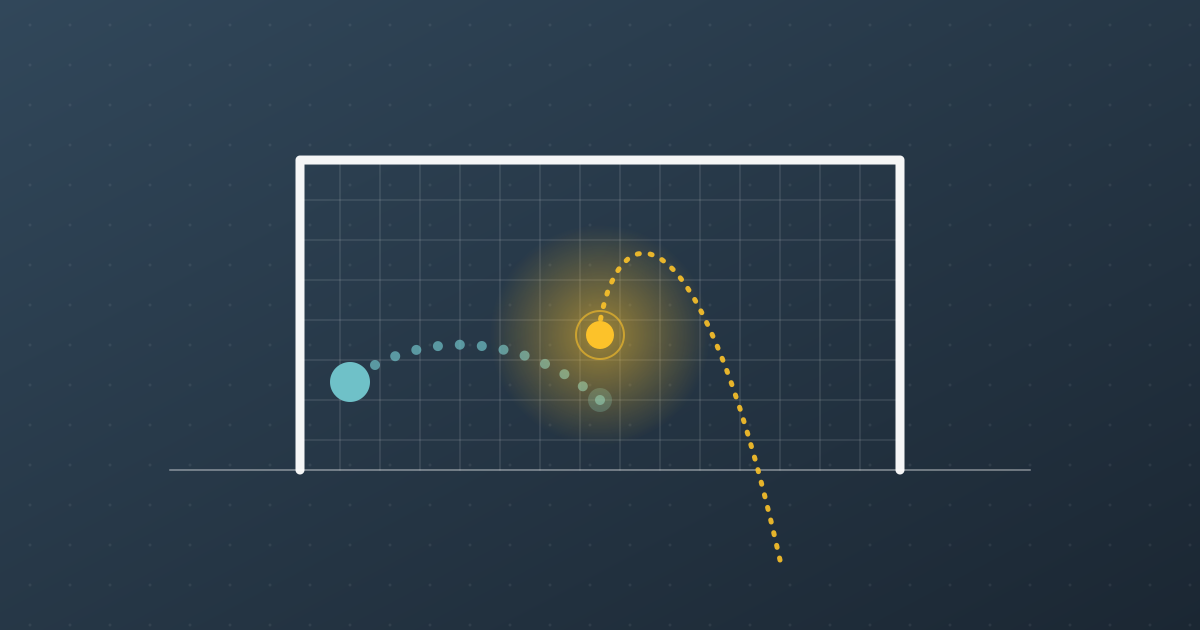
In 1976, Panenka waited until Sepp Maier dived and chipped the ball into the middle, because he knew the goalkeepers’ rhythm.
Charles Dickens, “The Pickwick Papers”
One installment a month for one shilling turned readers into people who waited, and a false start into a success of 40,000 copies.
Theresa May, the 2017 snap election
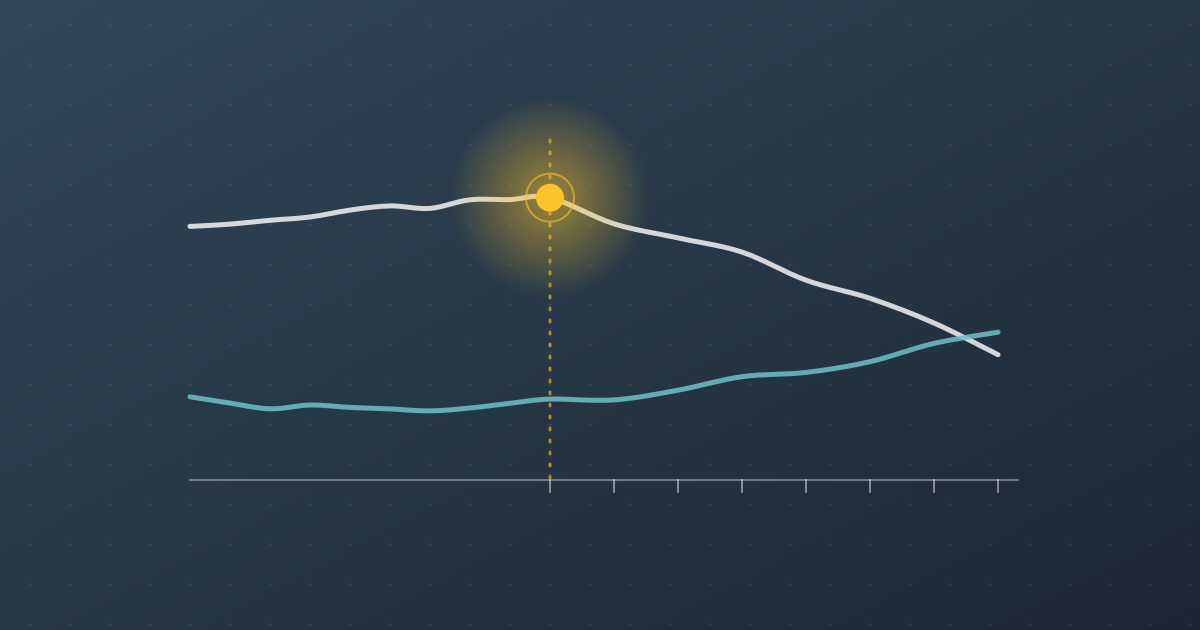
The case shows that a favorable moment alone does not make the right timing: a lead of up to 21 points turned into the loss of her majority.
What rhythm does your team have?
Get your profile across all 12 groups in about 10 to 15 minutes.
Start the Strategy CheckGroup 6: Time and Tempo
Guiding question: When do you act, and how fast?
Stage 3 of 5: Choose the path
- Anchor principle of the group
It answers the “when” of the guiding question; speed, initiative and the choice between a quick blow and a long haul all depend on the right moment.
The other 4 principles in the group build on it.
- TraditionEastern Strategy
Sun Tzu, Kautilya, the Thirty-Six Stratagems, the Tao Te Ching, Miyamoto Musashi, François Jullien
- Related principles
Where the 92 principles come from: eight traditions of strategy, from classical war theory to dealing with uncertainty.
More about the originBackground: WEGVISOR’s own selection from the strategy literature · More about the origin