Theresa May, the 2017 Snap Election and the Principle of Rhythm and Timing
In April 2017, Theresa May is up to 21 points ahead in the polls and calls an early election. Seven weeks later she has lost her absolute majority, because a favorable moment alone does not make the right timing.
A teal circle pulses steadily, and with each beat an arc rises; a golden dot watches and settles exactly into the gap between two beats. Then the golden dot itself pulses in a calm rhythm, and many small mist-blue dots fall into line and swing along with it.
Principle #42
Rhythm and Timing: If you read the tempo of a situation, you act at the right moment, give others a reliable rhythm or throw your opponent off their stride.
4 min read5 sectionsSituationLink to the principle
Contents
Timing is often confused with a snapshot: the situation looks good right now, so act now. Miyamoto Musashi warned against seeing only your own rhythm. If you choose the moment, you also have to know how the time afterward will unfold and how your opponent will adjust to it. The 2017 British general election, a counterexample to the Principle of Rhythm and Timing, shows what happens when the choice of a seemingly perfect moment ignores how the following weeks will unfold.
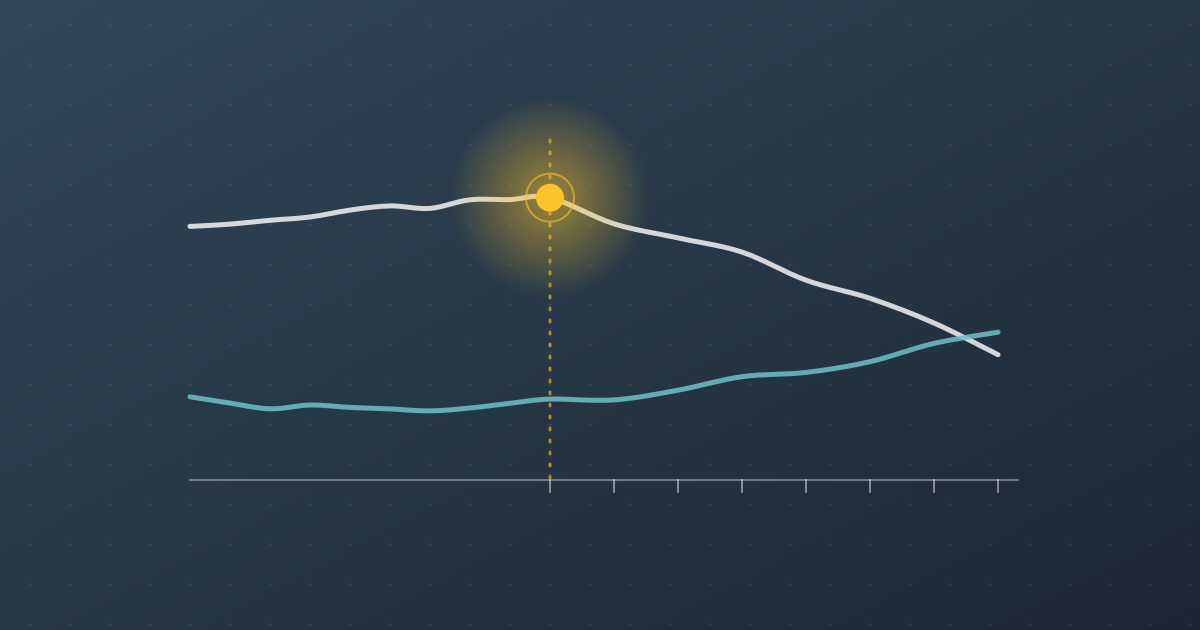
At the peak of the lead, a golden dot calls the election, and within seven weeks the gap between the lines melts away – as with Theresa May in 2017.
01
A seemingly perfect moment
Situation
Theresa May has been prime minister since July 2016. In March 2017, Britain formally triggered Article 50 to leave the EU. The Conservatives have only a narrow majority in the House of Commons. In the polls, they are up to 21 points ahead of the Labour Party under Jeremy Corbyn.
Link to the principle
Everything seems to argue for an election: a weak opponent, a large lead, difficult negotiations with the EU just ahead. A bigger majority would strengthen May in those talks. The timing looks ideal. But it is a snapshot, not a rhythm.
02
Breaking her own word
Situation
On April 18, 2017, May announces a new election for June 8, although she had previously ruled out an early election. On April 19, the House of Commons approves the election by 522 votes to 13, reaching the two-thirds majority required under the Fixed-term Parliaments Act.
Link to the principle
If you break your own promise to seize a favorable moment, you make the timing itself the issue. The election looks not like a necessity but like a tactic. That gives the opponent its first story.
03
Seven weeks that turn out differently
Situation
The Conservatives rely on the slogan “strong and stable” and repeat it so often that it draws ridicule. Their manifesto contains plans for funding social care that critics dub a “dementia tax.” A few days later, May announces a cap on costs, which many see as a U-turn. She stays away from a television debate on May 31. After the attacks in Manchester on May 22 and in London on June 3, the campaign is suspended twice. The lead melts away in the final weeks.
Link to the principle
An election campaign has its own rhythm. If you start one, you give up control over the following weeks. May had chosen the starting point but had not thought through how things would unfold. During this time, Labour found its rhythm, and the Conservatives lost theirs.
04
The result
Situation
On June 8, 2017, the Conservatives win 317 seats, 13 fewer than before. An absolute majority requires 326. Labour gains 30 seats and reaches 262. May is left with only a minority government, propped up by an agreement with Northern Ireland’s DUP and its 10 members of Parliament. She enters the Brexit negotiations from this weakened position.
Link to the principle
The election was meant to strengthen May and weakened her instead. The timing achieved exactly the opposite of its purpose. A moment is only as good as what happens afterward.
05
What a moment does not reveal
Situation
Poll numbers in April reflect a mood that changes as soon as an election is called. The opposition suddenly has a stage and airtime, your own program comes under scrutiny, and surprising events shift the issues. In 2019, May resigns after her withdrawal agreement has failed in the House of Commons several times.
Link to the principle
Good timing does not only ask: where do things stand now? It asks: how will the situation move when I act, and how will the other side react? If you are looking for the right moment, you have to read the whole rhythm, not just the first beat.
Key takeaways
Key lessons
01
Don’t confuse a favorable moment with the right timing.
02
Ask yourself how the situation will move after your step.
03
Count on your opponent using the new rhythm.
04
Don’t break your own word just to seize a moment.
05
Check whether your timing serves your purpose or only your mood.
Summary
In 2017, Theresa May called a new election when her lead in the polls was at its largest. She had previously ruled out an early election. During the campaign her lead melted away, and after seven weeks she had lost her majority. The counterexample shows: timing is not the choice of a favorable moment but the reading of a whole sequence of events, including what the opponent makes of it.