Charles Dickens, The Pickwick Papers and the Principle of Rhythm and Timing
Starting in 1836, Charles Dickens’s “The Pickwick Papers” appears in monthly installments at one shilling each. The first part sells poorly, the last 40,000 copies, because a steady rhythm turns readers into people who wait.
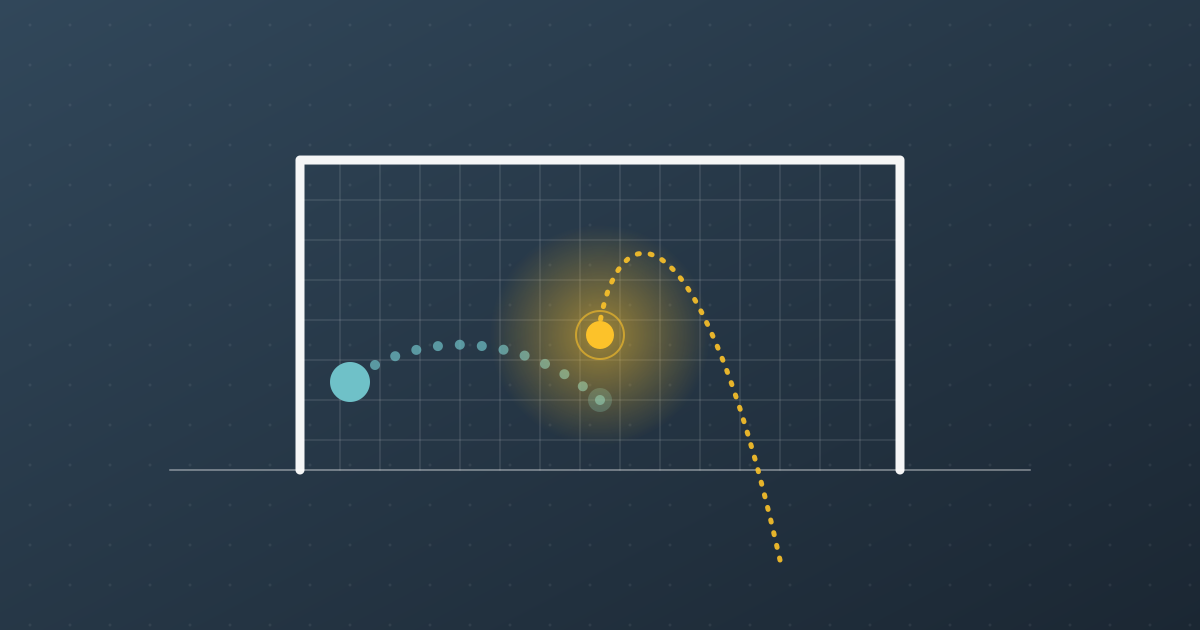
A teal circle pulses steadily, and with each beat an arc rises; a golden dot watches and settles exactly into the gap between two beats. Then the golden dot itself pulses in a calm rhythm, and many small mist-blue dots fall into line and swing along with it.
Principle #42
Rhythm and Timing: If you read the tempo of a situation, you act at the right moment, give others a reliable rhythm or throw your opponent off their stride.
4 min read5 sectionsSituationLink to the principle
Contents
In the Principle of Rhythm and Timing, rhythm is not only something you disrupt in an opponent. You can also set it yourself. If you give others a reliable rhythm, you create anticipation, habit and loyalty. Charles Dickens did not invent this. But with his first novel he showed how much power a steady rhythm can unleash, and in doing so he changed the publishing industry of his century.
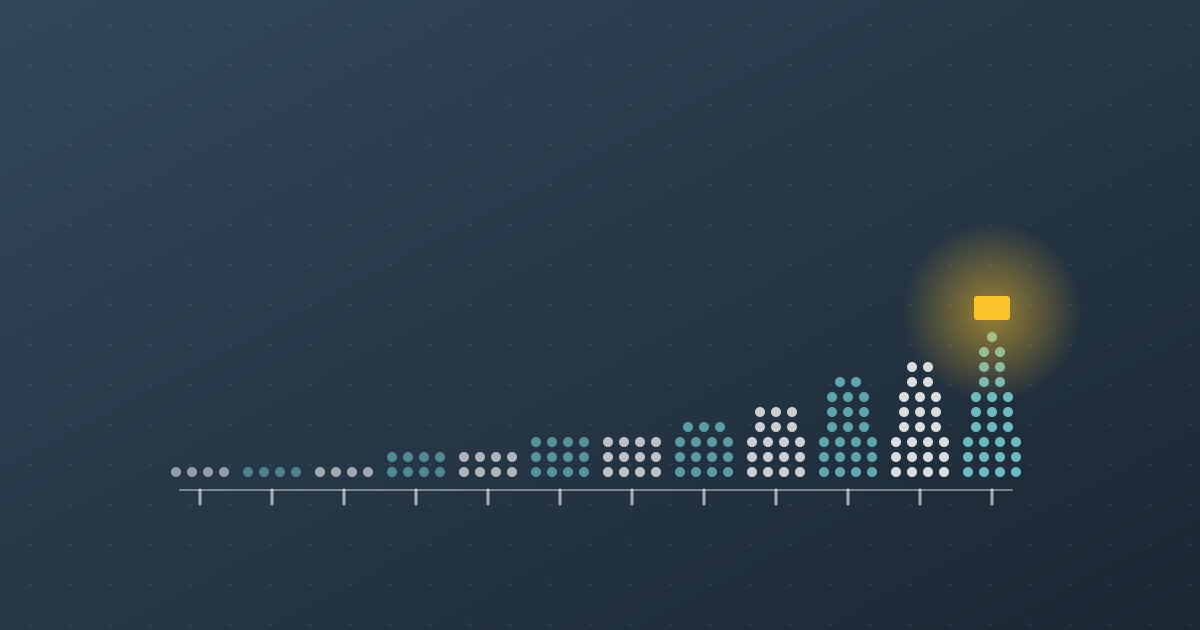
At equal intervals, one installment after another drops, above each a growing cluster of waiting dots, until the last one is crowned in gold – like “The Pickwick Papers.”
01
A commission to write captions
Situation
In 1836, the London publishing house Chapman and Hall plans a series of comic sporting illustrations by the artist Robert Seymour about the mishaps of a club. For this, it is looking for an author to link the pictures with text. It finds the 24-year-old Charles Dickens, then a parliamentary reporter, who has just published his “Sketches by Boz.”
Link to the principle
At the start there is no grand plan, only a format: one installment a month. Dickens accepts the commission and turns the series of pictures into a novel. The format sets the rhythm, and Dickens learns to tell his story in that rhythm.
02
A weak start
Situation
The first part of “The Posthumous Papers of the Pickwick Club” appears in the spring of 1836 in 1,000 copies and sells poorly. The print run of the second part is cut to 500. The artist Robert Seymour, who drew the pictures for the first two installments, takes his own life. After one installment illustrated by Robert William Buss, Hablot Knight Browne, known as Phiz, takes over the illustrations.
Link to the principle
A rhythm does not work right away. It takes several beats before people feel it and adjust to it. Anyone who had given up after the first weak installment would never have found out what the steady rhythm can achieve.
03
The steady rhythm
Situation
Every month an installment appears with 32 pages of text and two illustrations for one shilling. That is affordable for many readers; a whole novel at once would not be. The publisher also sells advertising in the installments. With the later parts, sales rise sharply. The earlier parts have to be reprinted about 20 times. The last part appears in November 1837 and sells 40,000 copies.
Link to the principle
The monthly rhythm turns reading into an event. Readers know when the next installment is coming, talk about it and wait for it. A reliable rhythm creates a loyalty that a single big work does not.
04
Telling the story to the readers’ rhythm
Situation
With the servant Sam Weller, Dickens introduces a character who delights readers. Soon there are Sam Weller joke books, stage adaptations, pirated editions and Pickwick clubs. Only once is the rhythm broken: in June 1837 no installment appears, because Dickens is grieving for his sister-in-law Mary Hogarth. After that, publication continues at the usual rhythm.
Link to the principle
Between two installments, Dickens can see what resonates and respond to it. So the rhythm is not rigid. It gives the author the chance to adjust course at the right moment. And precisely because the rhythm is otherwise so reliable, the one pause stands out.
05
A model for a century
Situation
After the success of “The Pickwick Papers,” other authors such as William Makepeace Thackeray also publish their novels in installments. Dickens himself remains loyal to the format. The serial format, with every installment left open-ended, shapes reading in the 19th century and still echoes in today’s series.
Link to the principle
If you set a rhythm that suits people, you change more than your own product. You change expectations. That applies to a publisher just as much as to a team that meets at the same time every week, or to a church with a regular rhythm of worship services.
Key takeaways
Key lessons
01
Give the people around you a rhythm they can rely on.
02
Give a new rhythm time before you discard it.
03
Use the pauses between the beats to adjust course.
04
Divide something big into affordable, regular steps.
05
Break your rhythm only when it is truly necessary.
Summary
“The Pickwick Papers” began as captions for sporting drawings and with a false start. The steady rhythm of one installment a month for one shilling turned readers into people who waited and the novel into a shared event. Dickens used the gaps between installments to respond to his readers. The example shows the second side of the principle: you can not only disrupt rhythm in others but also set it yourself.