Contents
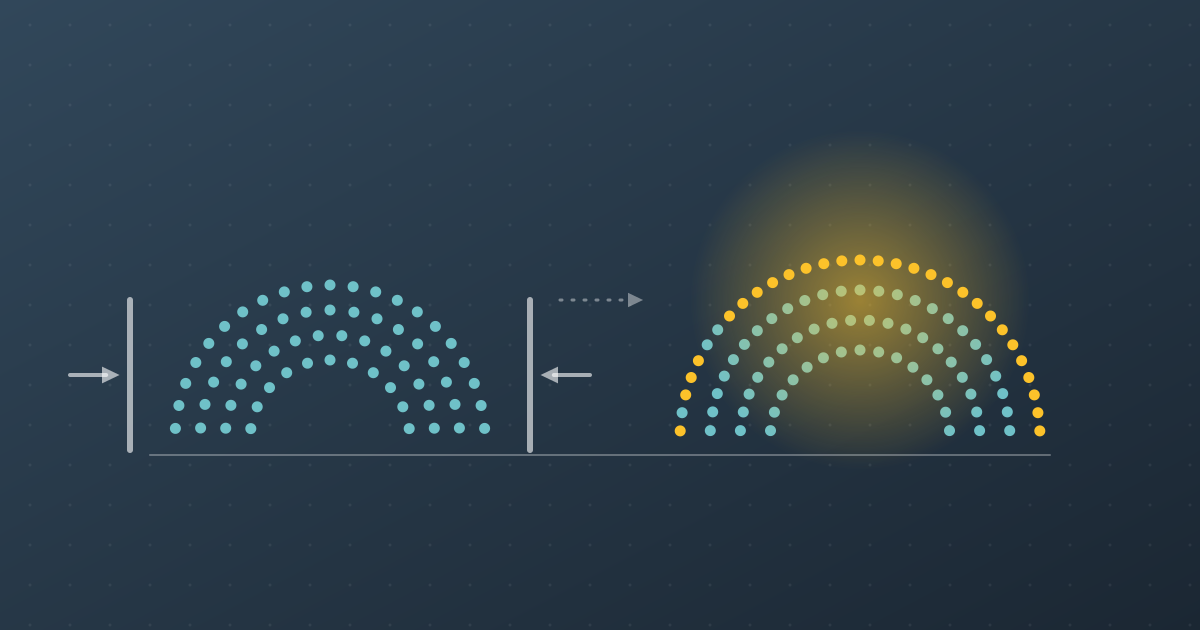
If you want to hide something, you do the obvious thing: you demand that it disappear. In a world where others are watching and passing things on, that is exactly what can draw attention to it in the first place. Edward N. Luttwak described this reversal for wars and conflicts. The Streisand effect shows Paradoxical Logic at work in the media world.

One photo among 12,000
Situation
The photographer Kenneth Adelman runs the California Coastal Records Project. He documents the California coast in aerial photographs to make erosion and development visible. The collection comprises more than 12,000 images and is freely available to researchers and the public. One of them shows the Malibu estate of the singer and actress Barbra Streisand.
Link to the principle
In its original situation, the image was practically invisible. It was one among thousands, without a name, without attention. Any measure that singled it out was bound to make it more visible.
The lawsuit
Situation
In 2003, Streisand sues Adelman for invasion of privacy and demands $50 million. She wants the image removed. At this point, the photo had been downloaded six times, two of them by her own lawyers.
Link to the principle
By linear logic, the lawsuit makes sense: if you want to protect your privacy, you take action against the publication. But the lawsuit was itself a public act. It linked the image to a famous name and turned it into news.
The backlash
Situation
The media report on the case. In the following month, more than 420,000 people visit the site; Mental Floss later speaks of well over a million views. The lawsuit is dismissed, and Streisand has to pay Adelman’s legal fees (around $155,000 to $177,000, depending on the source).
Link to the principle
The measure brought about exactly the opposite of what it was meant to achieve. That is no accident but the result of an environment that reacts. Journalists, readers and users are not passive. For them, an attempt to hide something is interesting in itself.
A name for a pattern
Situation
In 2005, Mike Masnick, the founder of the blog Techdirt, coins the term “Streisand effect.” He uses it to describe cases in which the attempt to suppress a piece of information multiplies its spread. In a 2008 radio interview, Masnick said that the internet had changed this dynamic.
Link to the principle
Since then, companies, government agencies and celebrities have known the pattern. Cease-and-desist letters, takedown demands and lawsuits against critics often trigger exactly the attention they are meant to prevent. If you know this, you weigh up whether silence might be the better protection.
Where paradoxical logic ends
Situation
Not every takedown demand triggers a Streisand effect. Much information disappears quietly, because nobody is interested in it or because the demand is made discreetly. The effect occurs above all when a well-known person or organization publicly takes action against something that seems small and harmless.
Link to the principle
Paradoxical logic applies where an audience is watching and joining in. The greater the gap between the power of the one taking action and the harmlessness of the matter, the more sharply the effect backfires.
Key takeaways
Key lessons
- Before suppressing anything, ask who will only find out about it because of you.
- A public fight over something small makes it big.
- The audience is not neutral; it reacts to concealment.
- Sometimes silence is better protection than a legal battle.
- The Streisand effect doesn’t always occur, but when it does, it’s thorough.
Summary
In 2003, Barbra Streisand wanted to have an aerial photo of her house removed from a collection of coastal photographs. Before her lawsuit, six people had downloaded it; afterward, a great many people saw it. She lost the case and had to pay the legal fees. The measure had brought about the opposite of what it was meant to achieve. Since 2005, the pattern has borne her name.
Sources
- Edward N. Luttwak: Strategy: The Logic of War and Peace. Cambridge, Mass.: Belknap Press of Harvard University Press 1987.