In early 1975, Bill Gates and Paul Allen offer the computer maker MITS a piece of software that does not yet exist, for a computer they have never seen. Only afterward do they write it. The pattern is one of the old stratagems: create something out of nothing.
From a grid of 36 small frames, one grows large: a dot rests safely on a steep arc and is lured out onto the open plain by a swinging line. Then a new arrangement of different shapes appears, a golden circle glides over it like a magnifying glass, and inside it the same pattern lights up in gold.
Principle #33
Art of Stratagems: Stratagems are proven patterns of cunning that work again and again because people react similarly in similar situations; if you know them, you can use them – and, above all, recognize them.
4 min read5 sectionsSituationLink to the principle
Contents
Number seven in the collection of the Thirty-Six Stratagems is known in English as “Create something out of nothing”; Harro von Senger’s German version renders it the same way. The idea is to begin with an appearance and turn it into reality before the other side notices the difference. The stratagem is risky and morally delicate. The founding story of Microsoft shows how this part of the Art of Stratagems works and where its limit lies.
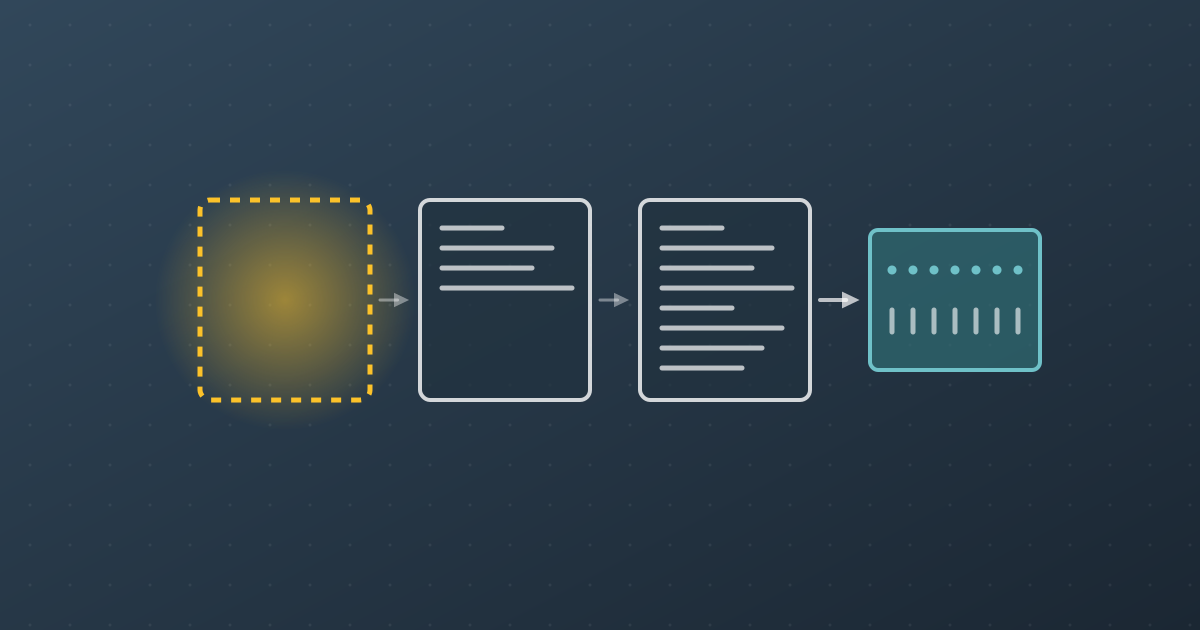
At first only a golden, dashed frame; then it fills line by line and flows into the computer – as with Bill Gates and Paul Allen in 1975.
01
A magazine cover changes the situation
Situation
In January 1975, the magazine Popular Electronics runs a story on the Altair 8800, a computer kit from the Albuquerque company MITS, designed by Ed Roberts. The computer is cheap, but it has no programming language that ordinary users could work with. Paul Allen and Bill Gates, then a student at Harvard, see the article.
Link to the principle
Stratagems start from an opportunity. Here it was a window of time: whoever was first to deliver a programming language for the Altair would shape the market. Anyone who waited until they were finished before getting in touch might be too late.
02
The offer before the product
Situation
Gates and Allen contact Ed Roberts and offer to demonstrate a BASIC interpreter for the Altair. At this point, Gates and Allen have neither an Altair nor a finished interpreter. Over the following weeks, they build a simulation of the Altair on a Harvard mainframe and write their program on it.
Link to the principle
This is the stratagem in its purest form: the announcement creates a situation in which the product has to come into being. The nothing becomes a commitment, and the commitment becomes a driving force. At the same time, the early promise secures the place before others take it.
03
The demonstration in Albuquerque
Situation
In March 1975, Paul Allen flies to Albuquerque to demonstrate the program on a real Altair. It is the first time the program runs on the machine itself. The demonstration succeeds, and MITS agrees to distribute the software as Altair BASIC.
Link to the principle
This is where it is decided whether a stratagem is a clever ruse or a fraud. The appearance has to become reality in time. If the program had not worked, the two men’s reputation would have been destroyed. The stratagem succeeded because real skill stood behind the appearance.
04
The contract
Situation
On July 22, 1975, MITS signs a license agreement with Gates and Allen. The two receive $3,000 up front and royalties of $30 per copy of the 4K version and $35 per copy of the 8K version. Allen takes a job at MITS; in November 1975, Gates takes a leave of absence from Harvard. Allen had suggested the name Micro-Soft for their partnership; the hyphen was later dropped.
Link to the principle
The form of the contract is remarkable. Gates and Allen did not hand over the program for a fixed price; they granted a license in return for a fee per copy. Out of the nothing of the first promise, something of value had emerged in which they kept a share.
05
The limit of the stratagem
Situation
Today the story is often told as a hero’s tale. But it works as a story only because things went well. In the software industry of later decades, countless products were announced that never appeared or appeared far too late.
Link to the principle
“Create something out of nothing” is a high-stakes stratagem. It is defensible only if you can make good on the appearance by your own efforts, and soon. If you promise something you cannot deliver, you are not using a ruse; you are deceiving the other person to their detriment.
Key takeaways
Key lessons
01
A window of time can matter more than a finished product.
02
A promise can drive you, but only if you can keep it.
03
The appearance has to become reality before anyone notices the difference.
04
Keep the rights to what you have created.
05
Don’t tell the stories of successful stratagems without the failed ones.
Summary
In 1975, Bill Gates and Paul Allen offered MITS a piece of software they did not yet have. They wrote it in a few weeks on a simulation of the computer, demonstrated it successfully and received a license agreement. The pattern matches the stratagem “Create something out of nothing.” It succeeded because real skill stood behind the appearance. Without that skill, the ruse would have become a deception.