In the spring of 1941, even before the United States enters the war, American and British staffs agree: Germany is to be defeated first, and in the Far East a strategic defensive will suffice. The Pacific is to get only as much as it needs to hold. Putting this into practice shows how hard that “only as much” really is.
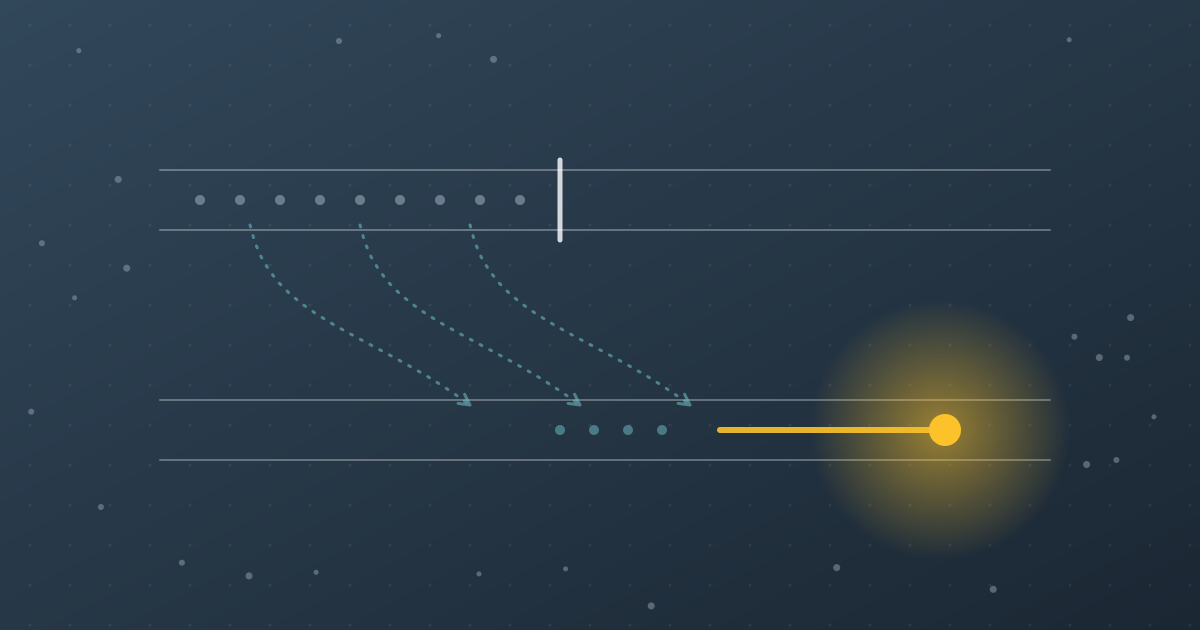
A large circle in the center and two small circles at the edge receive equal numbers of mist-blue dots from a single source; the large one stays pale while the small ones overflow. Restart: the outer circles get a few targeted dots, just enough to stay teal, and the main stream goes into the center circle, which grows golden; when one outer circle briefly fades, a single dot saves it.
Principle #9
Economy of Force: Give secondary theaters only as much as they need to hold, so that the main theater gets enough.
4 min read5 sectionsSituationLink to the principle
Contents
Economy of Force is the flip side of concentration. If you concentrate your forces in one place, you have to decide what the other fronts get. Nothing is too little; an equal share is too much. The “Europe First” strategy of World War II is the largest-scale example of this trade-off, and it also shows the tensions that come with it.
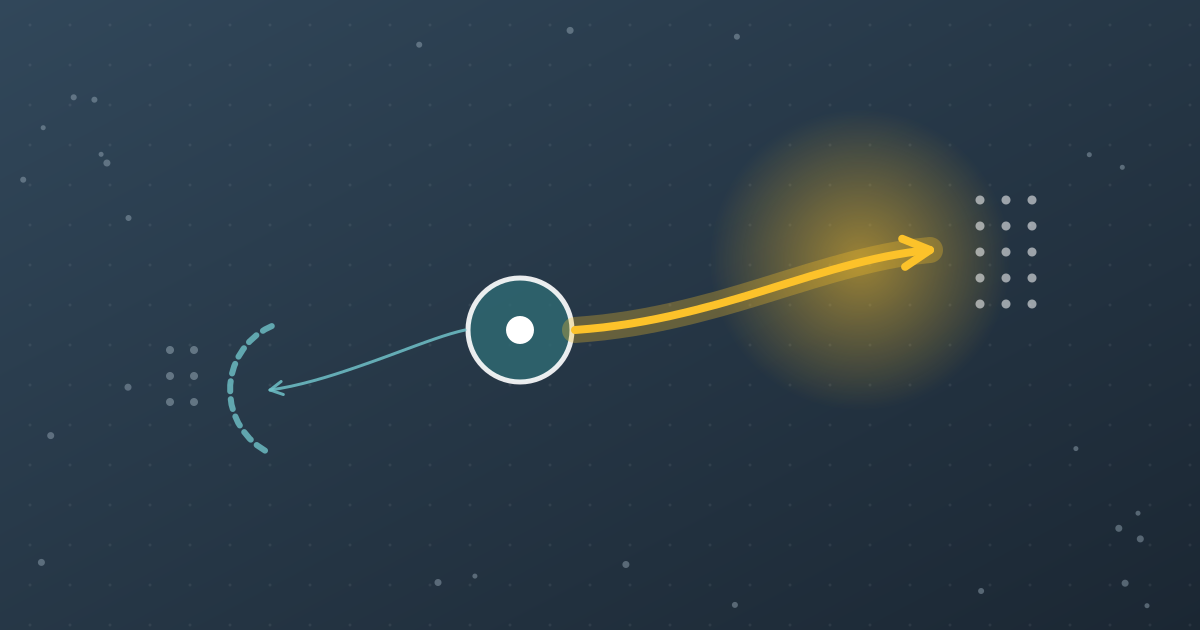
From a single source, a broad golden stream flows east, while a narrow one flowing west only holds a line – like the “Europe First” strategy.
01
Two wars, one main enemy
Situation
At the end of 1940, the head of the U.S. Navy, Admiral Harold R. Stark, wrote a memorandum that became known as “Plan Dog.” In it, he recommended that in the event of war the United States should defeat Germany first and stay on the defensive in the Pacific. In secret staff talks between the Americans and the British, the ABC-1 report of March 27, 1941, set down the early defeat of Germany as the aim and a strategic defensive in the Far East.
Link to the principle
Germany was considered the most dangerous enemy because it threatened Britain and the Soviet Union at the same time. The Pacific mattered, but it would not decide the war. That is the basic question of Economy of Force: Where is the outcome decided, and what does everything else need to avoid losing?
02
Confirmed after Pearl Harbor
Situation
After the Japanese attack on Pearl Harbor on December 7, 1941, the obvious move would have been to turn entirely against Japan. But at the Arcadia Conference in Washington around the turn of the year 1941–42, Franklin D. Roosevelt and Winston Churchill reaffirmed the priority of Europe.
Link to the principle
Economy of Force requires you to hold on to a priority even when a secondary theater suddenly clamors for attention. The opponent who hit you last is not automatically the most important one.
03
Holding with little
Situation
In the Pacific, a holding action with lesser means was supposed to suffice. What exactly that meant was left open, and commanders interpreted it differently. In June 1942, the U.S. Navy repelled a Japanese attack at Midway. In August, Guadalcanal marked the start of the first major American offensive of the war, in the Pacific of all places.
Link to the principle
The secondary theater does not get nothing. It gets enough not to lose. Midway shows that even limited forces can achieve a great deal if they are used well. Guadalcanal shows that holding sometimes requires limited attacks.
04
The numbers contradict the plan
Situation
In the first six months after entering the war, the United States sent more than 300,000 troops to the Pacific and fewer than 100,000 to Europe. In December 1943, roughly as many troops faced Japan as faced Germany, and Japan even faced more warships. After that, the weight shifted to Europe. When the war in Europe ended, 78% of the Army and Army Air Forces were deployed against Germany, but around 70% of the Navy and all six Marine Corps divisions were in the Pacific. Admiral Ernest J. King complained that the Pacific was receiving only 15% of Allied resources instead of the 30% it needed.
Link to the principle
In practice, Economy of Force is a constant struggle. Secondary theaters have advocates, a momentum of their own and real emergencies. The principle tells you where the main weight belongs. It does not guarantee that the allocation follows the plan every day.
05
The dispute over the route
Situation
General George C. Marshall wanted to land in northern France in 1943; the British refused. When Churchill pushed through a landing in North Africa in 1942, Marshall for a time proposed abandoning the priority of Europe and attacking in the Pacific instead. Roosevelt rejected this because it would not help the Soviet Union. The landing in North Africa followed in November 1942.
Link to the principle
Even people who agree on the priority will argue about the route. That is why Economy of Force needs someone who holds on to the priority when experts are ready to give it up in the heat of the dispute. Here, that person was Roosevelt.
Key takeaways
Key lessons
01
Decide which theater is the main theater, and stick to it.
02
Give secondary theaters enough to hold, no more and no less.
03
Do not let the latest blow knock you off your priority.
04
Check regularly whether the actual allocation still follows your plan.
05
Appoint someone to defend the priority when disputes arise.
Summary
With “Europe First,” the United States and Britain decided that Germany was to be defeated first and that the Pacific would get only as much as it needed to hold. Roosevelt held on to this priority after Pearl Harbor and through the generals’ disputes. The actual numbers show, however, that for a long time the Pacific received more than planned. The story shows Economy of Force both as the right guiding principle and as a constant struggle over the right measure.