In 2008, the Honda team is trailing the field in Formula One. Under Ross Brawn, the team stops work on its current car early and puts almost all its effort into the car for 2009, when new rules take effect. The team survives Honda’s withdrawal, starts over as Brawn GP and wins both world championships.
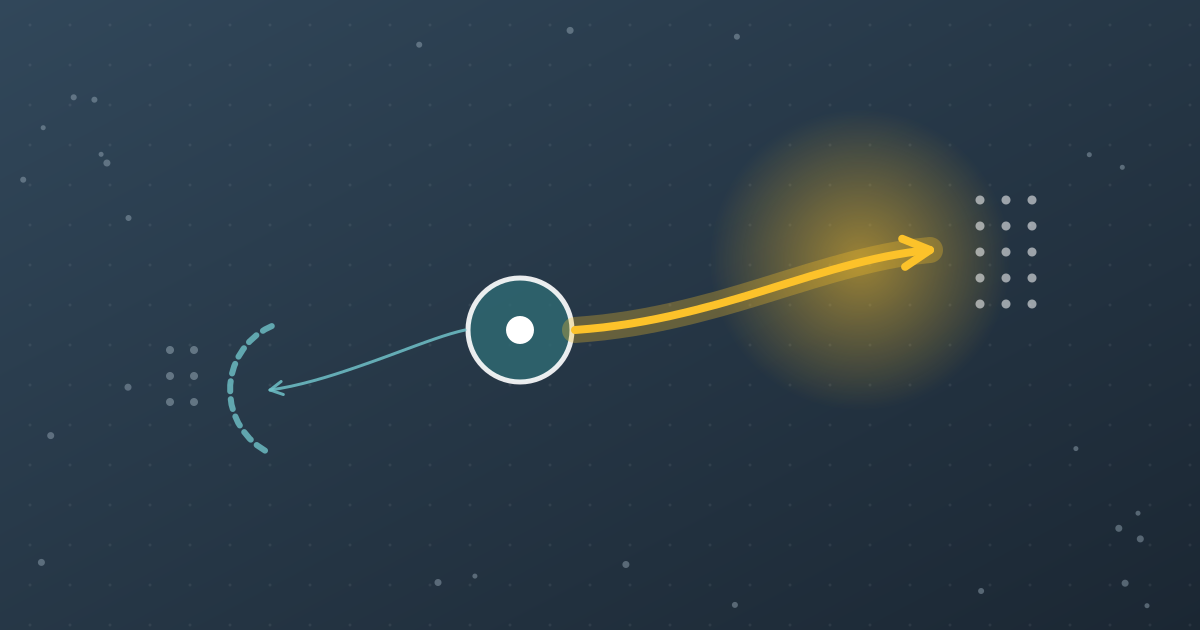
A large circle in the center and two small circles at the edge receive equal numbers of mist-blue dots from a single source; the large one stays pale while the small ones overflow. Restart: the outer circles get a few targeted dots, just enough to stay teal, and the main stream goes into the center circle, which grows golden; when one outer circle briefly fades, a single dot saves it.
Principle #9
Economy of Force: Give secondary theaters only as much as they need to hold, so that the main theater gets enough.
4 min read5 sectionsSituationLink to the principle
Contents
In Formula One, two races are always running at once. Teams develop the car for the current season and the car for the next. If you pursue both at full strength, you spread engineers, wind-tunnel time and money across two fronts. In 2008, the Honda team under Ross Brawn turned the current season into a secondary theater. The story shows Economy of Force at work: what you save in one place makes something possible in another.
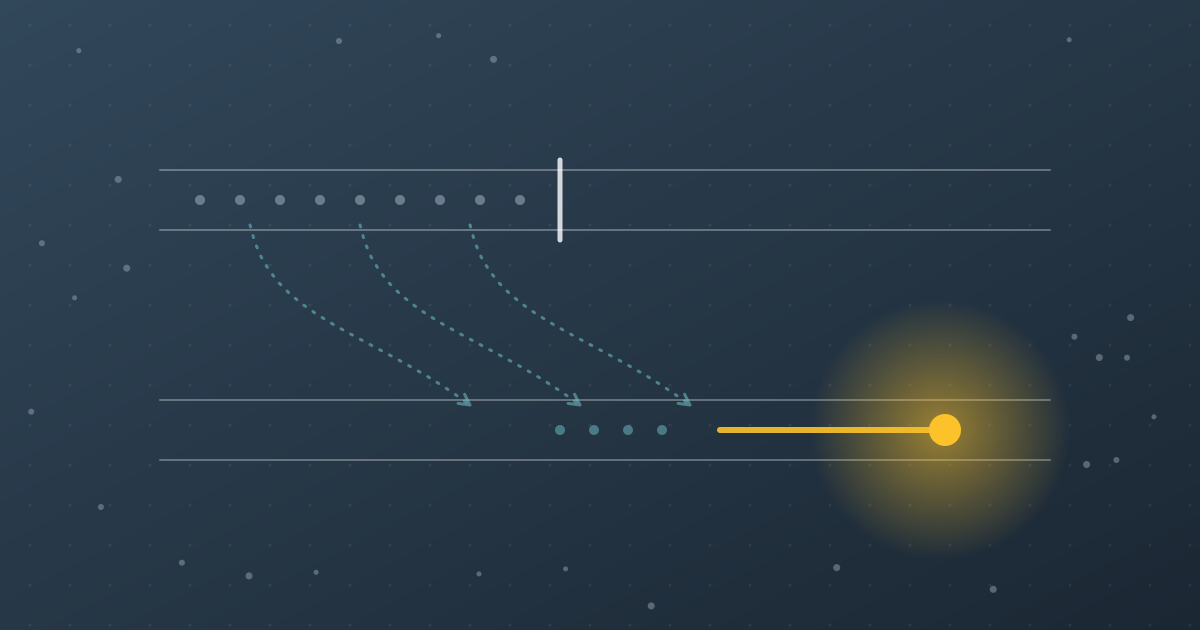
The upper track breaks off early, its strength flows down into the lower one, where a golden dot pulls away from everyone – like Brawn GP in 2009.
01
A car with no future
Situation
Ross Brawn had previously been technical director at Benetton and Ferrari during Michael Schumacher’s championship years. For 2008, he became team principal at Honda. That season’s car, the RA108, was weak. Major rule changes were coming for 2009; among other things, aerodynamic downforce was to be cut significantly.
Link to the principle
The current year could hardly be saved; the next one was wide open. In a situation like this, the question is not how to get a little better everywhere, but where extra effort will achieve the most.
02
The current season on the bare minimum
Situation
Honda stopped developing the 2008 car early and concentrated on the 2009 rules. The team saw the season through without developing the car significantly. There were only a few bright spots, such as Rubens Barrichello’s third place in the rain-soaked race at Silverstone.
Link to the principle
This is Economy of Force in the literal sense. The current season got only what it needed to finish properly. Everything else went into the main theater: the new car. That cost points and prestige, and those are exactly the costs you have to be willing to bear.
03
The shock in December
Situation
On December 5, 2008, Honda announced its withdrawal from Formula One because of the financial crisis. Honda left the team a budget reported at around £100 million. Ross Brawn and chief executive Nick Fry had about three months to save the team. In the end, Brawn’s management team bought the outfit themselves. On March 6, 2009, it relaunched under the name Brawn GP. After McLaren team principal Martin Whitmarsh put in a word, Mercedes supplied the engines, and the car was adapted to the Mercedes V8.
Link to the principle
Because the effort in 2008 had not been split between two cars, there was a well-advanced new car in December that was worth saving. Concentrating on the main objective also kept the team alive through the crisis.
04
The head start at the season opener
Situation
Brawn, Williams and Toyota exploited a gap in the regulations and built a double diffuser, which generated extra downforce. The governing body, the FIA, allowed the solution. Twenty-three days after its official founding, the team locked out the front row at the first race in Australia with Jenson Button and Rubens Barrichello and took a one-two finish.
Link to the principle
Concentrating early paid off twice. The team had more time than others to think through the new rules, and in the process it found an advantage that many had overlooked.
05
Titles and limits
Situation
Button won six of the first seven races, and none after that. Other teams caught up. In the end, the lead was still enough: Button became world champion, and Brawn GP won the constructors’ championship. In November 2009, Mercedes parent company Daimler and the investor Aabar together took over 75.1% of the team.
Link to the principle
The lead that came from concentration was large, but not lasting. During the season, Brawn GP itself faced the question of how much to put into the current year and how much into the next. Economy of Force is not a one-time decision but a question you have to ask again and again.
Key takeaways
Key lessons
01
Distinguish between the current year and the year in which things are decided.
02
Give the secondary theater what it needs so that it does not collapse.
03
Deliberately accept the cost of economizing there.
04
Use your head start to find gaps that others overlook.
05
Ask the allocation question again and again.
Summary
Under Ross Brawn, the Honda team turned the 2008 season into a secondary theater and put its effort into the car for the new 2009 rules. That cost a weak year, but it created a car worth saving after Honda’s withdrawal. As Brawn GP, the team won both world championships. The story shows Economy of Force as a deliberate decision to be weak in one place in order to become strong in the decisive one.