In February 2021, Facebook blocks all news in Australia rather than bow to a law that would oblige platforms to pay publishers. A few days later, the government amends the law. Facebook had demonstrated that it was better off without an agreement than the other side.
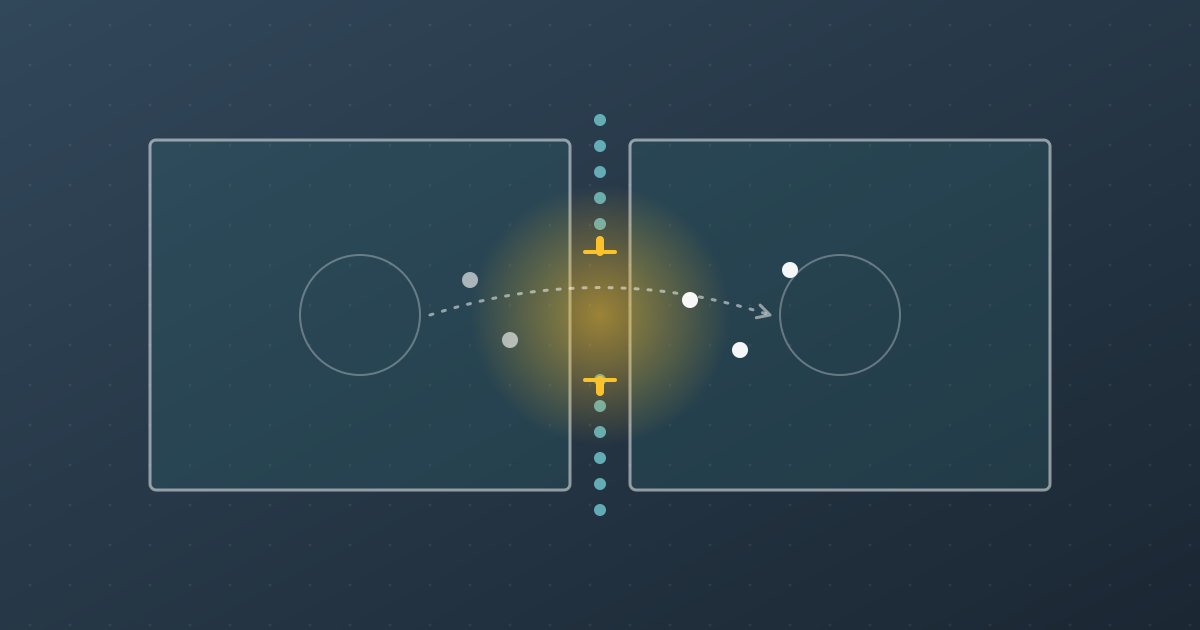
Two dots sit on a horizontal line with a small frame between them as the offer; behind one a gold gate opens into the light, behind the other stands a closed mist-blue line. Then the second dot draws a gate of its own into its line, and the frame moves to the middle.
Principle #69
Best Alternative: Your power in a negotiation depends above all on how well off you are if there is no agreement.
4 min read5 sectionsSituationLink to the principle
Contents
If you negotiate, you should know what you will do if there is no agreement. Roger Fisher and William Ury call this the best alternative to a negotiated agreement, or BATNA – the core of the Best Alternative. In 2021, Australia wanted to force two of the largest companies in the world into negotiations with publishers. Google and Facebook reacted very differently. The difference lay in their alternatives.
A stream of small news squares piles up in front of a gold barrier, while the large platform behind it stays full – as with Facebook in Australia.
01
A law designed to force negotiations
Situation
The Australian Competition and Consumer Commission (ACCC) had examined how digital platforms were changing the news market. The result was a draft law, the News Media Bargaining Code. It provided that large platforms would pay publishers for news content linked on their sites. If no agreement was reached, binding arbitration would decide in the end.
Link to the principle
The core of the draft was to curtail the platforms’ alternative. Anyone who failed to reach an agreement would not simply be able to walk away but would have to accept an arbitration ruling. In this way, the publishers, whose own alternative was weak, were to be strengthened.
02
Google: a threat that doesn’t hold
Situation
In January 2021, Google told a Senate committee that it would shut down its search engine in Australia if the law went ahead unchanged. Shortly afterward, Google signed deals with major publishers, for example with the media group Nine, reportedly for around 30 million Australian dollars a year, and a global agreement with News Corp.
Link to the principle
For Google, the threat was expensive. Search is its core business, and withdrawing from an entire country would have made room for competitors. An alternative that costs you more than it costs the other side is not a good alternative. Google settled.
03
Facebook: the alternative on display
Situation
Facebook took a different path. On February 17, 2021, it blocked all news content for users in Australia, local and international alike. Users worldwide could no longer see or share content from Australian publishers. Pages that had little to do with news were blocked as well: health authorities in the middle of the COVID-19 pandemic, charities and emergency services. Facebook said the law defined news too vaguely and announced that it would restore pages that had been blocked by mistake.
Link to the principle
Facebook did not negotiate with words; it showed its alternative. For Facebook, news is a small part of what it offers. For publishers and the public, Facebook is an important channel. The blackout made visible who loses more without an agreement.
04
The agreement
Situation
Treasurer Josh Frydenberg spoke with Mark Zuckerberg. On February 23, 2021, the government and Facebook announced an agreement on amendments. A platform must now be given a month’s notice before the law is applied to it. Arbitration is preceded by two months of mediation. And the government must take into account whether a platform already makes a significant contribution to the Australian news industry through its own deals. Facebook announced that it would restore news in the following days. Two days later, parliament passed the amended law.
Link to the principle
Facebook did not win everything. But it kept what mattered to it: the ability to decide for itself whether news appears on its platform, and to make deals on its own terms. That is the core of the principle. The side with the better alternative sets the framework of the agreement.
05
The price of the alternative
Situation
The blackout drew fierce criticism of Facebook, especially because of the blocked health and emergency pages. Many accused the company of using its power ruthlessly.
Link to the principle
Demonstrating a strong alternative comes at a price. If you play it, you put trust and reputation at risk. That is why a good alternative often works best when the other side knows about it without your having to play it.
Key takeaways
Key lessons
01
Before every negotiation, clarify what you would do without an agreement.
02
Check whether your threat would cost you more than it costs the other side.
03
Recognize who loses more if talks fail.
04
Be prepared for the other side to try to curtail your alternative.
05
Consider the price before you actually play your alternative.
Summary
Australia wanted to force Google and Facebook to the negotiating table by law. Google, for which a withdrawal would have been expensive, signed deals. Facebook, which can do without news, blocked it and won changes to the law. The case shows: it is not the better argument that decides but who is better off without an agreement. It also shows that playing an alternative can cost trust.
Sources
Roger Fisher and William Ury: Getting to Yes: Negotiating Agreement Without Giving In. Boston: Houghton Mifflin 1981.
TechRadar: Facebook has banned news in Australia
Yahoo News: Facebook reverses its Australian news ban
TechCrunch: Facebook to restore news sharing in Australia after government makes amendments to proposed law (February 22, 2021)
Wikipedia: News Media Bargaining Code
Back to the basics
Read what lies behind the Best Alternative: with explanation, animation, video and research.