The principle in detail
Three steps through the principle: grasp it, place it, put it to work. Open each topic on its own.
The core messageCore statement and 3 clarifications
You measure an offer against your best alternative. If the offer is better, you consider it seriously; if it is worse, you can walk away.
- It does not say
- That you are powerless without a good alternative. Shared interests, fair standards and good relationships are sources of influence, too.
- It does not say
- That every relationship should be thought of in terms of the exit. In a marriage, a friendship, a team or a church, constantly keeping one eye on the exit can weaken the bond.
- It also says
- The other side’s alternative counts just as much. If you know it, you know where their limit lies.
The explanationHow the principle works and what matters
The principle works because every negotiation takes place in the shadow of what would happen without an agreement. Alternatives have an effect even when nobody uses them.
What will you do if there is no yes, and how good is that door?
The signs3 signs when you heed it · 3 when you overlook it
- Before every negotiation, you know what you would do without an agreement.
- You check whether your alternative is secured or merely promised.
- You give it up only once the agreement is binding.
- You accept a bad offer because you see no other way.
- You threaten to use an alternative that would hurt you more than the other side.
- You depend on a single supplier or customer and only notice it when a dispute breaks out.
The backgroundFrom Roger Fisher and William Ury’s book “Getting to Yes” (1981). · T5 Game Theory, Negotiation and Conflict
- 1979SupplementedRobert H. Mnookin and Lewis Kornhauser
Bargaining in the Shadow of the Law
- 1981OriginRoger Fisher and William Ury
Getting to Yes
- 1982SupplementedHoward Raiffa
The Art and Science of Negotiation
- Tradition T5TraditionGame Theory, Negotiation and Conflict
Thomas C. Schelling, Robert Axelrod, Herman Kahn, Roger Fisher and William Ury
See the tradition on the Origin page
Read more: the full background
From Roger Fisher and William Ury’s book “Getting to Yes” (1981). Supplemented by Robert H. Mnookin and Lewis Kornhauser (1979) and Howard Raiffa’s “The Art and Science of Negotiation” (1982).
The research4 sources: 3 theories, 1 experiment · 1979–1994 · with limitations of the research
- weak
- moderate
- strong
The advantage of an attractive alternative has been shown experimentally; the claim that it is the main determinant of negotiating power goes beyond the sources, which themselves name other sources of influence.
- 1979Robert H. Mnookin and Lewis Kornhauser
“Bargaining in the Shadow of the Law”: divorcing couples bargain “in the shadow of the law.”
- 1981Roger Fisher and William Ury
“Getting to Yes”: the best alternative to a negotiated agreement is the yardstick for every offer; you develop it by listing possible moves, improving the most promising ones and choosing one.
- 1982Howard Raiffa
“The Art and Science of Negotiation”: theory of the reservation price and the zone of agreement.
- 1994Robin L. Pinkley, Margaret A. Neale and Rebecca J. Bennett
“The Impact of Alternatives to Settlement in Dyadic Negotiation”: negotiators with an attractive alternative achieve better outcomes.
Alternatives are often uncertain and overestimated, and brandishing an alternative can be expensive if it costs you trust. The experiments show the advantage of a good alternative; they do not show that it alone, or above all, determines power.
Read more: what research shows
Roger Fisher and William Ury of the Harvard Negotiation Project coined the term BATNA in 1981 in “Getting to Yes.” There, the best alternative protects against two mistakes: accepting a bad offer because you see no other way, and rejecting a good one because you overestimate your own alternative. As early as 1979, Robert H. Mnookin and Lewis Kornhauser had described how divorcing couples bargain “in the shadow of the law.” In 1982, Howard Raiffa developed the idea into his theory of the reservation price and the zone of agreement. Experiments by Robin L. Pinkley, Margaret A. Neale and Rebecca J. Bennett (1994) show that negotiators with an attractive alternative achieve better outcomes. The sources do not claim that the alternative determines negotiating power “above all.”
The related principles40 Freedom of Action · 57 Strategic Interdependence · 64 Credible Commitment · 66 Brinkmanship
The flip side is 64 Credible Commitment (deliberately cutting off alternatives to become credible)
40 Freedom of Action describes what good alternatives secure
57 Strategic Interdependence is a reminder that your own alternative always counts in relation to the other side’s
If you threaten to let talks fail, you are playing with both alternatives, as in 66 Brinkmanship
Read more: the full text
The flip side is 64 Credible Commitment (deliberately cutting off alternatives to become credible); 40 Freedom of Action describes what good alternatives secure, and 57 Strategic Interdependence is a reminder that your own alternative always counts in relation to the other side’s. If you threaten to let talks fail, you are playing with both alternatives, as in 66 Brinkmanship.
The action steps5 action steps: Before every important negotiation, write down what you will do if there is no agreement.
Before every important negotiation, write down what you will do if there is no agreement.
- Develop your alternative actively: list possible moves, improve the most promising ones, choose one.
- Take a sober look at whether your alternative is secured. An alternative that has only been promised is easily overestimated.
- Consider what alternative the other side has. That tells you where their limit lies.
Don’t play your alternative so hard that trust and the relationship suffer lasting damage.
The reflection questions3 questions for you or for a conversation
- In your last important negotiation, what would you have done without an agreement, and did you know it beforehand?
- Which supplier, customer or person are you so dependent on that you can hardly say no?
- What alternatives do your best people have, and what does that mean for you?
Take your time with one question. Write down your answer – or talk it over with someone you trust.
The picture to rememberThe animation once more, with an explanation
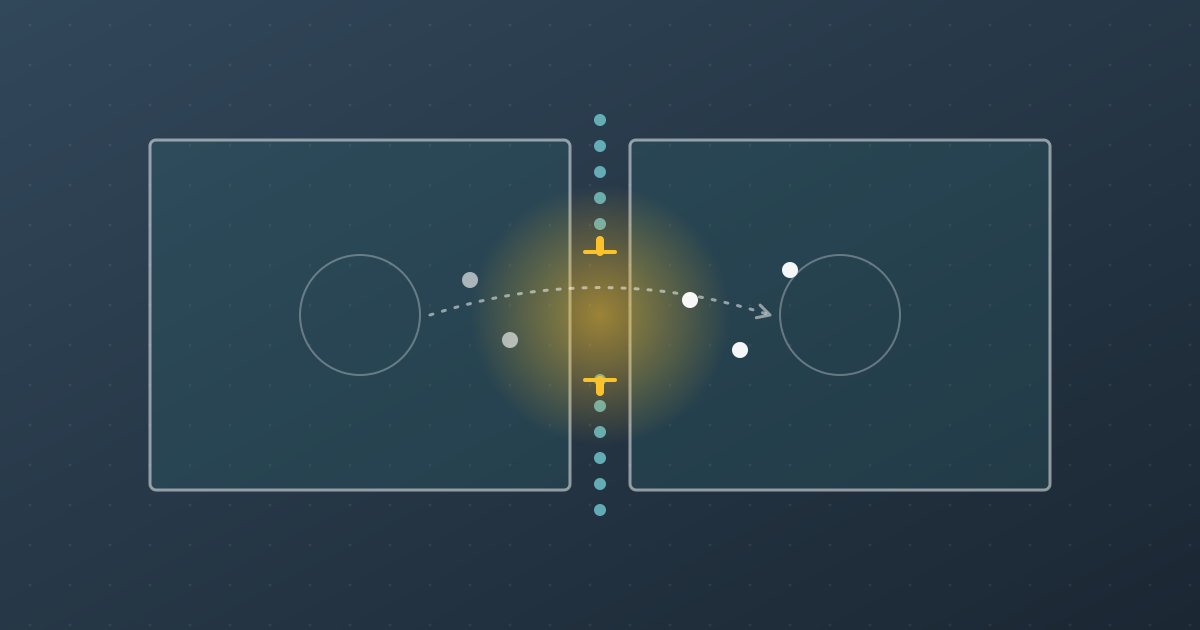
- Two dots sit on a horizontal line with a small frame between them as the offer
- Behind one a gold gate opens into the light, behind the other stands a closed mist-blue line
- Then the second dot draws a gate of its own into its line, and the frame moves to the middle
How the principle shows up in practice
Facebook in Australia
In 2021, Facebook blocks all news and wins changes to a media law, because it had less to lose without an agreement than the other side.
The Bosman ruling
Since 1995, professional soccer players in the EU have been able to move on a free transfer once their contracts end. This new alternative changes every contract negotiation.
Unilateral divorce in the United States
In states where one spouse could obtain a divorce alone starting in 1970, domestic violence and suicides among women declined, according to Betsey Stevenson and Justin Wolfers. Alternatives have an effect even when nobody uses them.
What will you do without an agreement?
Get your profile across all 12 groups in about 10 to 15 minutes.
Start the Strategy CheckGroup 8: Interaction, Alliances and Negotiation
Guiding question: How do you act when others are in the game too?
Stage 4 of 5: Act with others
- TraditionGame Theory, Negotiation and Conflict
Thomas C. Schelling, Robert Axelrod, Herman Kahn, Roger Fisher and William Ury
Where the 92 principles come from: eight traditions of strategy, from classical war theory to dealing with uncertainty.
More about the originBackground: WEGVISOR’s own selection from the strategy literature · More about the origin