In Danny DeVito’s 1989 black comedy, Oliver and Barbara Rose fight over their house, and every step goes one rung higher than the last. The film shows what happens when both sides see only the next rung and nobody looks for the way down.
A ladder of six teal lines stands in the frame, with a gold threshold glowing between two pairs of rungs. Two dots climb higher in turn, growing smaller and paler, until one merely directs a beam at the next rung, where its outline appears large, and the other glides one rung down.
Principle #68
Escalation Ladder: If you know the rungs of a conflict and are credibly superior on the next one, you determine how far the dispute goes.
4 min read5 sectionsSituationLink to the principle
Contents
Most examples of escalation come from world politics. “The War of the Roses” moves it into a family home in Washington, D.C., and shows the Escalation Ladder in private life. The film is based on Warren Adler’s 1981 novel. Michael Douglas plays Oliver Rose, Kathleen Turner his wife Barbara, and Danny DeVito the lawyer Gavin D’Amato, who narrates the story. The film is deliberately exaggerated. But anyone who has been through a fierce dispute will recognize the rungs it shows.
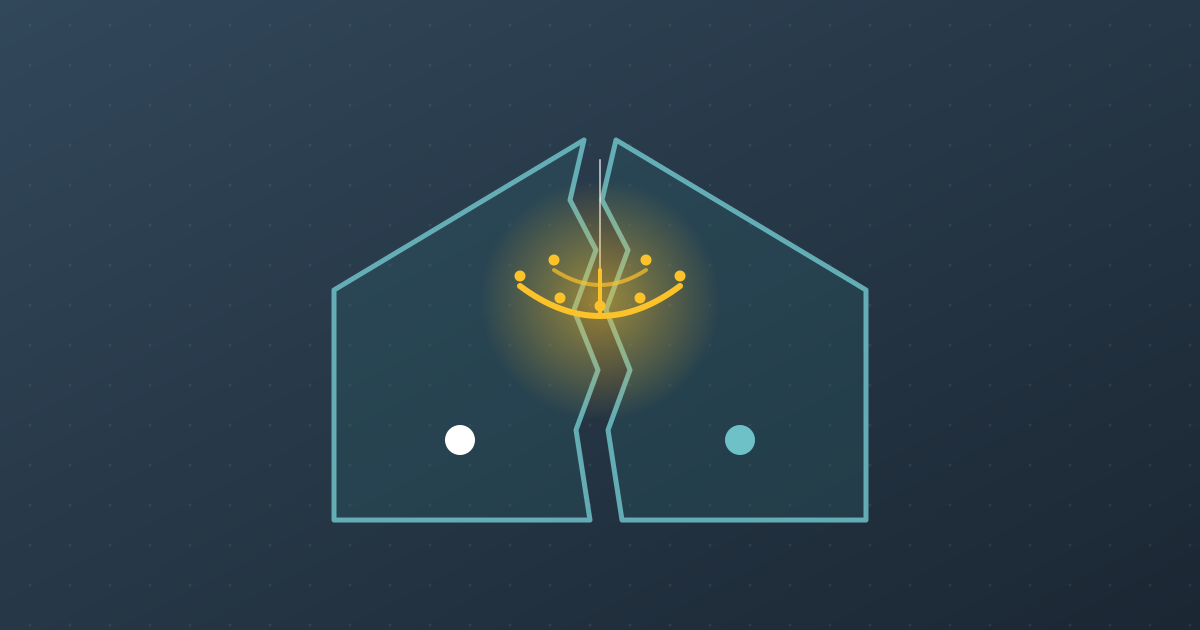
A house drawn in lines splits apart in the middle, and above it a gold chandelier hangs by a thin thread – as in “The War of the Roses.”
01
The beginning: a rift
Situation
Oliver and Barbara meet at an auction where they are both bidding on the same piece. Oliver becomes a successful lawyer; Barbara raises the children and furnishes the house. When the children are almost grown, Barbara feels empty and overlooked. She starts a catering business to become independent. After Oliver suffers what appears to be a heart attack, she realizes that she felt a sense of freedom at the thought of his death. She wants a divorce.
Link to the principle
On the lowest rung, there is no fight yet, only a rift in the relationship. At this point, the dispute could still be resolved with words. But neither of them says what it is really about.
02
The rung of positions
Situation
Barbara wants only the house and everything in it. Her lawyer turns a loving letter against him: Oliver wrote it before going into the hospital, to be read if he died. Oliver refuses to move out. Using a legal loophole that Gavin points out to him, he stalls the proceedings. Barbara rejects an offer to buy her out. Oliver divides the house into separate zones. When Gavin advises him to give in, Oliver fires him.
Link to the principle
Now the positions harden. It is no longer about interests but about being right. The house becomes a symbol. In both their eyes, whoever gives it up loses face. And whoever advises giving way is pushed aside.
03
The rung of deeds
Situation
Oliver accidentally runs over Barbara’s cat. She locks him in the sauna. He disrupts a dinner she is giving for business clients and humiliates her in front of the guests. She wrecks his beloved sports car. Both smash furniture, including the piece from the auction where they met.
Link to the principle
On this rung, each responds with a blow a little harder than the last. Neither wants to give in first. The ladder climbs because each side believes the next rung will finally bring the other to their senses. Neither of them controls the next rung, so the ladder controls them both.
04
The rung of destruction
Situation
The children are away at college, and the housekeeper quits. Barbara invites Oliver to dinner to talk and afterward claims that the meal was made from his dog. It isn’t true, but it destroys whatever was left. Oliver nails the house shut; Barbara loosens the chandelier in the entrance hall. In the end, both are hanging from it. It falls, and both die.
Link to the principle
At the top of the ladder, it is no longer about winning. It is only about the other side losing, even if you go down with them. The Austrian conflict researcher Friedrich Glasl named the last stage of his escalation model “Together into the abyss.”
05
The frame: advice to a client
Situation
Gavin tells the whole story to a man who wants a divorce. He gives him two options: to separate quickly and generously and start over, or to go home and remember why he loved his wife. Afterward, Gavin calls his own wife.
Link to the principle
The lawyer points to the only way out: get off the ladder early. If you deliberately give way or start over while still on the lower rungs, you never have to experience the upper ones. If you only notice where you are once you are at the top, you often find no way back down.
Key takeaways
Key lessons
01
Say early what really matters to you, before only positions are left.
02
Notice when an object becomes a symbol of victory or defeat.
03
Don’t reflexively escalate by one rung.
04
Listen to people who show you the way down.
05
Get off while you are still on a low rung.
Summary
“The War of the Roses” shows an escalation ladder in private life: from a rift, through hardened positions and mutual blows, to shared destruction. Neither of the two controls the next rung, so the dispute keeps climbing. The lawyer’s advice at the end is the real lesson: if you want to determine the course, you have to decide early how far you are willing to go.
Sources
Warren Adler: The War of the Roses. Novel, 1981.
Friedrich Glasl: Konfliktmanagement. Bern: Haupt 1980 (in German).
Wikipedia: The War of the Roses (film)
Back to the basics
Read what lies behind the Escalation Ladder: with explanation, animation, video and research.