The U.S.–China Trade War and the Escalation Ladder
Starting in July 2018, the United States imposes tariffs on Chinese goods, China responds, and the tariffs rise round by round, from $34 billion to $200 billion worth of goods. The dispute shows how an escalation ladder works in the economy and why the side with more room to maneuver on the next rung has the advantage.
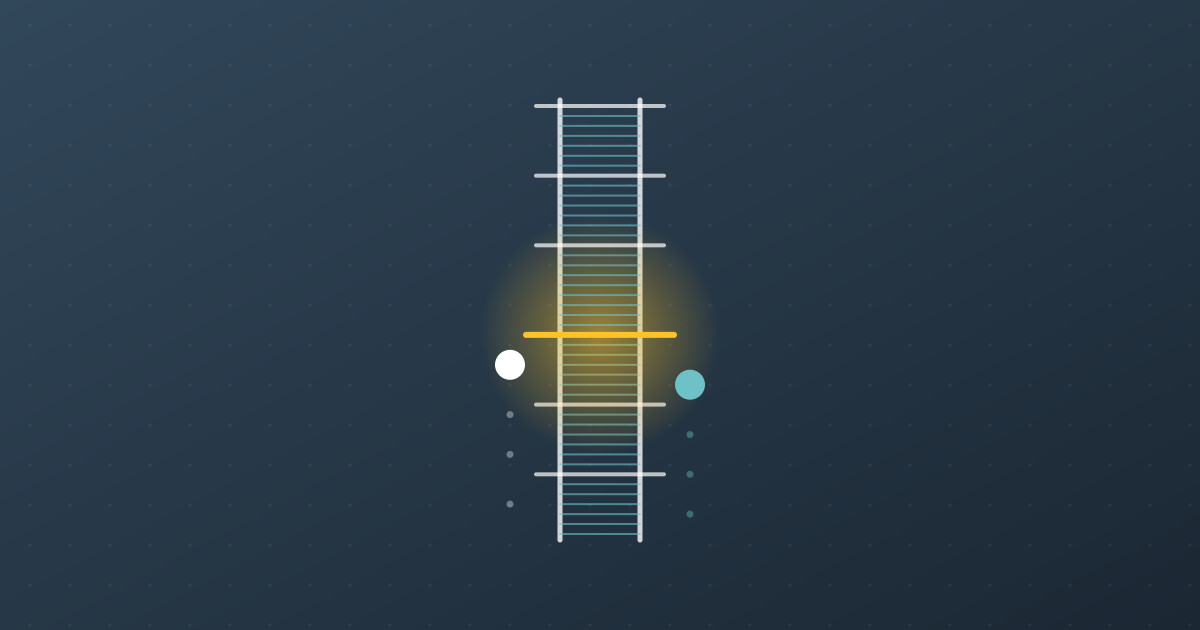
A ladder of six teal lines stands in the frame, with a gold threshold glowing between two pairs of rungs. Two dots climb higher in turn, growing smaller and paler, until one merely directs a beam at the next rung, where its outline appears large, and the other glides one rung down.
Principle #68
Escalation Ladder: If you know the rungs of a conflict and are credibly superior on the next one, you determine how far the dispute goes.
4 min read5 sectionsSituationLink to the principle
Contents
Trade disputes are rarely a single blow. They consist of announcements, deadlines, lists and counterlists. Each round is a message to the other side. The trade war between the United States and China from 2018 to 2020 is a textbook example of the Escalation Ladder: how rungs follow one another, how one side runs up against a limit and how the dispute ends in a truce at a high level.
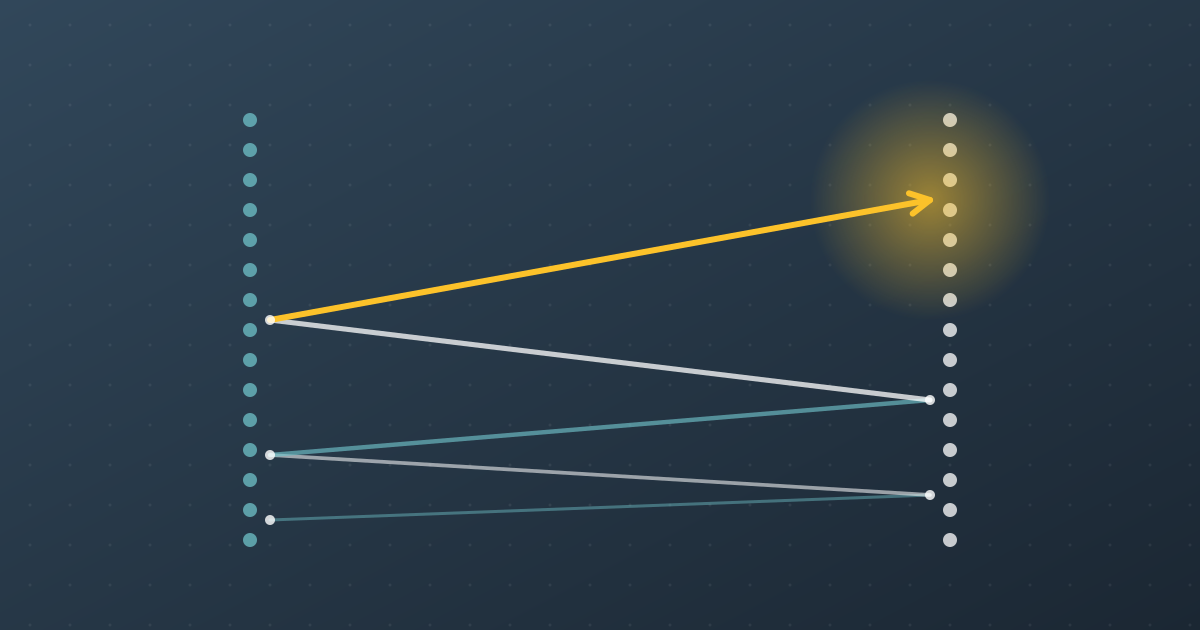
Between two walls of dots, a line bounces back and forth, steeper with every round, the last one gold – as in the U.S.–China trade war.
01
The first rung
Situation
In August 2017, President Donald Trump’s administration launches an investigation into Chinese trade practices, mainly over forced technology transfer and the handling of intellectual property. On July 6, 2018, the first tariffs take effect: 25% on Chinese goods worth about $34 billion. China responds with 25% on 545 American goods of the same value.
Link to the principle
Both sides choose a response of exactly the same size. That is a signal: we are not backing down, but we are not going any further than you either. On the ladder, both stand on the same rung.
02
Round after round
Situation
On August 23, 2018, both sides follow with 25% on $16 billion worth of goods each. On September 24, 2018, the United States imposes a 10% tariff on Chinese goods worth $200 billion and announces an increase. China responds with tariffs on American goods worth $60 billion.
Link to the principle
This reveals an imbalance. China imports far fewer goods from the United States than the other way around. That is why it cannot keep up dollar for dollar on tariffs. On this rung, the side with the larger import volume has more room to maneuver. That is exactly what Herman Kahn means when he asks who controls the next rung.
03
A pause and a new climb
Situation
On December 1, 2018, at the G20 summit in Buenos Aires, Donald Trump and Xi Jinping agree on a 90-day truce. China pledges extensive purchases of American goods. But the talks collapse in the spring of 2019. In May 2019, the United States raises the tariff on the $200 billion list to 25%, and China raises its retaliatory tariffs. Starting in September 2019, an additional U.S. tariff of 15% applies to a further list of goods.
Link to the principle
A pause on the ladder is not a descent. The rung that has been reached remains, and the next round starts from there. If you agree to a truce, you should know which rung you are standing on and what happens when it ends.
04
Other ladders
Situation
Because China has less room to maneuver on tariffs, it also turns to other means. It buys fewer American agricultural products, especially soybeans, hitting farmers in the United States. In August 2019, the yuan falls below the mark of seven to the dollar. The U.S. administration then designates China a currency manipulator.
Link to the principle
If you are at a disadvantage on one ladder, you look for another on which you are stronger. That makes escalation hard to predict. One side’s ladder is not necessarily the other’s, and a response may come in an entirely different field.
05
An agreement halfway up
Situation
On January 15, 2020, both sides sign the Phase One agreement. China pledges to buy at least $200 billion worth of additional American goods and services by the end of 2021. A further round of U.S. tariffs planned for December 2019 had already been suspended when the agreement was announced. The United States lowers the tariff on the September 2019 list from 15% to 7.5%. The 25% tariffs on the first three lists remain in place.
Link to the principle
The dispute does not end at the foot of the ladder but halfway up. That is typical. It is easier to climb rungs than to dismantle them again, because each side fears that a descent will look like weakness. Escalations leave behind a new normal.
Key takeaways
Key lessons
01
Every response to an escalation is a message; choose its level deliberately.
02
Check beforehand on which rung you have more room to maneuver than the other side.
03
Be prepared for the other side to switch to a ladder on which they are stronger.
04
A pause is not a retreat; the rung that has been reached remains.
05
Plan the descent early, because it is harder than the climb.
Summary
Between 2018 and 2020, the United States and China climbed the tariff ladder round by round, from $34 billion to $200 billion worth of goods and more. On tariffs, the United States had more room to maneuver; China switched to other means. The Phase One agreement ended the climb, but not the tariffs. The ladder shows that whoever controls the next rung sets the pace and that the way down is longer than the way up.
Sources
South China Morning Post: US-China trade war timeline
BDO: U.S. and China Sign “Phase One” Trade Agreement
Wikipedia: China–United States trade war
Herman Kahn: On Escalation: Metaphors and Scenarios. New York: Praeger 1965.
Back to the basics
Read what lies behind the Escalation Ladder: with explanation, animation, video and research.