Ken Aston, the Yellow and Red Cards and the Escalation Ladder
After a chaotic World Cup match in 1966, the English referee Ken Aston, by his own account, came up with the idea for the yellow and red cards at a traffic light. Since the 1970 World Cup, everyone in the stadium can see which rung of punishment a player is on, and that is exactly what makes a game manageable.
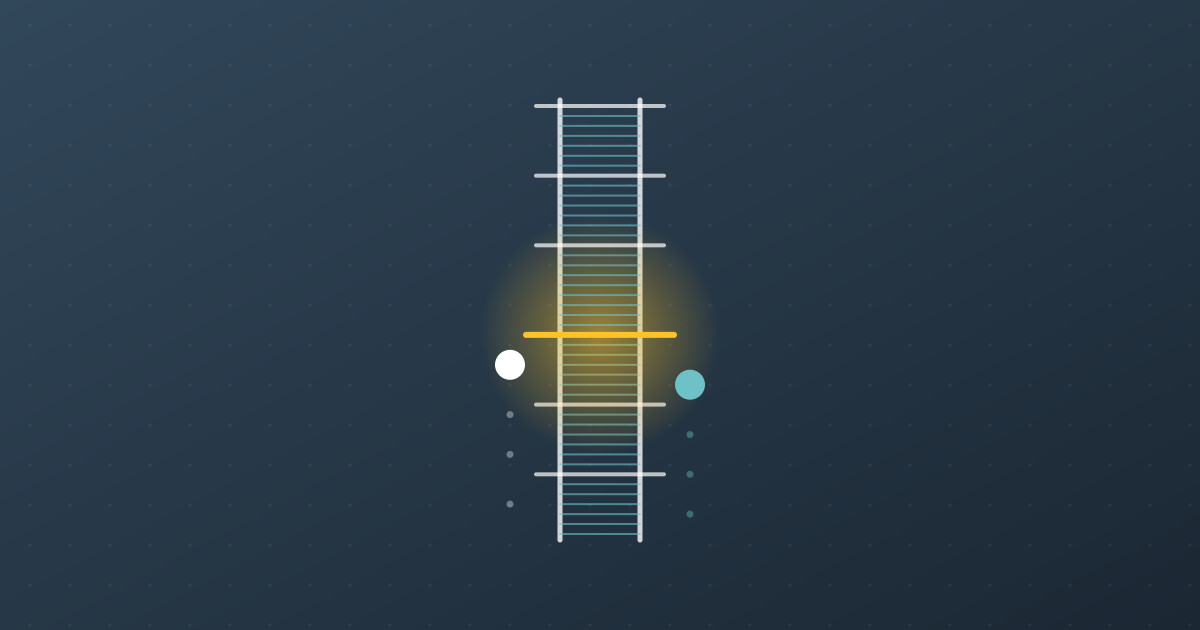
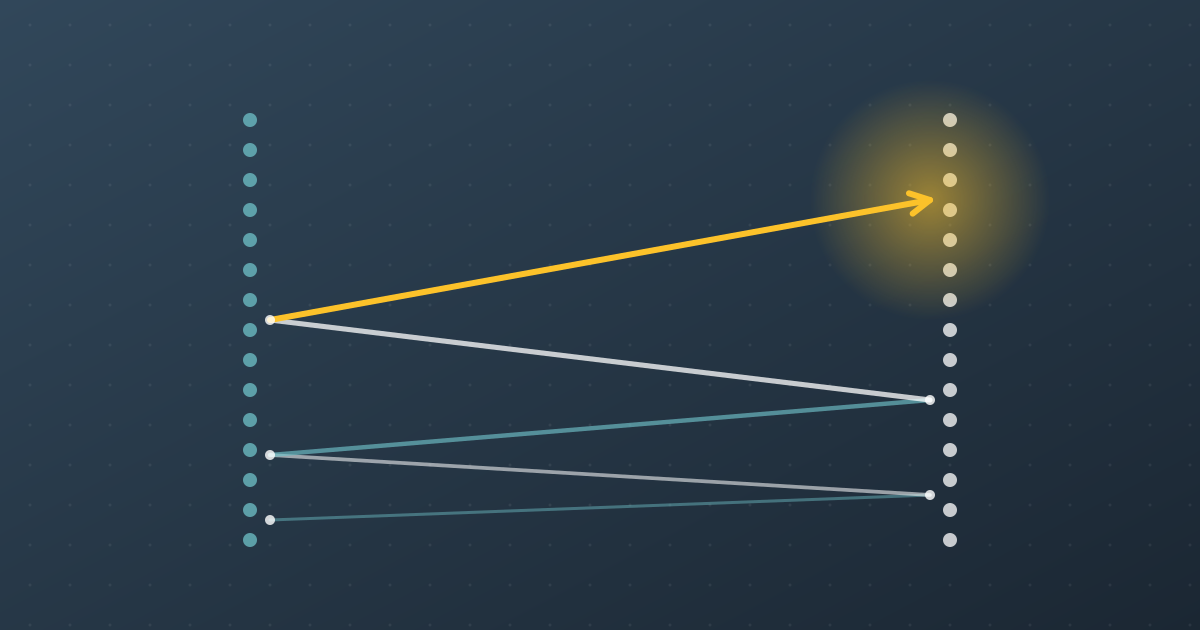
A ladder of six teal lines stands in the frame, with a gold threshold glowing between two pairs of rungs. Two dots climb higher in turn, growing smaller and paler, until one merely directs a beam at the next rung, where its outline appears large, and the other glides one rung down.
Principle #68
Escalation Ladder: If you know the rungs of a conflict and are credibly superior on the next one, you determine how far the dispute goes.
4 min read5 sectionsSituationLink to the principle
Contents
An escalation ladder works only if both sides know where they stand. In soccer, that was not the case for a long time. Referees gave cautions verbally. Players often didn’t understand them, especially in international matches. Spectators sometimes learned only later from the newspaper what had happened. A match in the summer of 1966 showed how dangerous this lack of clarity is, and why an Escalation Ladder needs visible rungs.
A traffic light of three circles, the middle one gold, beside it two cards, one gold and one outlined in white – like Ken Aston’s yellow and red cards.
01
The chaos at Wembley
Situation
On July 23, 1966, England and Argentina meet in the World Cup quarterfinal at Wembley Stadium. In the 35th minute, the German referee Rudolf Kreitlein sends off the Argentine captain, Antonio Rattín. Rattín does not understand what is happening, or does not want to. For several minutes, he refuses to leave the field. Kreitlein speaks no Spanish. On the other side, Jack Charlton learns only from the newspaper that the referee cautioned him.
Link to the principle
A punishment that nobody clearly understands is not a rung on a ladder. It is a reason for a new dispute. When it is unclear where a conflict stands, it escalates not according to rules but according to feelings.
02
The idea at the traffic light
Situation
Ken Aston was in charge of the referees at this World Cup. In 1962, he had himself refereed the notorious match between Chile and Italy, the “Battle of Santiago,” and sent off two players there. After the match at Wembley, Aston drives along Kensington High Street in London. By his own account, the idea comes to him at a traffic light: yellow means caution, red means stop. FIFA takes up the proposal.
Link to the principle
Aston doesn’t invent a new punishment. Cautions and sending-offs already existed. He makes the rungs visible. That is the decisive step. A ladder steers only if everyone can see the rungs: the player concerned, his teammates, the opponents and the audience.
03
The 1970 World Cup
Situation
At the 1970 World Cup in Mexico, the cards are used for the first time. It is also the first World Cup to be broadcast on television in color. At this tournament, no player is shown a red card. The first red card at a World Cup goes to Chile’s Carlos Caszely in 1974, in the match against West Germany.
Link to the principle
Whether the cards contributed to fewer sending-offs in 1970 cannot be proved. But the principle suggests it. If you have the next rung clearly in view, you think about your next step. A visible ladder works even before anyone reaches the top.
04
Rungs everyone knows
Situation
Today a referee has a finely graded ladder: a word, a warning, the yellow card, the red card for a second yellow, and the straight red card. Every player knows they have to play more carefully after a yellow. Coaches often substitute cautioned players before a second yellow can come.
Link to the principle
Here it becomes clear who controls the ladder. The referee holds the next rung in his hands, and everyone knows it. He doesn’t have to crack down right away. He can show a rung and thereby change the behavior of 22 players. His power lies less in the sending-off than in everyone’s certainty that he can order it.
05
What clubs, schools and families can learn from it
Situation
Similar rungs exist in many sets of rules: formal warnings and dismissal in employment law, reprimands and expulsion in schools, graded measures in club bylaws, agreed consequences in families.
Link to the principle
Good rungs are known before the conflict begins. They are clearly distinguishable from one another. And whoever applies them sticks to them. A ladder that applies only sometimes loses its effect because nobody knows anymore whether the next rung will really come.
Key takeaways
Key lessons
01
Make the rungs of a conflict visible before you need them.
02
Make sure the other person understands which rung they are on.
03
Use the lowest rung that still works.
04
Be consistent, or the next rung loses its force.
05
After a warning, give the other person the chance to change their behavior.
Summary
The 1966 quarterfinal showed how a game spins out of control when punishments are not understood. Ken Aston made the rungs of punishment visible with two colors. Since 1970, everyone on the field has known where they stand and what would come next. That is the power of an escalation ladder: it steers behavior because everyone knows the next rung.
Sources
History.com: How the 1966 World Cup Led to Yellow and Red Cards
Wikipedia: Ken Aston
Back to the basics
Read what lies behind the Escalation Ladder: with explanation, animation, video and research.