In March 1940, the Franco regime sets Spain’s clocks forward by one hour, to Central European Time. Intended as a wartime measure, it is still in force today. Ever since, the country has lived in a time zone that does not match its location, and it has organized its daily life accordingly.
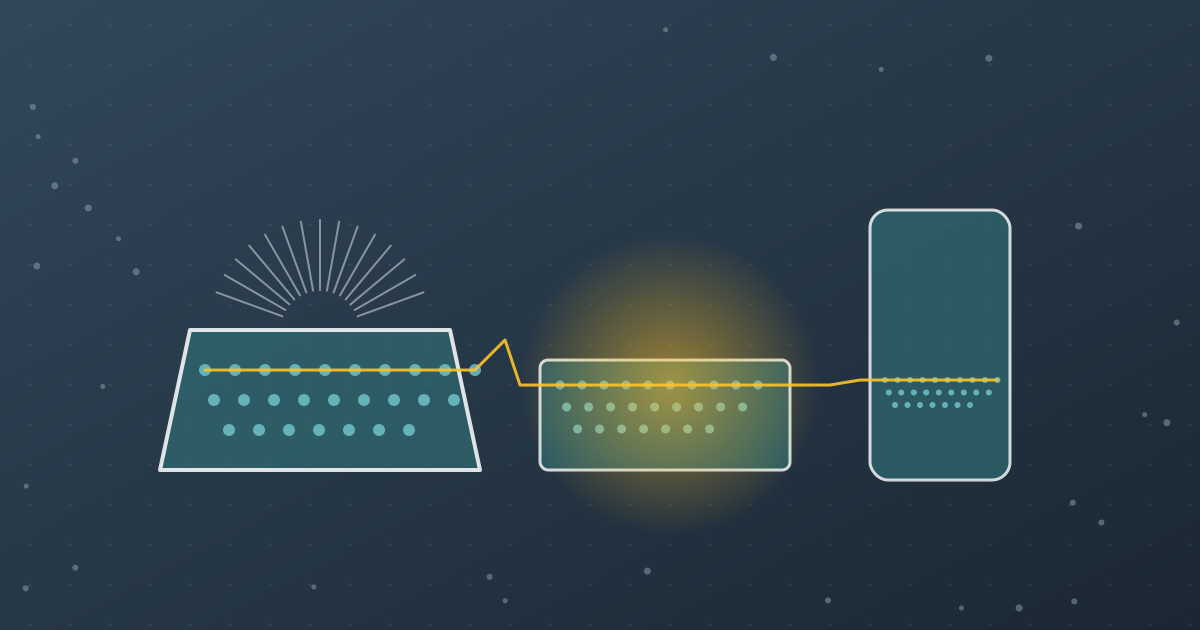
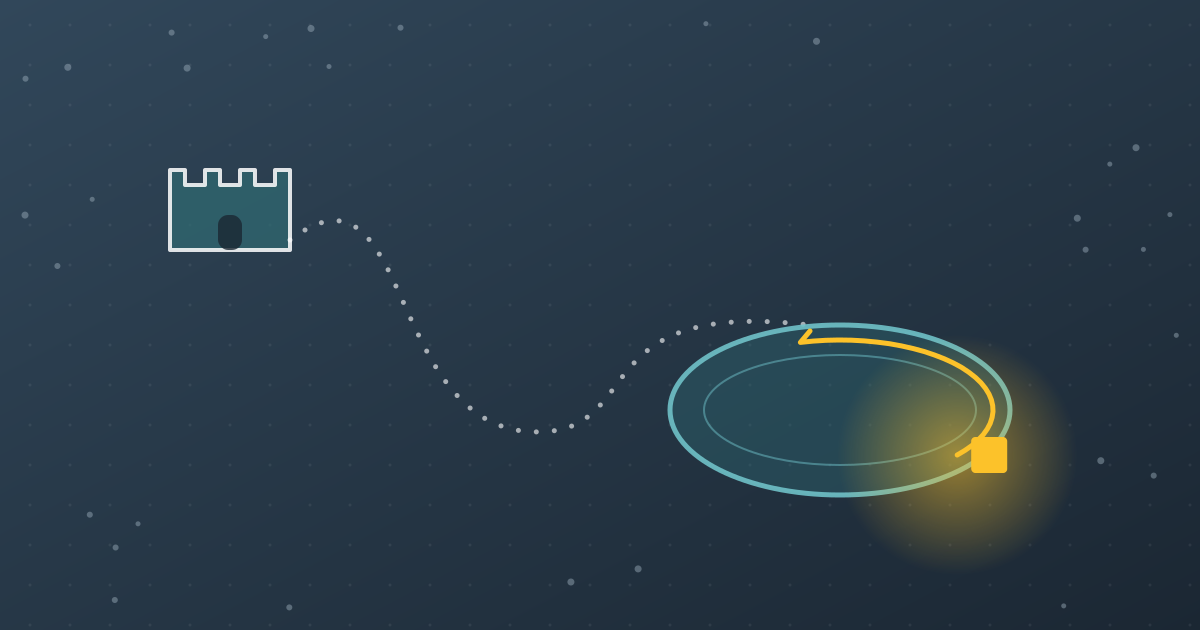
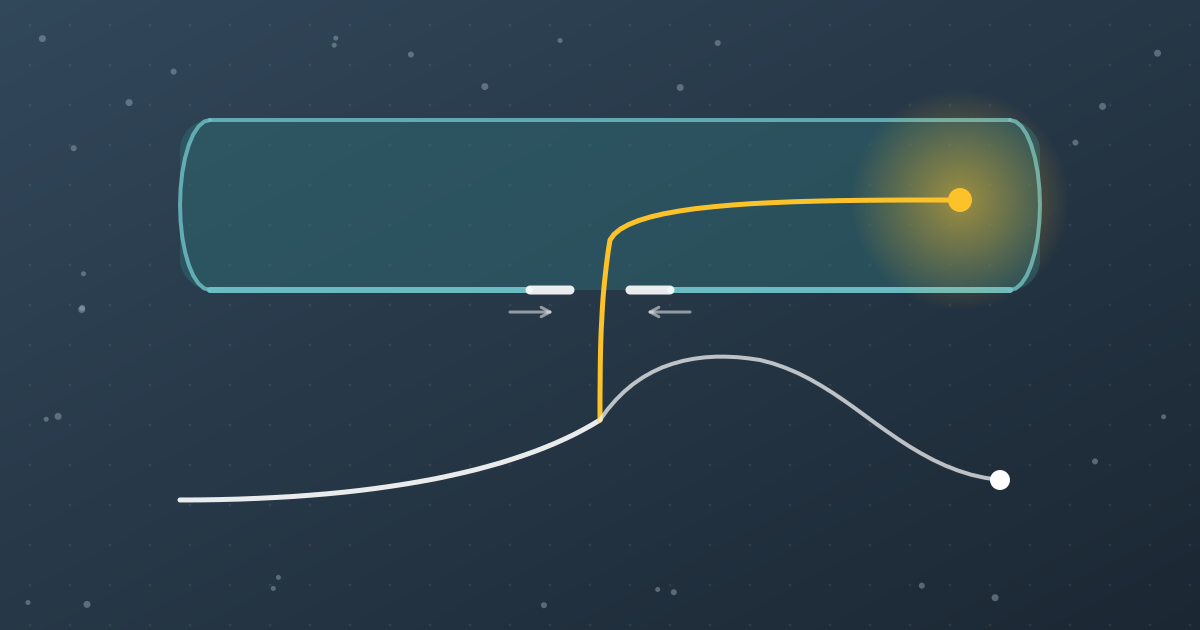
A first gold dot draws a slightly curved line around a small circle across a surface of mist-blue dots; further dots follow exactly this line until it becomes a strong gold track. Then the circle fades, a shorter, straight line appears beside it, only dashed in mist-blue, and the dots still stay in the curve.
Principle #81
Path Dependence: Early, often accidental decisions determine which paths remain open later; that is why beginnings matter more than they seem to at the time.
4 min read5 sectionsSituationLink to the principle
Contents
If you have dinner in Madrid, you often don’t sit down at the table until 9 or 10 p.m. This is considered a Spanish peculiarity. But part of the explanation lies not in culture but in a 1940 administrative decision. Spain’s time zone is a vivid example of Path Dependence: a single decision, intended as temporary, can set an entire country on a path it can hardly leave.
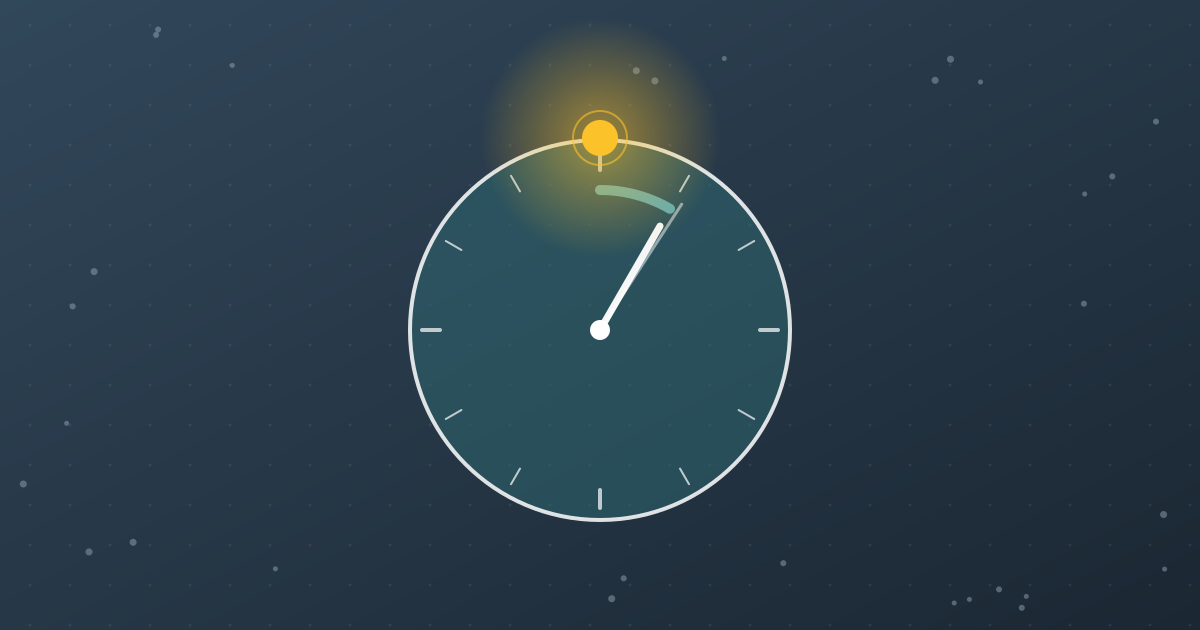
On a large clock face, the golden sun stands at noon, but the hand is already an hour ahead – like Spain’s clocks since 1940.
01
On Greenwich time since 1901
Situation
Starting on January 1, 1901, Greenwich Mean Time applies on the Spanish mainland, the Balearic Islands and in Ceuta and Melilla. This matches the country’s location: the prime meridian runs through eastern Spain, and Madrid even lies west of London. Portugal and Britain use the same time.
Link to the principle
It begins with an order that has a factual basis. Clock time and the position of the sun roughly match. Path dependence often begins where such an order is changed for reasons that have little to do with the matter itself.
02
March 1940: one hour forward
Situation
By an order dated March 7, 1940, the regime of Francisco Franco sets the clocks forward by one hour on the night of March 16–17, 1940. Spain thus switches to Central European Time, the time of Germany. It is a wartime measure that is never reversed. It is often interpreted as a gesture toward Nazi Germany, but this interpretation is disputed. Spain does not enter the Second World War.
Link to the principle
The reasons for the decision belong entirely to their time. The regime, the war and the political alliances are long since history. The clock time has remained. That is the core of path dependence: a decision outlasts the circumstances that explain it.
03
Life adapts
Situation
Because the clocks are ahead, the sun rises and sets late in Spain. In western Galicia, at the summer solstice, solar noon does not come until around 2:40 p.m. Spaniards usually eat lunch at 2 p.m. and dinner at 9 or 10 p.m. On Greenwich time, that would be 1 p.m. and 8 p.m. In 2013, a subcommittee of the Spanish parliament concluded, among other things, that many Spaniards do not get enough sleep.
Link to the principle
A whole web grows up around the decision: working hours, school hours, mealtimes, television schedules. Each individual element has adapted. That is precisely what makes the path stable. Anyone who wanted to set the clocks back would have to move all of that along with them.
04
Why nobody turns the clock back
Situation
In 2013, a subcommittee of the Spanish Congress of Deputies proposes, among other things, a return to Greenwich time. It is not implemented. The physicist Jorge Mira of the University of Santiago de Compostela sees little benefit in a switch: working hours would probably simply shift along with it, and in the short term there would be disruptions. A debate in the European Union on ending the seasonal clock change, which began in 2018, has not changed Spain’s time zone either.
Link to the principle
This shows the two sides of path dependence. A switch has immediate and certain costs; its benefit is uncertain and disputed. Even if the original step was questionable, the way back is not simply a correction. It is a new, expensive decision.
05
Temporary is often permanent
Situation
The Canary Islands are one hour behind the mainland. In Galicia, there are political initiatives to switch to Portugal’s time. The overall picture has not changed in more than 80 years.
Link to the principle
For leadership in companies, churches and families, this is a sobering lesson. What you introduce as a stopgap can become permanent as soon as others adjust to it. That is why, even with temporary measures, it pays to ask whether you could live with them for good.
Key takeaways
Key lessons
01
Treat stopgap solutions as carefully as permanent ones.
02
Assume that people will arrange their lives around every rule.
03
With old rules, ask whether their original reasons still apply.
04
Keep in mind that turning back is a new, expensive decision.
05
For temporary measures, set a date when they will be reviewed.
Summary
In March 1940, Spain switched its clocks to Central European Time, in wartime and under a dictatorship. The circumstances have passed; the clock time has remained. Working hours, school hours and mealtimes have adapted, making a switch back expensive and contentious. Spain’s time zone thus shows how a single decision becomes a path that a country can hardly leave even decades later.
W. Brian Arthur: Competing Technologies, Increasing Returns, and Lock-In by Historical Events. In: The Economic Journal 99 (1989), No. 394, pp. 116–131.
Back to the basics
Read what lies behind Path Dependence: with explanation, animation, video and research.