In August 1914, two Russian armies march into East Prussia, separated by the Masurian Lakes. The weaker German Eighth Army stands between them, moves its forces by rail and on foot against one army and then turns against the other.
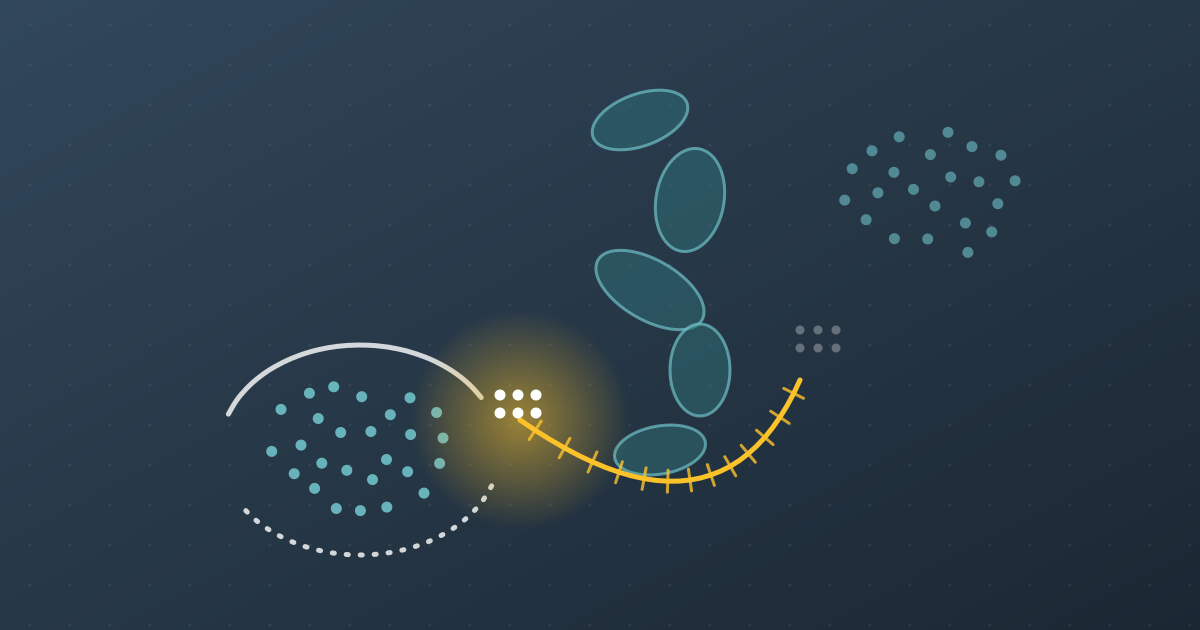
In the middle, a group of golden dots gathers; to the left and right stands a larger teal circle, and above, a long mist-blue arc separates them. Short golden lines carry almost all the dots first to the left circle, which falls apart, then to the right one; in the final image of a second version, the two circles find each other across the arc and close in on the middle like a frame.
Principle #36
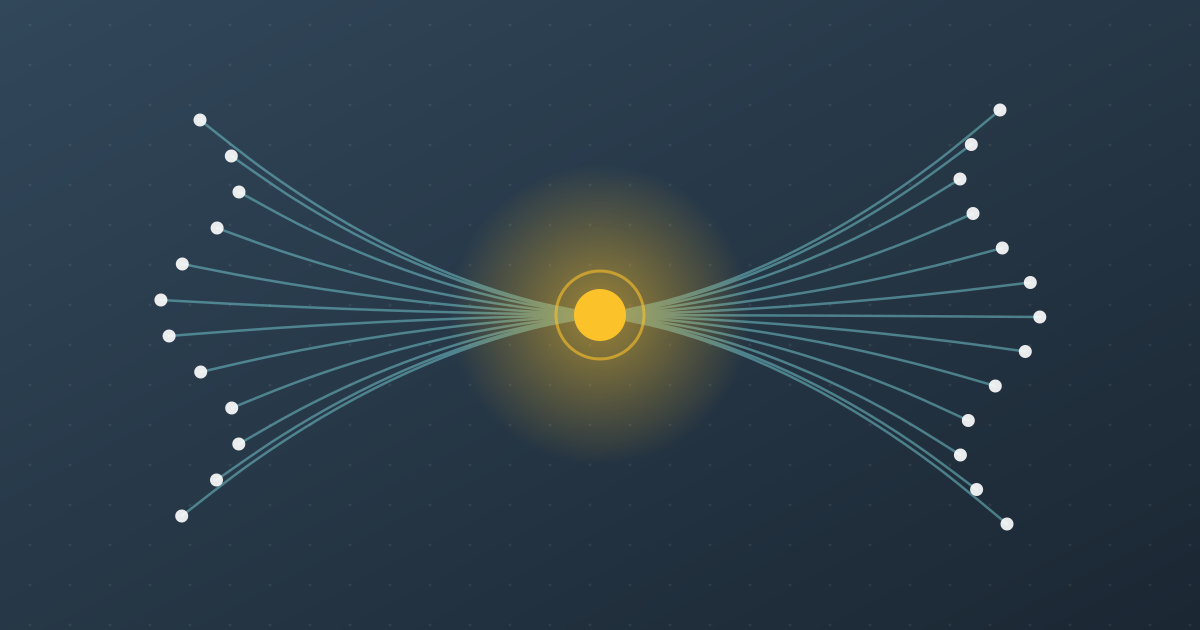
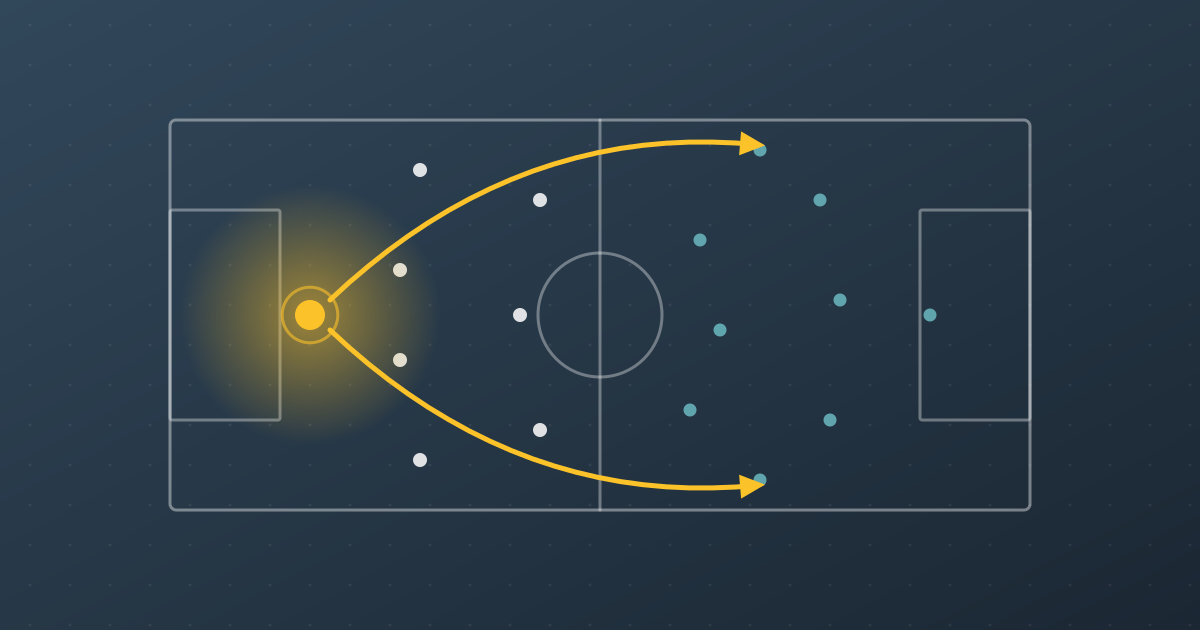
Interior Lines: If you stand in the middle with short routes, you can shift your forces faster than separated opponents and defeat them one after another before they unite.
4 min read5 sectionsSituationLink to the principle
Contents
In the 19th century, the Swiss military theorist Antoine-Henri Jomini described why an army in the middle can have the advantage: it has shorter routes than opponents who envelop it from outside. If those opponents are separated, it can turn against one after the other. The Battle of Tannenberg in August 1914 is one of the best-known examples of Interior Lines. But it also shows that interior lines work only if the opponent makes mistakes.
A chain of lakes separates two armies, while on a golden track the defenders’ own dots travel from one to the other – as at Tannenberg in 1914.
01
Two armies and a lake district
Situation
In August 1914, Russia attacks East Prussia from two sides. The First Army under Paul von Rennenkampf comes from the east, the Second Army under Alexander Samsonov from the south. Between them lie the Masurian Lakes. Figures on troop strength vary. According to Mental Floss, the two Russian armies together had around 420,000 men, the German Eighth Army around 150,000. After the engagement at Gumbinnen on August 20, the German commander, Maximilian von Prittwitz, wants to fall back behind the Vistula. He is relieved of his command. On August 23, Paul von Hindenburg and his chief of staff, Erich Ludendorff, take over.
Link to the principle
The situation is the textbook picture of interior lines. Together, the Russians are superior, but they are separated. The Germans are weaker, but they stand in the middle and have a dense rail network in their own country.
02
The plan: shift forces south
Situation
A plan that, according to the common account, goes back largely to the staff officer Max Hoffmann provides for the following: the Eighth Army is to use the East Prussian rail network to bring I Corps under Hermann von François south against Samsonov. XX Corps under Friedrich von Scholtz holds Samsonov up for the time being. Facing Rennenkampf, only a thin screen remains. Hindenburg and Ludendorff adopt the plan.
Link to the principle
Interior lines are only an advantage if you use them. The core is the rapid shift: as much strength as possible against one opponent, as little as possible against the other. That takes the nerve to leave one front almost bare.
03
Radio messages in plain text
Situation
On the evening of August 24, the Germans intercept unencrypted Russian radio messages that reveal the position and line of march of the Second Army. Hindenburg and Ludendorff then also send XVII Corps under August von Mackensen and I Reserve Corps under Otto von Below south in forced marches. During this time, Rennenkampf hardly advances.
Link to the principle
If you stand in the middle, you need to know how much time you have. The radio messages showed the Germans that Rennenkampf was not coming to help. That gave them the nerve to throw almost everything against Samsonov.
04
The encirclement
Situation
From August 26 to 30, Samsonov’s army is gripped from several sides. On August 28, François, contrary to an explicit order from Ludendorff, pushes farther east and so helps cut off the Russians’ line of retreat. Casualty figures vary: the Russians lose around 90,000 to 95,000 prisoners and tens of thousands dead and wounded, the Germans around 14,000 dead, wounded and missing. According to the account of the British observer Alfred Knox, Samsonov takes his own life.
Link to the principle
The shift turned local inferiority into superiority. Against Samsonov alone, the Germans were now strong enough to envelop him.
05
Then the other army
Situation
After Tannenberg, the Eighth Army, reinforced by corps from the west, turns against Rennenkampf. In the Battle of the Masurian Lakes in September 1914, it pushes the Russian First Army back out of East Prussia.
Link to the principle
This is the second part of interior lines: first one, then the other. At the same time, Tannenberg shows the limit. Success depended on the opponent’s underestimation of the Germans, on radio messages sent in the clear and on Rennenkampf’s hesitation. Had both Russian armies pressed at the same time, the middle would have become a trap.
Key takeaways
Key lessons
01
If you stand between two opponents, don’t strike both halfway; strike one fully.
02
Use your short routes while the others are separated.
03
Dare to hold one side thinly, but only if you know the opponent there.
04
Good information extends the time you have in the middle.
05
Remember that the middle becomes a trap if your opponents coordinate.
Summary
In August 1914, two Russian armies, separated by the Masurian Lakes, stood at the borders of East Prussia. The weaker German Eighth Army used its position in the middle, moved corps by rail and forced march against Samsonov and encircled his army at Tannenberg. Then it turned against Rennenkampf. That is the principle of Interior Lines: if you are positioned centrally, you can shift your forces faster and defeat separated opponents one after another.