Contents
Carl von Clausewitz usually names the enemy army as the center of gravity. But he also knows that there can be other centers of gravity, such as the capital, an ally or public opinion. Sherman’s March to the Sea in the American Civil War is an example of the Center of Gravity: a commander redefines where it lies. At the same time, the march shows what price that can carry.
The starting point
Situation
On September 2, 1864, Sherman takes Atlanta, one of the South’s most important transportation hubs. The war is already in its fourth year. The Confederate army under John Bell Hood does not seek a decisive battle but moves north toward Tennessee to lure Sherman away from Georgia.
Link to the principle
Sherman faces a choice. He can pursue Hood and get bogged down in an endless fight. Or he can ask what the South’s ability to wage war actually hinges on.
The diagnosis
Situation
Sherman concludes that the Confederacy’s armies live on railroads, supplies and the willingness of the population to keep bearing the war. On October 9, 1864, he wires General Ulysses S. Grant that he can make the march “and make Georgia howl.” On November 2, Grant replies that he should go ahead as he proposes.
Link to the principle
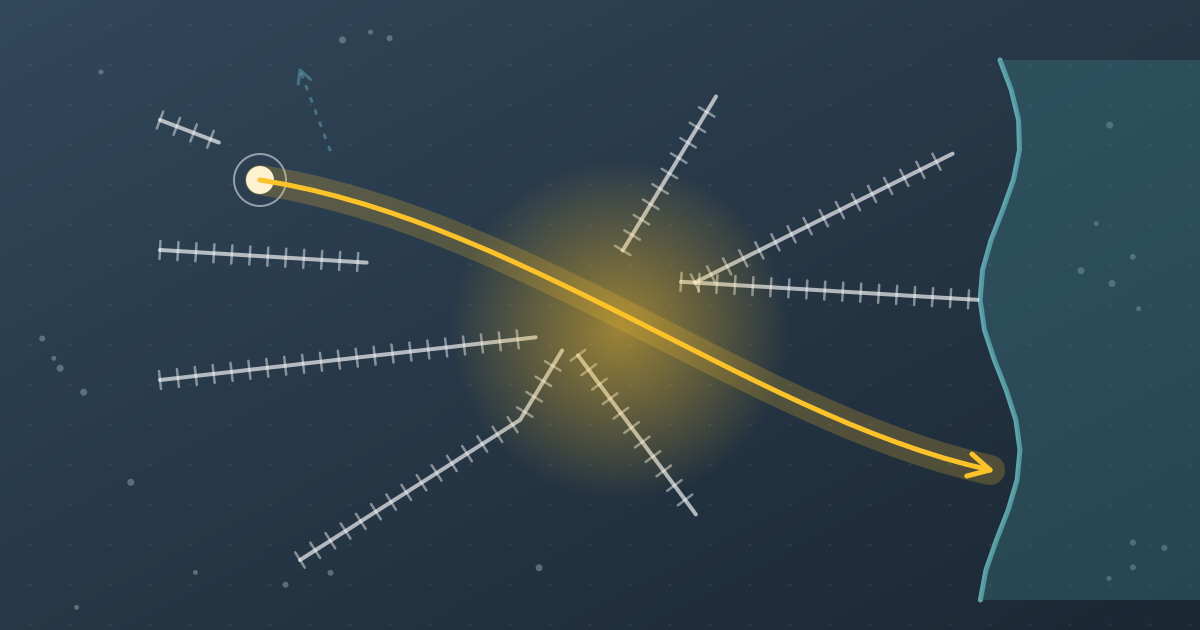
Sherman redefines the center of gravity. It is not Hood’s army on which everything hinges, but what sustains this army and the Confederacy as a whole. He leaves Hood to General George H. Thomas, who defeats him at Nashville in December.
The march
Situation
On November 15, 1864, Sherman leaves Atlanta with some 62,000 men. He deliberately cuts himself off from his own supply lines and has his troops live off the land. In two wings, the army marches some 460 to 480 kilometers to the southeast. Feints toward Augusta and Macon keep the enemy guessing. Railroads are systematically destroyed: the soldiers heat the rails over fires and bend them so that they become useless.
Link to the principle
All the means aim at the same point. The army hardly fights; it hits the transportation routes, the supplies and the population’s trust that its government can protect it. Combat casualties remain low compared with the war’s great battles.
Savannah and its aftermath
Situation
On December 21, 1864, Sherman takes the port city of Savannah and offers it to President Abraham Lincoln by telegraph as a Christmas present. He himself puts the damage done at $100 million, of which, he says, only a fifth was of use to his army. He then moves north through the Carolinas. On April 26, 1865, General Joseph E. Johnston surrenders to him in North Carolina.
Link to the principle
The blow against the center of gravity shortens the war; that, at least, was Sherman’s intention and is the assessment of many historians. The South loses not only material but also the belief that resistance still makes sense.
The price
Situation
The march hits civilians above all. Farms, mills and supplies are plundered or destroyed. At Ebenezer Creek on December 9, 1864, a Union corps has a pontoon bridge taken up before the formerly enslaved people following the army can cross; many drown, others are re-enslaved. Historians still argue over whether the march should be called “total war” or “hard war.”
Link to the principle
If you look for the center of gravity in the will of a population, you hit people who are not fighting. The principle explains the effect. It does not answer the moral question.
Key takeaways
Key lessons
- The obvious opponent is not always the point on which everything hinges.
- Ask what carries the other side’s strength, not just where it stands.
- Don’t let yourself be lured into a fight that only ties up forces.
- Direct all your means at the same point.
- Reckon with the price others pay for your blow.
Summary
In 1864 William Tecumseh Sherman let the opposing army go and directed his forces at what carried the Confederacy: railroads, supplies and the will of its population to fight. The March to the Sea hit this center of gravity and helped bring the war to an end. But it also shows how high the price can be when the center of gravity lies with people who are not fighting.
Sources
- William T. Sherman: Memoirs of General William T. Sherman. New York: D. Appleton and Company 1875.
- Mark Grimsley: The Hard Hand of War: Union Military Policy toward Southern Civilians, 1861–1865. Cambridge: Cambridge University Press 1995.