Francis Ford Coppola, “Apocalypse Now” and Death Ground
For “Apocalypse Now,” Francis Ford Coppola is personally liable for cost overruns running into the millions. Pulling the plug would have ruined him. He keeps shooting, through a typhoon, illness and chaos, and in 1979 he wins the Palme d’Or.
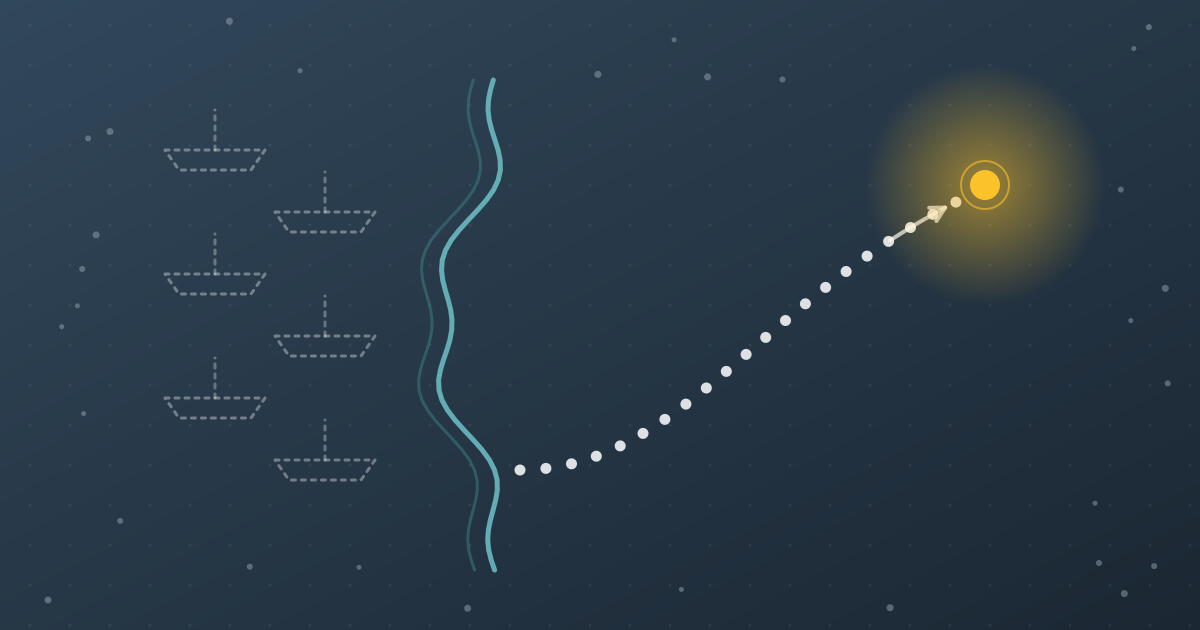
Many small dots stand at a fork; one line leads back to an arch at the bottom edge, one forward onto a rise, and the dots split into teal and mist-blue, some of them drifting back. Then the arch fades, all the dots turn gold and move forward together; in the final image, a ring closes around a dark circle that grows until a gap opens in the ring and it slips out.
Principle #85
Death Ground: If you have no way back, you release strengths that would otherwise stay hidden; that is why it can be wise to cut off your own retreat deliberately – and unwise to take it away from an opponent.
4 min read5 sectionsSituationLink to the principle
Contents
Most directors bear an artistic risk. The studio bears the financial one. With “Apocalypse Now,” Francis Ford Coppola reverses this relationship. He finances the film through his own company and gives a personal guarantee when the costs explode. In doing so, he builds his own death ground: he can no longer stop without losing everything. The story shows what strength this releases and what it costs – a case of Death Ground in the film business.
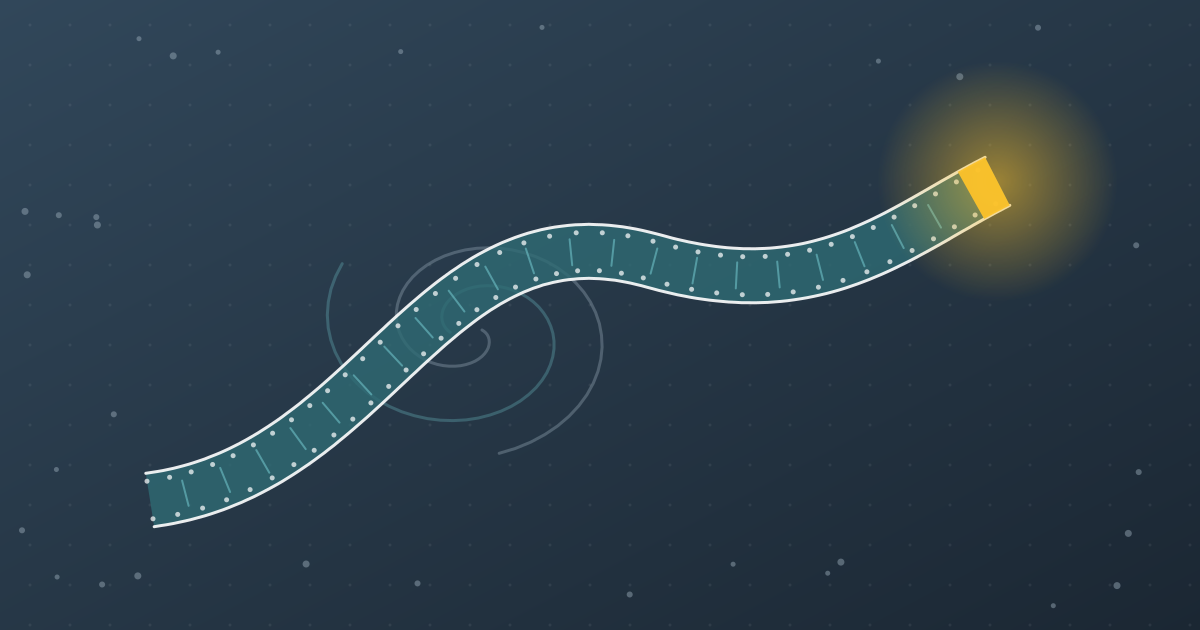
A strip of film runs right through a hurricane and on, until its last frame glows gold – like Coppola on “Apocalypse Now.”
01
A film at his own expense
Situation
After the success of the two “Godfather” films, Coppola decides in 1975 to produce the Vietnam War film himself, through his company American Zoetrope. The budget is initially between $10 million and $14 million, depending on the source. Around $8 million comes from the sale of the foreign rights, and $7.5 million from the American distributor United Artists for the U.S. rights.
Link to the principle
If you produce yourself, you gain freedom and lose protection. Coppola can make the film the way he wants. But he can no longer count on a studio to bear the losses. The way back grows narrower before shooting has even begun.
02
A shoot that spins out of control
Situation
On March 20, 1976, filming begins in the Philippines. It does not end until May 1977, after 238 shooting days. The U.S. Department of Defense refuses the usual support; the government of Ferdinand Marcos lends helicopters. Shortly after the start, Coppola replaces the lead actor, Harvey Keitel, with Martin Sheen. A typhoon destroys a large part of the sets. Marlon Brando shows up significantly overweight and unprepared. In March 1977, Martin Sheen suffers a heart attack.
Link to the principle
For a studio, any one of these crises would have been a reason to stop the project or cut it back radically. For Coppola, this way out no longer exists. An abandoned film brings in no money; a finished one might. So he improvises, rewrites and keeps shooting.
03
Personal liability
Situation
The costs rise to around $30 million; the figures vary slightly. The overruns are covered by bank loans, guaranteed by United Artists and by Coppola’s personal assets. The trade press at the time reports on a director who is personally answerable for the cost overruns. According to reports, he puts up property as security and uses profits from “The Godfather.” In a 1979 interview, he speaks openly about exhaustion, pain and the fear that his lead actor’s heart attack set off in him.
Link to the principle
This is death ground in its purest form. Coppola has burned his own bridges. He has to finish the film and make it a success in order to pay off his debts. The strength with which he carries on grows out of this situation. But the pressure also takes its toll on him: physically, emotionally and in his family.
04
Cannes 1979
Situation
After a long postproduction and test screenings with different endings, Coppola shows the film at Cannes on May 19, 1979, as a work in progress. It wins the Palme d’Or, shared with Volker Schlöndorff’s “The Tin Drum.” In August 1979, the film opens in American theaters and earns several times its cost.
Link to the principle
In hindsight, success justifies the risk. But it also shows that Coppola had more than resolve: he had an extraordinary talent and material that struck a nerve. Death ground carried him through the shoot. It does not make good films on its own.
05
Risk as a pattern
Situation
Coppola continues to take risks at his own expense later on. His next big film, “One from the Heart” (1982), is a commercial failure and plunges him and his company into serious financial trouble. In 2024, he presents “Megalopolis” at Cannes, a project costing around $120 million that, according to reports, he largely financed himself.
Link to the principle
If you once step onto death ground and succeed, you are tempted to do it again. But the same situation does not always lead to the same result. The principle is a tool for exceptional situations, not a habit.
Key takeaways
Key lessons
01
Full responsibility gives you freedom and strips you of all protection.
02
With no way back, every crisis becomes a problem you have to solve.
03
Consider the toll that pressure takes on you and your family.
04
Resolve carries you through; quality decides in the end.
05
Don’t turn one venture that paid off into a recipe for the next.
Summary
Francis Ford Coppola financed “Apocalypse Now” himself and was personally liable for cost overruns running into the millions. Through a typhoon, a recasting and his lead actor’s heart attack, he kept shooting because abandoning the film would have ruined him. In 1979, the film won the Palme d’Or and became a success. Death ground released extraordinary strength in Coppola, but later projects show that the same bet does not always pay off.