At the end of 2008, Tesla and SpaceX are on the verge of collapse. By his own account, Elon Musk puts the rest of his money into both companies instead of saving just one. After that, he no longer has a cushion for emergencies.
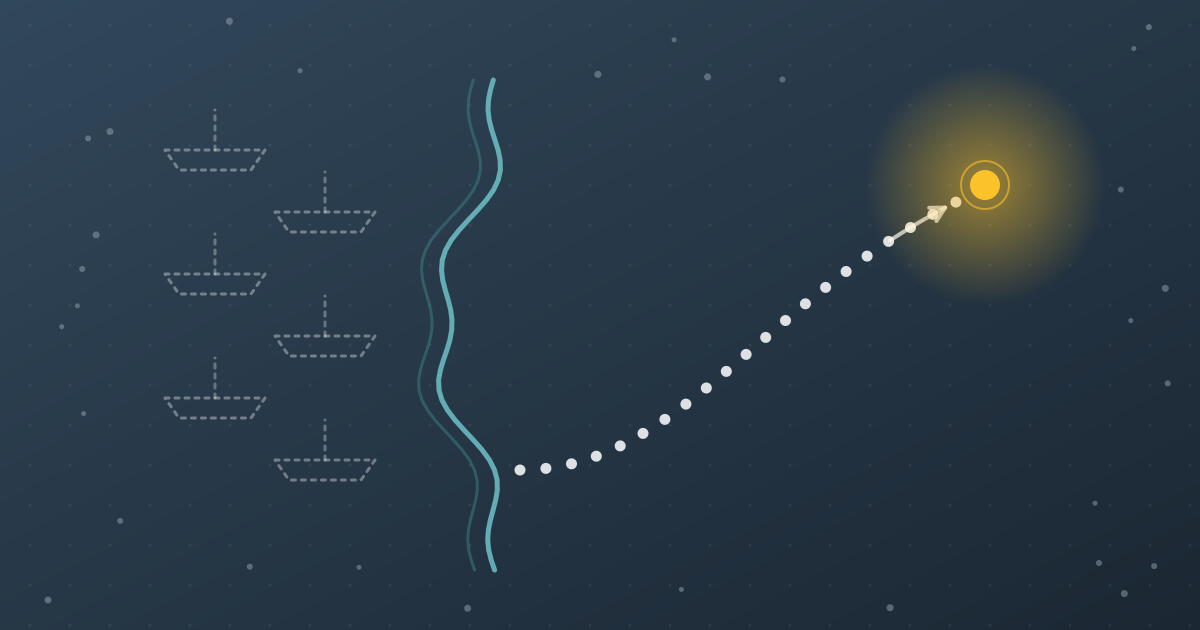
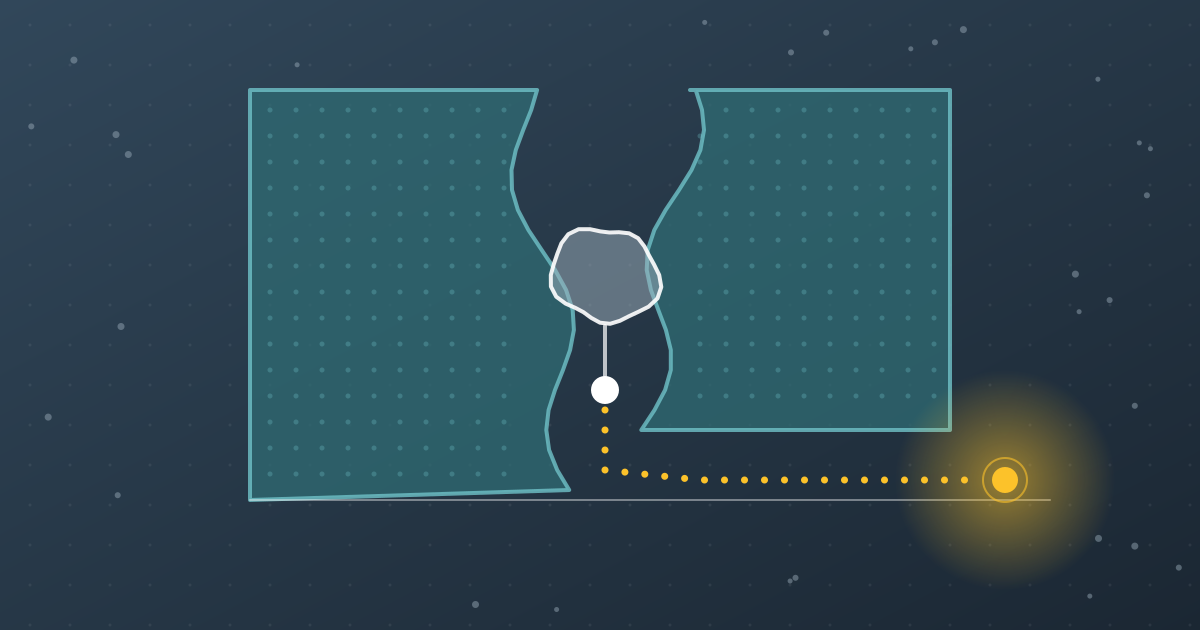
Many small dots stand at a fork; one line leads back to an arch at the bottom edge, one forward onto a rise, and the dots split into teal and mist-blue, some of them drifting back. Then the arch fades, all the dots turn gold and move forward together; in the final image, a ring closes around a dark circle that grows until a gap opens in the ring and it slips out.
Principle #85
Death Ground: If you have no way back, you release strengths that would otherwise stay hidden; that is why it can be wise to cut off your own retreat deliberately – and unwise to take it away from an opponent.
4 min read5 sectionsSituationLink to the principle
Contents
Entrepreneurs like to say they went “all in.” Usually it is just a figure of speech. In Elon Musk’s case in 2008, by his own account, it was meant literally. The case shows Death Ground in business: if you have no reserves left, you work under extreme pressure and with total focus. But it also shows how close the outcome was and why it is not a recipe for everyone.
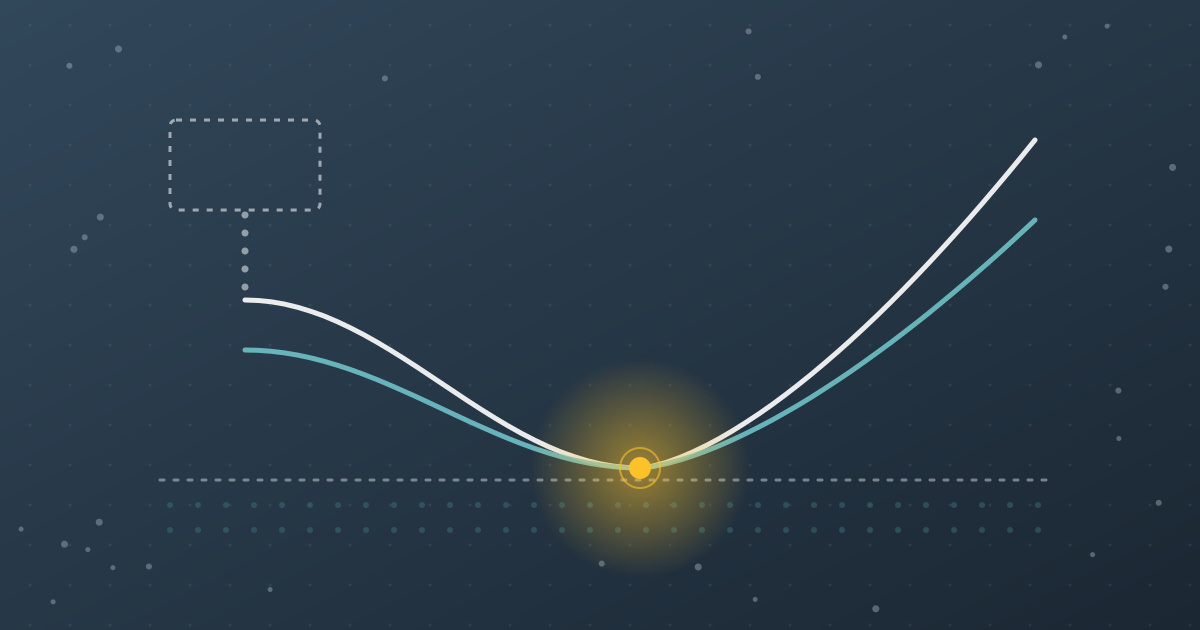
The cushion at the top left is empty; two curves sink to the edge of the abyss, touch it at a golden point and rise – like Musk in 2008.
01
The money from PayPal
Situation
In 2002, eBay buys the payment service PayPal. Elon Musk is one of the largest shareholders and receives a sum in the high millions from the sale. That same year, he founds the space company SpaceX. In 2004, he becomes the lead investor in the young carmaker Tesla. At an event in Paris in 2015, he said he had thought it unlikely that either company would succeed and had therefore financed them with his own money instead of asking other investors.
Link to the principle
The fortune from PayPal is Musk’s safety net. He could have lived well on it. By putting it into two very risky companies, he shrinks this safety net step by step. It is not death ground yet, but the path toward it has been laid.
02
Three failed launches
Situation
SpaceX’s first rocket, the Falcon 1, fails in 2006, in 2007 and in August 2008. Each failed launch costs money, time and trust. On September 28, 2008, on its fourth attempt, the Falcon 1 reaches orbit. It is the first privately developed liquid-fueled rocket to do so.
Link to the principle
With every failure, the room for maneuver shrinks. One more failure could have meant the end. In situations like this, everything secondary disappears. The team works toward a single goal because there is no other choice left. This is exactly the effect Sun Tzu describes: in a situation with no way out, no one thinks of flight anymore.
03
The choice between two companies
Situation
In the fall of 2008, the financial crisis hits Tesla too. The Roadster is being built only slowly, money is running short, and in October Musk takes over as head of the company himself. By his own account, he faces a choice: put the rest of his money into one of the two companies or split it between both. He chooses both. He later says that at the time he no longer owned a house or any other assets he could sell.
Link to the principle
Here death ground has been reached. There are no reserves left with which Musk could absorb a failure. If he gives up in this situation, he loses everything. That creates enormous resolve. But it also creates pressure that can impair judgment.
04
Christmas Eve 2008
Situation
On December 23, 2008, SpaceX receives a NASA contract for 12 resupply flights to the International Space Station, worth $1.6 billion. On December 24, 2008, Tesla closes a financing round. According to Musk, this happens at 6 p.m., in the last possible hour before Tesla would no longer have been able to make payroll.
Link to the principle
The rescue comes from outside, from a customer and from investors. Death ground did not bring it about. What it did was make sure that both companies held out until that moment. That is the sober achievement of the principle: it mobilizes strength but guarantees no outcome.
05
The limit of the example
Situation
Even afterward, things remain tight. Musk said that as late as early 2013, Tesla had only enough money for one or two weeks. Tesla has been consistently profitable only since the end of 2019, after the production ramp-up of the Model 3. Today Musk is one of the richest people in the world.
Link to the principle
We know this story because it ended well. No one tells the stories of the many founders who also put everything on the line and failed. This is called survivorship bias. The organizational researcher Barry M. Staw has also shown that after losses, people tend to put even more into a failing venture. Death ground raises the stakes, not the probability of success.
Key takeaways
Key lessons
01
Without reserves, you work with more focus, but also under dangerous pressure.
02
Death ground keeps you in the game; you have to win with performance and partners.
03
Distinguish courageous commitment from the reflex to throw good money after bad.
04
Success stories show you only the survivors.
05
Put only as much at stake as you can lose without dragging others down with you.
Summary
In 2008, by his own account, Elon Musk bet the rest of his fortune on Tesla and SpaceX when both were close to the end. With no safety net, he and his teams worked with all their strength until a NASA contract and a financing round on Christmas Eve saved the companies. The example shows the power of death ground and at the same time its limit: it mobilizes, but it does not decide the outcome.
Wikipedia: Commercial Resupply Services (NASA contracts of December 23, 2008); Wikipedia: Falcon 1 (launch dates).
Barry M. Staw: Knee-Deep in the Big Muddy: A Study of Escalating Commitment to a Chosen Course of Action. In: Organizational Behavior and Human Performance 16 (1976).
Back to the basics
Read what lies behind Death Ground: with explanation, animation, video and research.