Kevin Systrom, Instagram and the Principle of Plan and Adaptation
In 2010, Kevin Systrom builds an overloaded app called Burbn. What excites users most is one feature: sharing photos. Systrom and Mike Krieger cut everything else. What remains becomes Instagram, which is sold two years later for $1 billion.
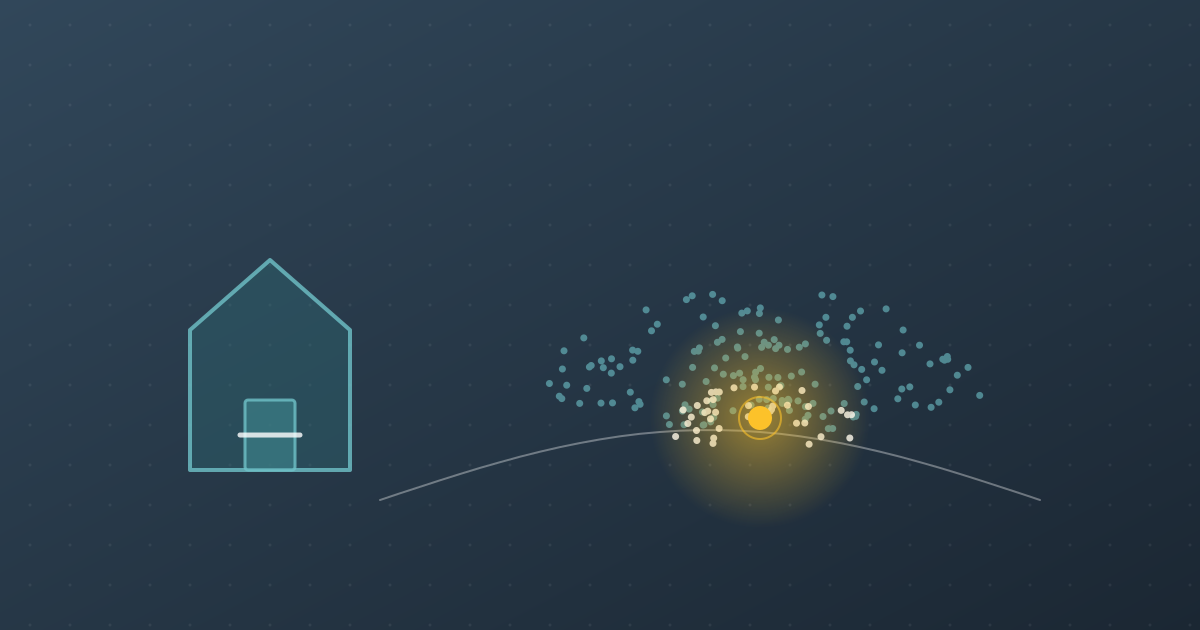
A dashed line connects a starting point with a golden target circle. A dot sets off until a crossbar cuts the line and it fades to mist-blue. The target circle keeps glowing; a new arc in teal traces itself around the obstacle, later a second one, and the dot reaches the target by a completely different route.
Principle #21
Plan and Adaptation: A plan gives you direction, but as soon as reality responds, you have to adapt it without losing sight of the objective.
3 min read5 sectionsSituationLink to the principle
Contents
Helmuth von Moltke, chief of the Prussian General Staff, wrote in 1871 that no plan of operations extends with any certainty beyond the first encounter with the enemy’s main force. Strategy, he concluded, is a system of expedients. In the start-up world, the encounter with the main force means this: the first real users try out your product. What happens next is rarely what you planned. Instagram’s story shows the Principle of Plan and Adaptation at work.
A grid of many small feature icons fades; only the photo icon steps forward and grows large and golden – as Instagram did out of Burbn.
01
An app for everything
Situation
In 2010, in San Francisco, Kevin Systrom develops an app called Burbn together with Mike Krieger. It is designed as a check-in service: users report where they are and can also post photos. On March 5, 2010, Systrom raises $500,000 in seed funding from the investors Baseline Ventures and Andreessen Horowitz.
Link to the principle
Burbn is a plan. It rests on an assumption about what people want: one place for everything they experience while out and about. The plan isn’t wrong; it’s just untested. The investors’ money gives it weight, but not certainty.
02
What users actually do
Situation
Burbn closely resembles Foursquare, the well-known check-in service of the time. Systrom and Krieger look carefully at what people do with the app. One feature excites them most: sharing photos. Systrom later described a meeting in which the team asked itself what was actually unique and interesting about their product. The answer was the photo.
Link to the principle
This is the first encounter with reality. Users don’t vote with words but with their behavior. If you want to adapt, you first have to look. Systrom and Krieger don’t hold on to the plan just because they came up with it.
03
The cut
Situation
The team cuts almost everything. What remains at the core is photo sharing, plus filters that make even simple phone photos look better. At first, the app runs only on the iPhone. It gets a new name: Instagram. On October 6, 2010, it launches in the App Store.
Link to the principle
Here, adapting means not adding something but leaving things out. That is often the harder step, because every feature you cut was once part of the plan. The objective stays the same: an app that people like to use and use often. The way there changes completely.
04
Rapid growth
Situation
Instagram grows rapidly. In December 2010, after about two months, the app has one million registered users. By September 2011, according to a CNN report, it has more than nine million. On April 9, 2012, Facebook announces that it will acquire Instagram for about $1 billion in cash and stock.
Link to the principle
The success did not come from the original plan but from the adaptation. Had Systrom and Krieger kept building out Burbn, they would probably have sunk more money and time into features nobody wanted. Here, Moltke’s image of strategy as a system of expedients shows up as a willingness to put what you have learned into practice right away.
05
What remained
Situation
Much from the Burbn days was carried over: the team, the seed money, the experience with mobile apps and the observation that photos connect people. Systrom himself later attributed the success to having paid close attention to user feedback. The entrepreneur Eric Ries popularized the term “pivot” for such changes of course.
Link to the principle
Adaptation is not a fresh start. Literally, a pivot is the point something turns on: one part stays fixed while the rest moves. If you adapt, you keep what works and change what doesn’t.
Key takeaways
Key lessons
01
Treat your plan as an assumption, not as the truth.
02
Pay attention to what people do, not just to what they say.
03
Adapting often means leaving things out.
04
Hold on to the objective and let go of the way.
05
When you change course, keep what already works.
Summary
With Burbn, Kevin Systrom and Mike Krieger planned an app for everything. Users showed them that only photo sharing really mattered. The two cut the rest, named the app Instagram and had one million users after two months. That is the Principle of Plan and Adaptation: the plan gets you moving, and adaptation gets you to the objective.