At the end of 1979, the Soviet Union invades Afghanistan. The Afghan resistance groups cannot defeat its army in open battle. So they fight differently: in small groups, from the mountains, with ambushes and with plenty of time. In February 1989, the last Soviet unit withdraws.
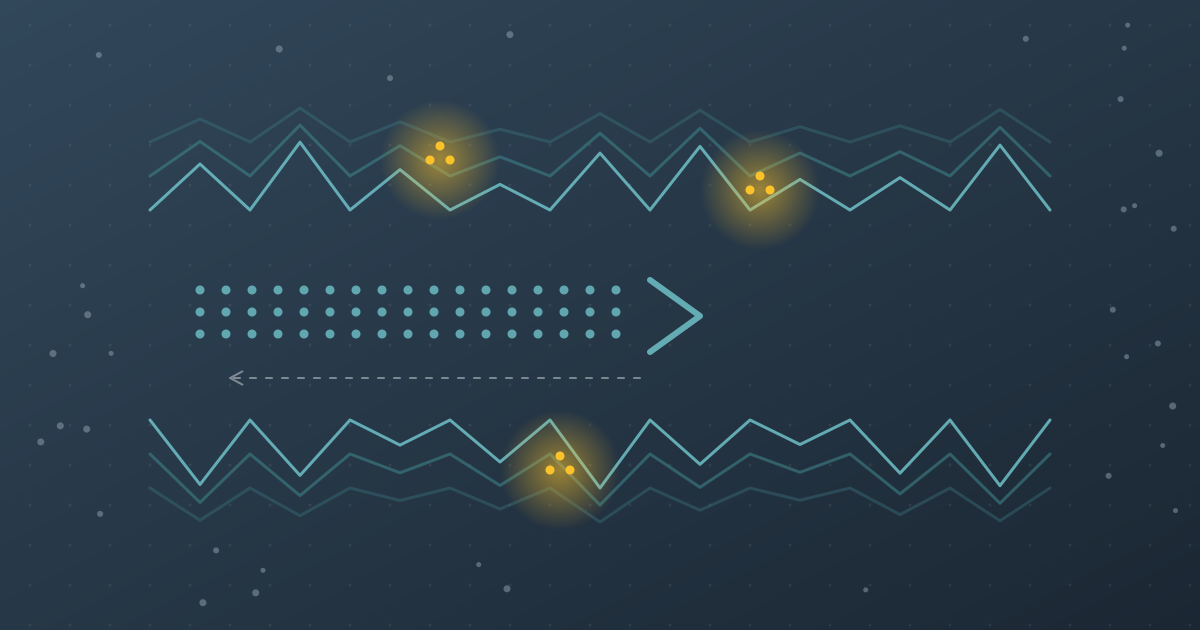
A large circle of many teal dots and a small circle of a few gold dots face each other on an even grid of mist-blue lines, and the gold dots are pushed back field by field. Then the grid tips away, revealing a field of narrow, winding lines and slim gates, in which the large circle gets stuck while the gold dots glide freely through.
Principle #56
Asymmetry: The weaker side does not win by playing the stronger side’s game better, but by choosing a different game in which that strength counts for little.
4 min read5 sectionsSituationLink to the principle
Contents
The political scientist Ivan Arreguín-Toft has studied why weaker sides win wars. His answer: what matters is less how strong a side is than whether both sides fight in the same way or in different ways. He examines the Soviet war in Afghanistan as one of five case studies and concedes that it is a counterexample to his theory: the Soviet Union turned to brutal warfare against the population, by his classification the same indirect approach as that of the guerrillas, and still had to withdraw. Even so, the war is one of the best-known examples of Asymmetry. It was also a vast human catastrophe. We recount it here soberly in order to understand the principle, not to glorify violence.
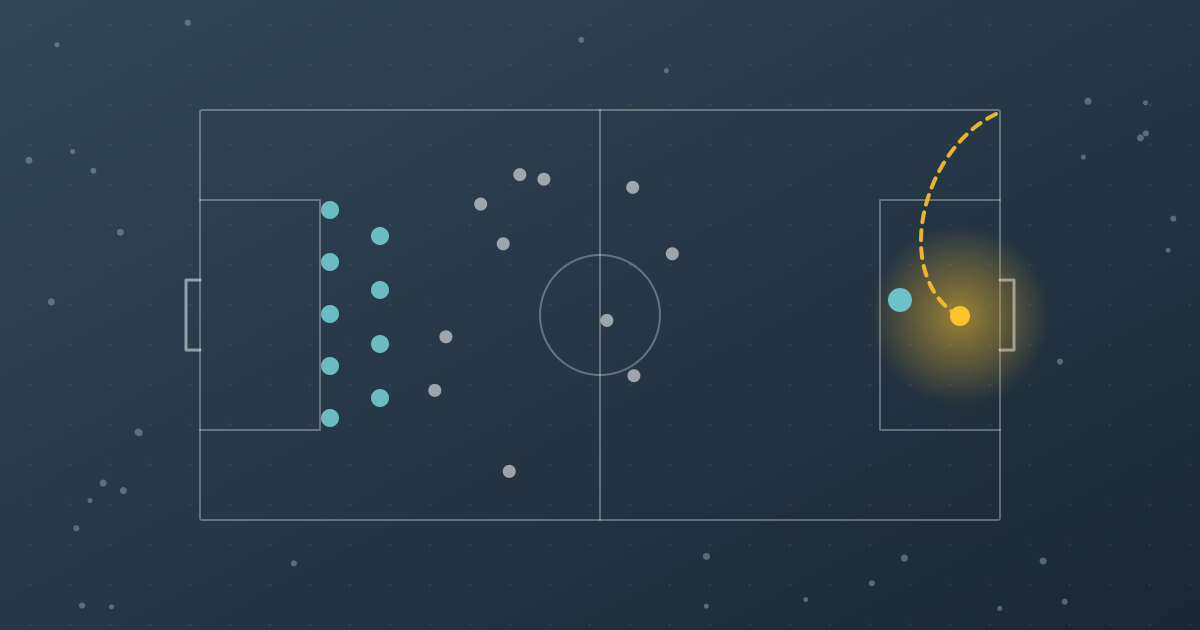
A broad arrow of dots moves through a valley, while small golden groups sit on the ridges all around – like the resistance in Afghanistan.
01
A superpower invades
Situation
On December 25, 1979, Soviet troops begin the invasion of Afghanistan to prop up the communist government there. In the years that follow, more than 100,000 Soviet soldiers are stationed in the country, around 115,000 in the mid-1980s. They have tanks, attack helicopters, artillery and an air force.
Link to the principle
On paper, the situation is clear. In any open battle, the Soviet army would be superior. If you play the same game against such a power, you lose. So the question for the weaker side is not how to become stronger but how to make the other side’s strength come to nothing.
02
No open battle
Situation
The mujahideen fight as guerrillas in small groups in the mountainous hinterland. Almost 80% of the country is not under the secure control of the government and the Soviet troops. The fighters ambush convoys, sabotage power lines, pipelines and radio stations and lay mines on a large scale.
Link to the principle
This is the heart of asymmetry: the weaker side chooses the place, time and manner of the fight. The mountains slow tanks down, and small groups offer no worthwhile target. The Soviet army can win every engagement and still make no progress.
03
Time as a weapon
Situation
The war drags on for nine years. According to official Soviet figures, around 14,500 Soviet soldiers die; other estimates go as high as about 26,000. Mikhail Gorbachev, head of the Soviet Communist Party since March 1985, wins support in the Politburo for a withdrawal as early as October 1985 and announces the complete withdrawal in 1987.
Link to the principle
The mujahideen do not have to win; they only have to hold out. For the stronger side, every month becomes more costly, politically and in human terms. Asymmetry shifts the contest from the question “Who is stronger?” to the question “Who can hold out longer, and who cares more?”
04
Help from outside
Situation
The mujahideen are not alone. Pakistan, the United States (Operation Cyclone), Britain, China, Saudi Arabia and other states support them. Aid from the United States, Saudi Arabia and China is estimated at a total of $6 billion to $12 billion. Foreign volunteers come as well.
Link to the principle
Asymmetry does not mean that the weaker side does everything on its own. It needs safe havens and supplies. If you fight differently, you also have to be supplied differently. This holds on a large scale and a small one: a small company up against a corporation needs partners who give it breathing room.
05
The withdrawal and the price
Situation
On April 14, 1988, the Geneva Accords are signed. On May 15, 1988, the withdrawal begins, and on February 15, 1989, General Boris Gromov, commander of the 40th Army, is the last to cross the Friendship Bridge. For Afghanistan, the price is enormous: estimates speak of one to three million dead, and millions of people flee, mainly to Pakistan and Iran. After the withdrawal, the war in the country continues.
Link to the principle
Asymmetry can force a stronger side to withdraw. But it does not yet build an order. What works for wearing an opponent down does not automatically work for governing. If you use the principle, you should know what is supposed to come after the “victory.”
Key takeaways
Key lessons
01
Don’t play the stronger side’s game; choose your own.
02
Look for places and times where its strength counts for little.
03
Sometimes it is enough to hold out until it becomes too costly for the other side.
04
Secure backing and supplies before you commit to a long fight.
05
Think beyond victory: what will you build afterward?
Summary
The Soviet army was superior to the Afghan resistance groups in any open battle. The mujahideen therefore chose a different way of fighting: guerrilla war in the mountains, ambushes, sabotage and time. With support from outside, they held out for nine years, until the Soviet Union withdrew in February 1989. The example shows how asymmetry works, and at the same time its high human cost.