The principle in detail
Three steps through the principle: grasp it, place it, put it to work. Open each topic on its own.
The core messageCore statement and 3 clarifications
There are more than two options, and the best one changes with the balance of strength. If you are weaker, you tend to make peace; if you are stronger, you can seek confrontation.
- It does not say
- That staying put means doing nothing. If you stay put, you prepare for the moment when the situation turns.
- It does not say
- That every measure is permissible today. Under international law, war is no longer a matter of free choice, and a double policy, once discovered, destroys trust.
- It also says
- If peace and war bring the same gain, choose peace.
The explanationMost people and organizations have a favorite measure.
- Most people and organizations have a favorite measure.
- Some always attack; others always back away.
- The principle demands the reverse order: first examine the situation, then choose your response.
How strong are you really here, and which of the six responses fits that?
The signs3 signs when you heed it · 3 when you overlook it
- Before a conflict, you soberly assess how strong both sides are, including partners and backing.
- Depending on the situation, you choose differently: sometimes agreement, sometimes patience, sometimes open confrontation.
- When the balance of strength shifts, you change your response.
- You answer every situation with your usual tool: attacking or backing away.
- You fight a battle you cannot win because you want to win it.
- You keep waiting until the favorable moment has passed.
The backgroundTradition T2 Eastern Strategy
- 150 BC–AD 300OriginKautilya
Arthashastra, Book 7, Chapters 1 and 2
- 1979SupplementedKenneth N. Waltz
Theory of International Politics
- 1987SupplementedStephen M. Walt
The Origins of Alliances,
- Tradition T2TraditionEastern Strategy
Sun Tzu, Kautilya, the Thirty-Six Stratagems, the Tao Te Ching, Miyamoto Musashi, François Jullien
See the tradition on the Origin page
Read more: the full background
From Kautilya’s Arthashastra, Book 7, which took shape in layers between about 150 BC and AD 300, in Rudrapatna Shamasastry’s translation (1915). Supplemented by the distinction between balancing and bandwagoning in Kenneth N. Waltz (1979) and Stephen M. Walt (1987).
The research4 sources: 1 classic, 1 review, 1 theory, 1 primary study · 1979–2013 · with limitations of the research
- weak
- moderate
- strong
A classical rule without measurement; modern alliance research examines only some of the six responses.
- 1979Kenneth N. Waltz
“Theory of International Politics”: states balance against superior power because a system without any higher authority pushes them to do so.
- 1987Stephen M. Walt
“The Origins of Alliances,” chapter “Balancing and Bandwagoning”: states are more likely to ally against a threatening power than to join it.
- 2013Patrick Olivelle
“King, Governance, and Law in Ancient India”: dates the layers of the Arthashastra to between about 150 BC and AD 300.
- The six measures take only power into account; law, morality and trust hardly feature.
- Under international law, war is no longer a matter of free choice today.
- A double policy destroys trust when it is discovered, and in repeated relationships that costs more than it gains.
- The balance of strength is also hard to measure: if you misjudge yourself, you will choose the wrong measure even with the right rule.
- Applying the rules to companies, churches or families is this page’s own inference from a teaching meant for rulers.
Read more: what research shows
The doctrine appears in the seventh book of the Arthashastra. In Rudrapatna Shamasastry’s translation (1915), it opens with the statement that the circle of states is the source of the sixfold policy. Clear rules follow: whoever is inferior should make peace; whoever is superior should wage war. Whoever is neither vulnerable nor strong enough should stay put; whoever has the necessary means should march. Whoever cannot defend themselves should seek shelter, and whoever needs help should keep peace with one party and move against the other. If the advantages are equal, peace is to be preferred. None of this has ever been measured. Modern international relations theory offers related responses: Kenneth N. Waltz and Stephen M. Walt distinguish between states balancing against a power and bandwagoning with it.
The related principles08 Relative Superiority · 26 Deception · 42 Rhythm and Timing · 58 Mandala of States
To go deeper, see 58 Mandala of States (the map of neighbors, friends and enemies to which the six measures refer) and 08 Relative Superiority (how to assess the balance of strength correctly)
42 Rhythm and Timing shows when staying put has to turn into action
26 Deception is the tool without which a covert double policy cannot work
Read more: the full text
To go deeper, see 58 Mandala of States (the map of neighbors, friends and enemies to which the six measures refer) and 08 Relative Superiority (how to assess the balance of strength correctly). 42 Rhythm and Timing shows when staying put has to turn into action; 26 Deception is the tool without which a covert double policy cannot work.
The action steps5 action steps: Write the six measures on a card and put it in front of you before you decide in a conflict.
Write the six measures on a card and put it in front of you before you decide in a conflict.
- Assess the balance of strength: people, resources, backing and partners on both sides. Get a second opinion if you are involved yourself.
Ask yourself which measure you prefer, and check whether the situation actually calls for it.
If you stay put, decide how you will notice that the situation is turning and what you will do then.
- Before any double policy, check whether you could defend it openly. In lasting relationships, what works only in secret costs more than it gains.
The reflection questions3 questions: Which of the six measures do you reach for most readily, and when did it last do you harm?
- Which of the six measures do you reach for most readily, and when did it last do you harm?
- In which conflict do you assess your strength according to your wishes rather than the situation?
- What are you waiting for right now, and how will you recognize that the time to act has come?
Take your time with one question. Write down your answer – or talk it over with someone you trust.
The picture to rememberThe animation once more, with an explanation
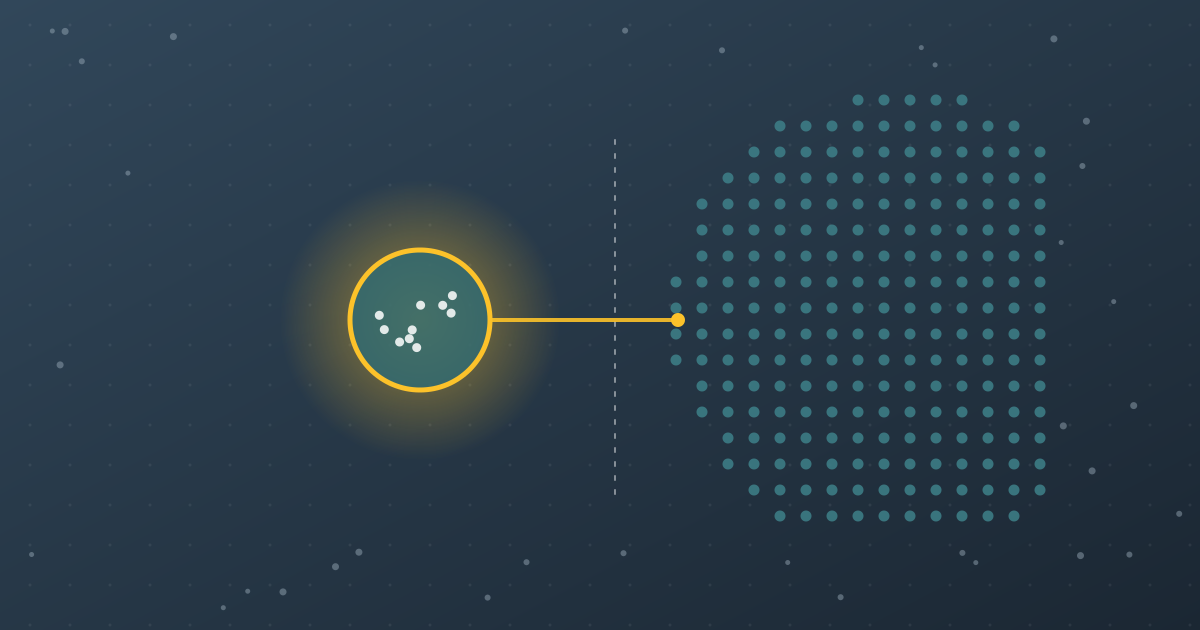
- A balance made of fine lines holds a golden circle on the left and a teal one on the right
- Beneath it lies a disk with six fields of simple signs made of dots, lines, arcs and frames
- When the balance tips, the disk turns and clicks into place at the matching field, which lights up in gold while the other fields stay teal and mist-blue
How the principle shows up in practice
Finland in 1948
After two lost wars, Finland chooses limited reliance on the Soviet Union combined with neutrality, and so remains independent.
Steven Bradbury
The slowest short-track skater in the 2002 final stays at the back while the favorites crash, and wins gold. Staying put as a deliberate choice.
Otto von Bismarck
With the secret Reinsurance Treaty of 1887, he reinsures himself with Russia, even though Germany is allied with Austria-Hungary. A double game that ends after his fall.
What does the situation say?
Get your profile across all 12 groups in about 10 to 15 minutes.
Start the Strategy CheckGroup 8: Interaction, Alliances and Negotiation
Guiding question: How do you act when others are in the game too?
Stage 4 of 5: Act with others
- TraditionEastern Strategy
Sun Tzu, Kautilya, the Thirty-Six Stratagems, the Tao Te Ching, Miyamoto Musashi, François Jullien
- Related principles
Where the 92 principles come from: eight traditions of strategy, from classical war theory to dealing with uncertainty.
More about the originBackground: WEGVISOR’s own selection from the strategy literature · More about the origin