The principle in detail
Three steps through the principle: grasp it, place it, put it to work. Open each topic on its own.
The core messageCore statement and 3 clarifications
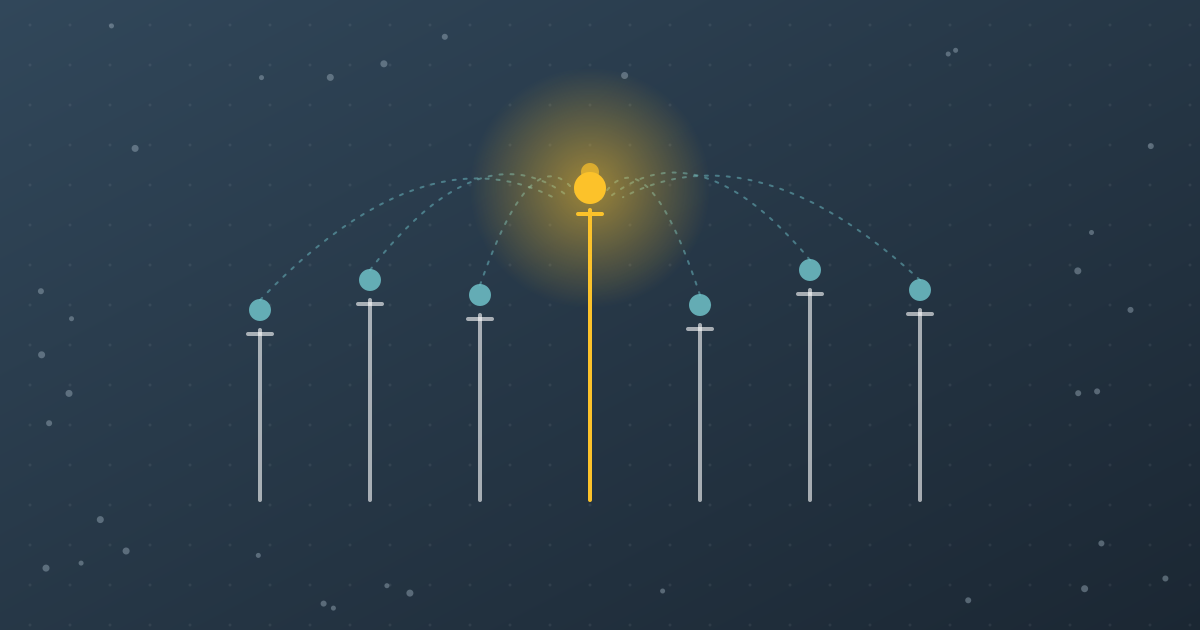
If one party becomes clearly stronger than all the others, the others have a growing incentive to join together. Unchecked growth thus often creates its own resistance.
- It does not say
- That the others always balance. Weaker parties often join the stronger one, especially when they are small, close by and without alternatives.
- It does not say
- That balancing brings peace. It prevents domination but can even prolong conflicts.
- It also says
- A balance, once achieved, does not hold by itself. It has to be readjusted because the weights shift.
The explanationHow the principle works and what matters
The principle is at work wherever no higher authority protects everyone: between states, in markets, between departments, in churches and in families. It describes a tendency, not a law; sometimes the weaker parties join the stronger one instead.
Who might feel threatened by your growth right now?
The signs3 signs when you heed it · 3 when you overlook it
- You pay attention to how your success affects others and deliberately forgo some gains.
- You let others share in what you build.
- As the weaker party, you consider whether to join a strong player or form a counterweight with others.
- You collect gains in every arena at once and are surprised when the others form a united front.
- You think former rivals are incapable of joining forces.
- As the weaker party, you attach yourself to the strongest and lose your independence in the process.
The backgroundFrom Hans J. Morgenthau’s work “Politics Among Nations” (1948). · T4 Political Prudence
- 1752SupplementedDavid Hume
S essay
- 1948OriginHans J. Morgenthau
Politics Among Nations
- 1979SupplementedKenneth N. Waltz
Theory of International Politics
- 1987SupplementedStephen M. Walt
The Origins of Alliances
- Tradition T4TraditionPolitical Prudence
Thucydides, Niccolò Machiavelli, Baltasar Gracián
See the tradition on the Origin page
Read more: the full background
From Hans J. Morgenthau’s work “Politics Among Nations” (1948). Supplemented by Kenneth N. Waltz’s “Theory of International Politics” (1979), Stephen M. Walt’s “The Origins of Alliances” (1987) and an idea already found in Polybius and in David Hume’s essay “Of the Balance of Power” (1752).
The research4 sources: 1 classic, 1 theory, 1 primary study, 1 case study · 1948–1994 · with limitations of the research
- weak
- moderate
- strong
A central and much-tested theory of international relations; case studies support the tendency to balance against threats, while historical counterevidence shows many exceptions.
- 1979Kenneth N. Waltz
“Theory of International Politics”: states balance against superior power because the structure of the system pushes them to do so.
- 1987Stephen M. Walt
“The Origins of Alliances”: drawing on alliances in the Middle East from 1955 to 1979, he shows that states tend to ally against a threatening power rather than with it; ideology, foreign aid and political penetration explain alliances less well.
- 1994Paul W. Schroeder
“Historical Reality vs. Neo-realist Theory”: in European history, balancing was not the most common response; states often hid from the threat, transcended the conflict or joined the stronger side.
- The principle describes a tendency, not a law.
- Weaker parties often join the stronger one instead of opposing it, especially when they are small, close by and without alternatives.
- It does not explain why no opposing coalition against the United States emerged after 1990.
- Balancing prevents domination, but not war; it can even prolong wars.
- The research examines states; the page infers that departments, companies or families behave the same way.
Read more: what research shows
The idea is old: Polybius, writing in the 2nd century BC, reports that Hiero of Syracuse supported Carthage so that Rome would not become too powerful. In 1948, Hans J. Morgenthau worked out the principle systematically: where states strive for power and no higher authority protects them, a balance of power emerges. In 1979, Kenneth N. Waltz turned it into a structural theory. Stephen M. Walt studied alliances in the Middle East from 1955 to 1979 and found that states tend to ally against a threatening power rather than against the merely strongest one; what counts are proximity, offensive capability and perceived intentions. In 1994, the historian Paul W. Schroeder countered that balancing was by no means the most common response in European history: states often hid from the threat or joined the stronger side.
The related principles13 Culminating Point · 58 Mandala of States · 59 Six Measures · 61 Security Dilemma
To go deeper, see 58 Mandala of States (where opposing coalitions form: with the neighbor’s neighbor) and 59 Six Measures (balancing is one response to a balance of strength, seeking shelter another)
61 Security Dilemma shows how balancing can be read as a threat
13 Culminating Point describes how an advance that goes too far calls forth the counterforces that stop it
Read more: the full text
To go deeper, see 58 Mandala of States (where opposing coalitions form: with the neighbor’s neighbor) and 59 Six Measures (balancing is one response to a balance of strength, seeking shelter another). 61 Security Dilemma shows how balancing can be read as a threat; 13 Culminating Point describes how an advance that goes too far calls forth the counterforces that stop it.
The action steps5 action steps: After every major success, ask who might feel threatened by it, and talk to those people.
After every major success, ask who might feel threatened by it, and talk to those people.
- Don’t win every round. Deliberately leave to others the fields that matter less to you.
- Share successes visibly: let others take part in projects, resources and recognition.
If someone else becomes overwhelmingly powerful, check early with whom you can form a counterweight, while it is still possible.
- Review balances regularly. What was balanced last year may have shifted since.
The reflection questions3 questions: On which fronts have you won lately, and who lost as a result?
- On which fronts have you won lately, and who lost as a result?
- Who around you might join forces if you keep growing like this?
- Where are you attaching yourself to a strong player instead of forming a counterweight with others?
Take your time with one question. Write down your answer – or talk it over with someone you trust.
The picture to rememberThe animation once more, with an explanation
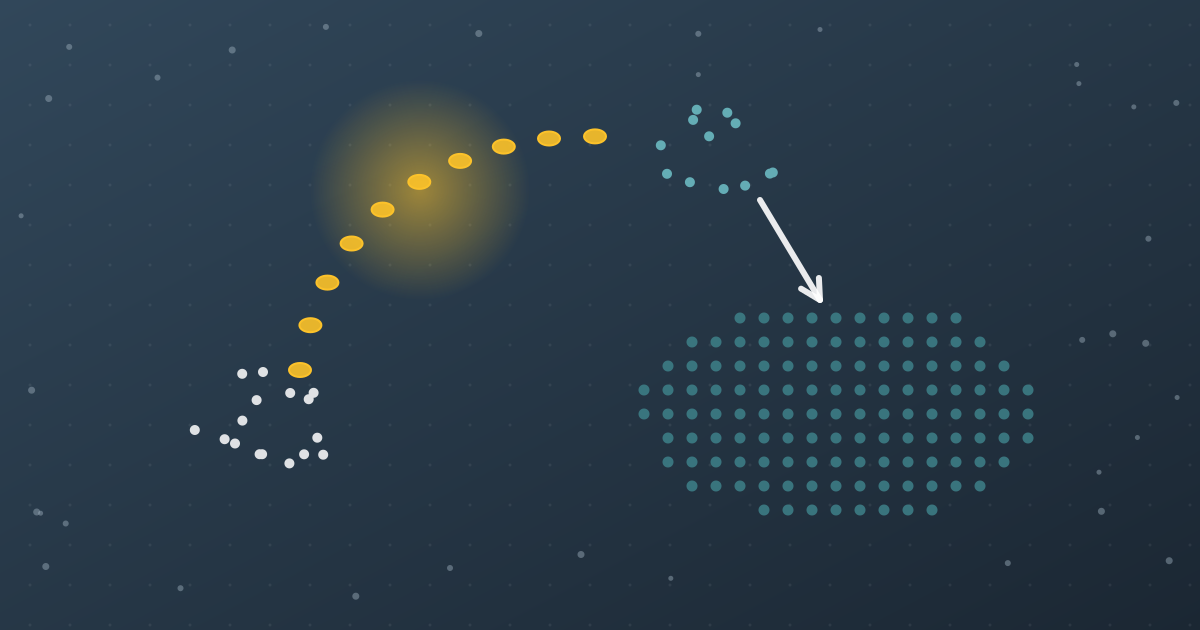
- Five teal circles of equal size rest on a beam balance made of fine mist-blue lines, calmly in equilibrium
- One of them turns gold and grows until the balance tips
- The four remaining circles roll toward each other and link up with lines into a block, and the balance comes back into equilibrium, before one circle within the block begins to grow
How the principle shows up in practice
Treaty of Bärwalde, 1631
Cardinal Richelieu finances Protestant Sweden against the overwhelmingly powerful emperor. The balance counts for more than religious denomination.
Airbus, 1970
France and Germany pool their aviation industries because neither could form a counterweight to the U.S. manufacturers on its own. The alliance grows into a global corporation.
Super League, 2021
Twelve major clubs want to break away from the rest. Within two days, fans, associations, leagues and governments form an opposing coalition, and the project collapses.
Who feels threatened by you?
Get your profile across all 12 groups in about 10 to 15 minutes.
Start the Strategy CheckGroup 8: Interaction, Alliances and Negotiation
Guiding question: How do you act when others are in the game too?
Stage 4 of 5: Act with others
- Related principles
Where the 92 principles come from: eight traditions of strategy, from classical war theory to dealing with uncertainty.
More about the originBackground: WEGVISOR’s own selection from the strategy literature · More about the origin